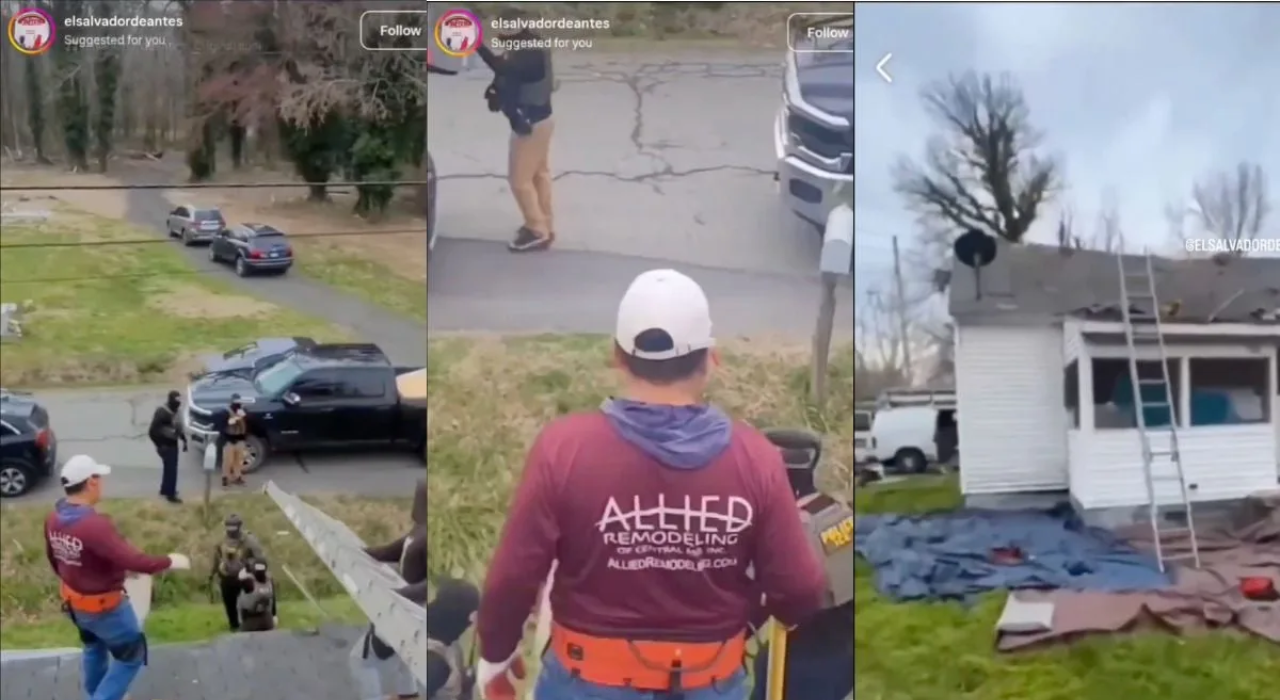
A standard roofing job near its completion should be a moment of relief for a homeowner and a payday for the crew. Instead, a viral incident involving a $10,000 bill and a sudden call to Immigration and Customs Enforcement (ICE) has exposed the jagged underbelly of the American construction industry. The allegation is simple and predatory: a homeowner reportedly waited until the heavy lifting was done, then weaponized federal law enforcement to vanish the debt by attempting to vanish the debtors.
This isn’t just a story about one bad actor in a suburban driveway. It is a snapshot of a systemic failure where the "paperless" nature of residential labor meets the absolute power of the person holding the checkbook. When a customer uses the threat of deportation as a negotiation tactic, they aren't just breaking a contract. They are exploiting a labor loophole that the industry has relied on for decades to keep costs low and timelines fast.
The Calculated Timing of the ICE Threat
In the world of high-stakes contracting, the "90 percent mark" is the danger zone. This is when the materials are paid for, the old roof is hauled away, and the new structure is dried in. For a dishonest homeowner, this is the moment of maximum leverage. The bulk of the value has been added to the property, but the final payment remains in the bank.
Reporting suggests the homeowner in question didn't raise concerns about shingle quality or site cleanup. The pivot to immigration status happened only when the invoice sat on the table. By calling ICE, a client creates a high-pressure environment where workers are forced to choose between their wages and their freedom. Most will choose to walk away from the money. It is a theft of services disguised as civic duty.
This tactic works because the residential construction sector operates on a handshake and a prayer. Many small-scale crews, even those working as subcontractors for larger firms, lack the legal infrastructure to fight back against this kind of intimidation. They don't have a legal department. They have a truck, their tools, and a crew that needs to get paid by Friday to keep their own families fed.
The Subcontracting Shell Game
To understand how a homeowner feels empowered to call ICE on their own roofers, you have to look at the layers of insulation built into the business. Most homeowners don't hire a crew; they hire a "roofer" who is often just a salesperson with a website. That salesperson then hires a labor broker, who finally hires the men on the roof.
- The Prime Contractor: Collects the deposit, manages the brand, and rarely touches a hammer.
- The Labor Broker: Sources the crew, often ignoring documentation to keep margins thin.
- The Crew: Does the 12-hour days in 100-degree heat, often with the least amount of legal protection.
When the homeowner calls ICE, they are usually targeting the crew, not the person they signed the contract with. This creates a chaotic legal gray area. If the crew is detained or flees, the prime contractor still wants their money, but the people who actually performed the labor are left with nothing. The homeowner, meanwhile, sits under a brand-new roof that cost them nothing but a phone call.
Why Mechanics Liens Often Fail the Worker
The standard advice for a contractor who hasn't been paid is to file a mechanic's lien. This is a legal claim against the property that prevents it from being sold or refinanced until the debt is settled. On paper, it is a powerful tool. In reality, it is a slow-motion solution for a high-speed crisis.
Filing a lien requires a valid contract, proof of work, and—most importantly—a plaintiff who isn't afraid to walk into a courthouse. For workers living under the shadow of potential deportation, the courthouse is the last place they want to be. The homeowner knows this. They aren't just betting on the workers being undocumented; they are betting on the workers' fear of the system itself.
Even if the prime contractor files the lien, the actual laborers rarely see that money for months or years. The $10,000 bill might represent the entire profit margin for the job and the weekly wages for five or six men. A lien doesn't buy groceries on Saturday morning.
The Myth of the Unaware Homeowner
There is a common defense used in these scenarios: "I didn't know they were undocumented, and I felt I had to report illegal activity." This rarely holds water. In the construction industry, labor costs are the primary variable. If a homeowner receives three bids for $15,000 and one bid for $10,000, they are implicitly participating in a system that cuts corners. Often, those corners are cut in the form of workers' compensation insurance and payroll taxes.
The irony is thick. The homeowner benefits from the lower price point that an informal labor market provides, then turns around and uses that same informality as a weapon to avoid paying the discounted rate. It is a cycle of exploitation that requires the homeowner to be both a willing participant and a self-appointed moral arbiter.
Legal Consequences and the Shift in Liability
While the homeowner might think they found a "life hack" for a free roof, the legal tide is shifting. Several states have begun to look at the weaponization of immigration status as a form of extortion or witness intimidation. If a homeowner threatens to call ICE specifically to avoid a debt, they may be crossing the line from "concerned citizen" to "criminal defendant."
Contractors are also beginning to change how they operate to protect their crews:
- Staggered Payments: Demanding 50% upfront and 40% mid-way through the project, leaving only 10% at risk.
- Verified Documentation: Better firms are moving toward rigorous "E-Verify" checks for every person on-site to remove the leverage of an ICE threat.
- Body Cameras: Some foremen have started wearing cameras during final walk-throughs to document that the work was completed and to capture any verbal threats made by the client.
The $10,000 roofing bill isn't just about shingles and nails. It’s a test of whether a contract in America is a binding agreement or a suggestion that only applies if you like the person doing the work. When we allow people to use federal agencies as their personal collection (or anti-collection) agents, we undermine the entire basis of the service economy.
Check the licensing of your contractor and ask for proof of insurance for every individual on your property before the first shingle is pulled. If the price seems too good to be true, you are likely participating in a system that puts both the workers and your own legal standing at risk.