The sticker on the gas pump didn't change because of a mathematical error. It changed because a few thousand miles away, in the narrow, turquoise waters of the Strait of Hormuz, the air has grown thick with the scent of saltwater and impending gunpowder.
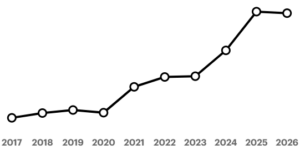
Brent crude oil just crested $125 a barrel. To a trader in a glass tower in Manhattan, that is a green digit on a terminal, a signal to buy or hedge. But to a long-haul trucker named Elias parked at a rest stop in Nebraska, that number is a thief. It is the reason he will spend tonight calculating whether he can afford the premium kibble for his dog or if he needs to skip a meal himself to keep the rig humming.
Economics is often taught as a series of cold charts and supply-side logic. It isn't. Economics is the study of human fear and the price we pay for it. Right now, the world is terrified of a spark in the Middle East, and we are all paying the "fear tax" at the pump.
The Choke Point
Consider the geography of our modern lives. We like to think of the global economy as a cloud—ethereal, digital, and instantaneous. It is actually a series of physical pipes and narrow gateways. The most important of these is the Strait of Hormuz.
Imagine a pipe that carries twenty percent of the world’s liquid energy. Now imagine that pipe is a strip of water only twenty-one miles wide at its narrowest point. Everything—the plastic in your toothbrush, the fuel for the plane taking you to see your parents, the fertilizer that grows the corn in your pantry—depends on ships passing through that gap without being harassed, boarded, or sunk.
When talk of war between Israel and Iran moves from the "unlikely" column to the "imminent" column, the markets don't wait for the first shot. They react to the possibility of the shot. The $125 price tag is a preemptive scream. It is the market's way of saying that if those ships stop moving, the world as we know it grinds to a shuddering halt.
Iran holds the keys to the gate. For years, the threat of closing the Strait has been their ultimate leverage. It is a geopolitical "dead man’s switch." If an escalation occurs—if the shadow war of cyberattacks and proxy strikes turns into a direct, kinetic confrontation—that gate slams shut.
The Invisible Stakes of the Shadow War
We are currently witnessing a phenomenon where the "geopolitical risk premium" is no longer a footnote in an analyst's report. It is the lead story.
When Brent crude was sitting at $80, the world felt manageable. Logistics were predictable. But the jump to $125 represents a psychological threshold. It’s the point where inflation ceases to be a buzzword and starts to feel like a physical weight.
Let's look at a hypothetical scenario to ground this. Meet Sarah. She runs a small boutique delivery service in a suburban town. Her margins are thin. When oil hits $125, her fuel costs don't just "increase." They devour her profit. Suddenly, the organic kale she delivers is twenty cents more expensive per bundle. The customer sees the price hike and buys less. Sarah cuts her assistant's hours. The assistant cancels a subscription. The ripple continues, unseen and unrelenting, until the entire pond is disturbed.
The conflict isn't just about missiles; it's about the erosion of the middle class's purchasing power. We are watching a transfer of wealth from the pockets of everyday people into the volatility of the energy markets, fueled by the rhetoric of regional powers.
The Arithmetic of Anxiety
Why $125? Why not $110 or $150?
The number is a reflection of the "what if." Analysts are currently pricing in a moderate disruption. They are betting that while things are bad, the total closure of the Strait is still a low-probability event. If a full-scale war breaks out, some experts suggest we could see $200 a barrel.
That isn't just a higher number. That is a global recession.
At $200, the airline industry collapses. International trade becomes prohibitively expensive. The "Just-in-Time" supply chain, which relies on cheap transit to keep inventory low, shatters. We saw a glimpse of this during the pandemic, but a war-driven energy crisis is different. It isn't a temporary pause; it's a structural destruction of value.
The tension between Iran and the West has reached a point where diplomacy feels like a fraying rope. For every headline about a diplomatic breakthrough, there are three about drone strikes or seized tankers. The markets see the fraying rope. They are charging us for the cost of the fall before we’ve even slipped.
The Human Core of the Barrel
It is easy to get lost in the talk of "barrels" and "benchmarks." But a barrel of oil is essentially thirty-five gallons of concentrated human potential. It moves us. It warms us. It allows us to transcend our local geography.
When the price surges because of war clouds, it means that potential is being diverted. Instead of being used to build, it is being used to protect. Instead of fueling progress, it is fueling a stalemate.
The tragedy of the $125 barrel is that it represents a failure of human cooperation. It is the literal price of our inability to find a path to peace in the Middle East. Every time a politician makes a bellicose speech, the price ticks up. Every time a naval exercise is conducted in the Persian Gulf, the price ticks up.
We are all stakeholders in this conflict, whether we want to be or not. You might live in a city that doesn't care about Middle Eastern history. You might not know the difference between a centrifuge and a siloth. But your bank account knows. Your grocery bill knows.
The crude oil is the blood of the global economy. When it gets "expensive," the economy gets anemic. The heart has to work harder to pump the same amount of life through the system. We are currently in a state of high-stress tachycardia.
Beyond the Ticker
The news will tell you that the "market is volatile." That’s a polite way of saying the world is scared.
If you look closely at the data, you see more than just price action. You see the movement of ships changing. You see insurance premiums for tankers in the Gulf skyrocketing—sometimes doubling overnight. You see nations quietly filling their strategic reserves, hording the black gold like villagers hording grain before a winter storm.
This isn't just business. This is survival.
The escalation in the Iran war isn't just a regional concern for those in the line of fire. It is a slow-motion car crash that we are all sitting in. We can see the dashboard, we can see the speedometer climbing, and we can see the wall approaching.
The $125 mark is the warning chime. It’s the sound the car makes when you’ve drifted out of your lane. The question is whether anyone is actually steering, or if we are all just passengers to the momentum of old grudges and new weapons.
Somewhere tonight, a mother is looking at her budget and wondering why everything suddenly feels so precarious. She doesn't see the warships. She doesn't see the diplomats in Vienna or the generals in Tehran. She just sees the total at the bottom of the receipt.
She is the true measure of the price of oil.
The barrel isn't filled with crude. It's filled with our collective stability, and right now, the container is leaking. The world is watching the horizon, waiting to see if the smoke will clear or if the sky will stay this expensive shade of dark.