In a windowless cleanroom in Alabama, a technician tightens a bolt on a fuel line that has already been redesigned four times. His hands shake, just a fraction. It isn’t coffee or age. It is the weight of forty years of ghosts. He is working on the Space Launch System (SLS), a rocket often described as a "behemoth" or a "triumph of engineering," but in the quiet of the hangar, it feels more like a cathedral built from the blueprints of a lost civilization.
We are going back to the Moon. That is the official line. But the "we" in that sentence is doing a lot of heavy lifting, and the "how" is buried under a mountain of invoices that could reach the lunar surface before the astronauts do.
The Ghost of Apollo’s Ledger
The story of the Artemis program isn't really about rocket science. Rocket science is the easy part. We solved the physics of lunar injection in 1969 using slide rules and grit. The real struggle—the one that keeps NASA administrators awake at 3:00 AM—is the brutal, unyielding math of modern bureaucracy.
When the Saturn V roared to life, it was fueled by a singular, terrifying national desperation. Money was an afterthought because the alternative was geopolitical irrelevance. Today, Artemis is fueled by a fragmented coalition of contractors, shifting political administrations, and a budget that bleeds out through a thousand tiny incisions. Each time a new president takes the oath of office, the goalposts for our lunar return move ten yards back.
Consider the "Cost-Plus" contract. It sounds like a boring accounting term. In reality, it is a recipe for inertia. Under these agreements, the government pays a contractor for all their expenses, plus a guaranteed profit. If a valve fails and requires two years of testing, the contractor doesn't lose money. They make more. The incentive isn't speed; it’s survival through process.
A Tale of Two Rockets
To understand why the path back is so fraught, you have to look at the two versions of the future currently sitting on launchpads in the American South.
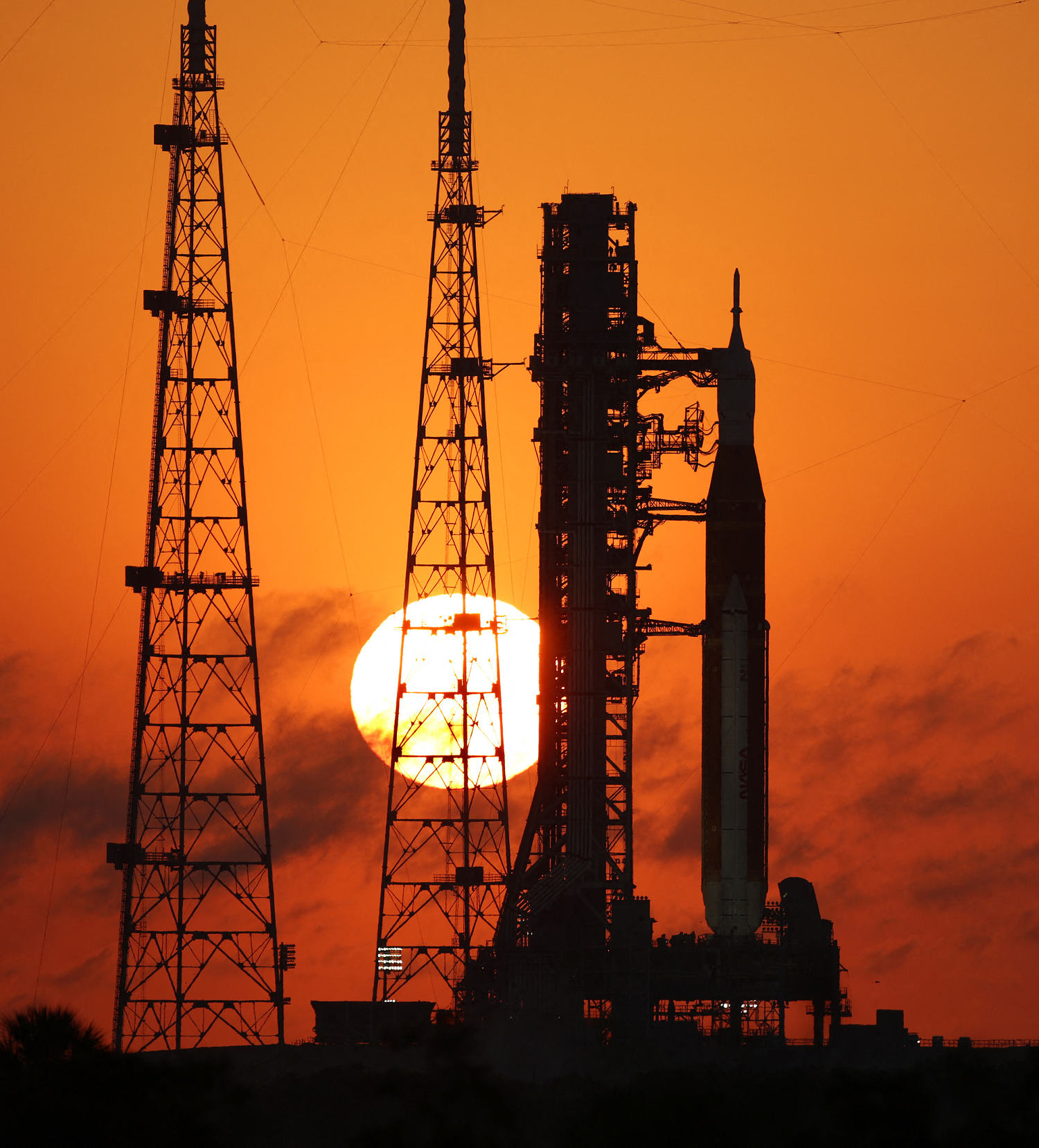
On one side, you have the SLS. It is the "Senate Launch System," a patchwork of Space Shuttle-era technology—literally using engines that flew on the Shuttle—reconfigured for a deep-space mission. It is magnificent. It is also expendable. Every time an SLS launches, $2 billion of exquisite hardware is dumped into the ocean. Imagine flying a Boeing 747 from New York to London and then crashing it into the Atlantic because you didn't want to figure out how to land it. That is the current lunar strategy.
On the other side, in the mud and salt air of South Texas, a private company is building stainless steel silos that they intend to land, refuel, and launch again by breakfast.
The friction between these two worlds is where the human drama lies. NASA is caught between its heritage—the slow, safe, "failure is not an option" culture—and the new era of "fail fast, break things, and film it in 4K." The engineers at NASA are some of the most brilliant minds on the planet, but they are working within a system designed to prevent risk at the cost of progress. They are forced to be perfect on the first try because they only get one rocket every two years.
The Invisible Stakes of the South Pole
Why are we doing this? Is it just for a better photo than the grainy 1969 footage?
The destination this time isn't the flat, dusty plains of the Sea of Tranquility. We are aiming for the lunar South Pole. It is a jagged, unforgiving landscape of eternal shadow. Temperatures there drop to levels that would turn common steel as brittle as glass. But in those shadows, tucked inside craters that haven't seen sunlight in billions of years, lies the "New Oil": water ice.
If you have water, you have oxygen. If you have water, you have hydrogen fuel. If you have water, the Moon isn't a dead end—it’s a gas station on the way to Mars.
But the stakes aren't just scientific. They are deeply, uncomfortably human. There is a quiet race happening, one that doesn't involve ticker-tape parades. If the United States and its partners don't establish a presence at these specific, ice-rich sites, someone else will. International law regarding lunar property is a murky, untested waterscape. The first person to put a fence around the ice effectively owns the future of deep space travel.
The Price of a Dream Delayed
We often talk about "billions of dollars" as if the money is being fired into space. It isn't. Every cent is spent on Earth—in grocery stores in Huntsville, in schools in Houston, in machine shops in Denver. But the opportunity cost is what hurts.
Every year the Artemis III landing—the one that actually puts boots on the ground—is pushed back, we lose the "bridge." The bridge is the institutional knowledge of the people who know how to do this. We are currently in a strange window where the people who built the last moon landers are in their nineties, and the people building the new ones are just out of college. There is a middle generation that grew up in the "Low Earth Orbit" era, a generation that forgot how to leave the backyard.
The human element of Artemis is the anxiety of a workforce that knows they are being watched by a public that has grown cynical about "the next big thing." When the SLS finally cleared the tower for Artemis I, the roar wasn't just atmospheric. It was the collective catharsis of thousands of people who had been told for a decade that their rocket was a "paper tiger."
The Ghost in the Machine
Think of a hypothetical astronaut. Let's call her Sarah. She has spent ten years training. She knows every bolt of the Orion capsule. She has spent thousands of hours in a centrifuge, feeling her skin pull back against her skull as she simulates the 8-G's of re-entry.
For Sarah, the budget overruns aren't a line item in a Congressional report. They are the reason she might be fifty years old before she gets her shot. They are the reason she watches her peers leave the agency for private ventures that move faster. The "fraught path" is a timeline of human lives spent waiting for permission to be extraordinary.
The path is long because we are trying to build a sustainable presence, not just a "flags and footprints" mission. We are building a space station in lunar orbit—the Gateway. It is a brilliant, necessary piece of infrastructure. It is also another massive, expensive moving part that can break, be delayed, or be defunded.
The Sound of the Future
If you go to the Cape on a launch day, the air feels different. It isn't the heat. It’s the tension. You are standing on a strip of sand that has seen the greatest triumphs and the most sickening tragedies of the American experiment.
We are currently in the "fraught" middle. The part of the movie where the hero is tired, the bank is calling, and the engine won't turn over. It is easy to look at the $90 billion price tag and say it isn't worth it. It is easy to point at the delays and call them a failure.
But then you look at the images of the Earth rising over the lunar limb, captured by a small camera on the tip of a solar wing. You see that "Blue Marble" again, and suddenly the invoices don't seem so heavy.
The path back to the Moon is over-budget because we are trying to do something that is fundamentally against our current nature: we are trying to think in decades instead of fiscal quarters. We are trying to build something that will outlast the people who signed the checks.
The technician in Alabama finally secures that bolt. He wipes his forehead and steps back. He knows that his work might sit on a shelf for another year. He knows the pundits will call his rocket a "boondoggle." But he also knows that when those four engines ignite, they will produce 8.8 million pounds of thrust, a raw, screaming defiance of gravity that can be heard for forty miles.
In that moment, the cost doesn't matter. The politics don't matter. Only the climb matters. We are a species that wanders, and we have been sitting on the porch for far too long. The Moon is waiting, indifferent to our ledgers, glowing in the dark like a cold, white promise we haven't yet kept.