You’ve probably heard the phrase "bellwether" tossed around by pundits until it lost all meaning. But when millions of voters across England and Wales headed to the polls in May 2024, the results weren’t just a localized ripple. They were a tectonic shift. We aren’t just talking about who picks up the trash or fixes the potholes. These elections were the final, brutal rehearsal for the general election that eventually saw the Conservative party's 14-year grip on power shatter.
If you think local elections are just about "low-stakes" politics, you’re missing the bigger picture. In 2024, the map of Britain was effectively redrawn. From the high-stakes London mayoral race to the razor-thin margins in the West Midlands, the message from the electorate was loud, clear, and incredibly messy.
The Night the Blue Wall Crumbled
For years, the Conservatives relied on a specific brand of English voter. In 2024, that foundation didn't just crack; it dissolved. The party suffered its worst local election defeat in nearly 30 years, losing over 470 council seats. Honestly, it was a bloodbath. They were left clinging to just six councils out of the 107 up for grabs.
But the real story wasn't just that the Tories lost. It's who they lost to. This wasn't a simple two-horse race. The Liberal Democrats surged, specifically in the "Blue Wall" heartlands of southern England. They picked up over 100 seats and took control of key councils like Tunbridge Wells and Dorset. They didn't just win; they humiliated the government on its own turf.
Meanwhile, the Green Party had their best night ever. They added 74 seats to their tally. This suggests a growing segment of the population is tired of the "business as usual" approach from the two main parties. It’s no longer a fringe movement. It’s a viable alternative for voters who feel politically homeless.
The Mayoral Giants and the West Midlands Shock
Mayoral races are often more about personality than party lines, but 2024 proved they can be both. Sadiq Khan secured a historic third term in London with 44% of the vote. That wasn't a shock. The real jaw-dropper was the West Midlands.
Richard Parker, the Labour challenger, unseated the high-profile Conservative incumbent Andy Street by a microscopic 0.3% margin. Parker won 38.1% to Street's 37.8%. It was so close it required a partial recount. Losing Street—a man often seen as a "moderate" Tory success story—was a massive psychological blow to the Conservative headquarters.
- London: Sadiq Khan (Labour) retained.
- West Midlands: Richard Parker (Labour) gained from Conservatives.
- Tees Valley: Ben Houchen (Conservative) retained.
- East Midlands: Claire Ward (Labour) won the first-ever mayoral race here.
Ben Houchen’s victory in Tees Valley was the only bright spot for the government. He won with 53.6% of the vote. However, even his victory came with a caveat. His vote share dropped significantly from the 73% he enjoyed in 2021. Even when the Tories won, they were bleeding support.
Beyond the Big Two
Don't let the Labour-vs-Tory narrative distract you from the fragmentation happening elsewhere. The 2024 local elections revealed deep-seated issues within the Labour camp too. Specifically, the party took a massive hit in areas with high Muslim populations.
In wards where more than 20% of residents are Muslim, Labour’s vote share plummeted by 21 points. This was largely a reaction to the leadership's stance on the conflict in Gaza. It proves that Keir Starmer’s "broad church" has some very shaky rafters. People aren't just voting for Labour because they love them; they’re often voting against the alternative, and when they’re angry enough, they’ll stay home or vote for independents.
Then there's Reform UK. While they only won two council seats, they were consistently siphoning off 10% to 15% of the vote in the wards they contested. They didn't need to win to be dangerous. They acted as a spoiler, dragging the Conservatives down and making it impossible for them to hold onto marginal seats.
Why Scotland and Wales Mattered
While the bulk of the drama was in England, the ripples were felt across the borders. In Wales, the Police and Crime Commissioner (PCC) elections showed a similar trend of Conservative retreat. In Scotland, though there weren't full local council elections in May 2024, the political climate was febrile. The collapse of the SNP-Green coalition and the resignation of Humza Yousaf just days before the English polls created a vacuum that Labour was more than happy to fill.
The 2024 results gave Labour the momentum they needed to argue that they were the only party capable of governing across the entire UK. It set the stage for the 2024 General Election where the SNP’s dominance in Scotland finally faced a real challenge.
Lessons from the Doorstep
What does this mean for you? It means the "two-party system" is effectively on life support. Voters are becoming more transactional. They’re willing to jump ship to the Lib Dems for local issues, the Greens for the environment, or Reform for immigration concerns.
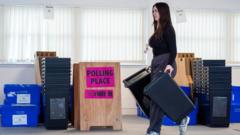
- Check your registration: Turnout in these elections hovered around 30% to 40%. That means a tiny fraction of people are making decisions for everyone else. Don't be the person who complains but didn't vote.
- Look at the data, not the spin: Parties will always claim they had a "good night." Look at the net seat changes. That’s where the truth lives.
- Understand the PCC role: Many people skip the Police and Crime Commissioner ballot. Don't. These people oversee multi-million pound budgets and set the policing priorities for your area.
The 2024 local elections weren't just a mid-term grumble. They were a clear eviction notice. The electorate decided it wanted something different, even if it wasn't entirely sure what that "different" looked like yet. If you want to understand the current state of British politics, you have to look at these local results. They are the blueprint for everything that has happened since.
Stop waiting for the "big" elections to pay attention. The real changes start in town halls and mayoral offices. Keep an eye on your local council's makeup and see how the shift in power affects your daily services. That’s where the rubber meets the road.