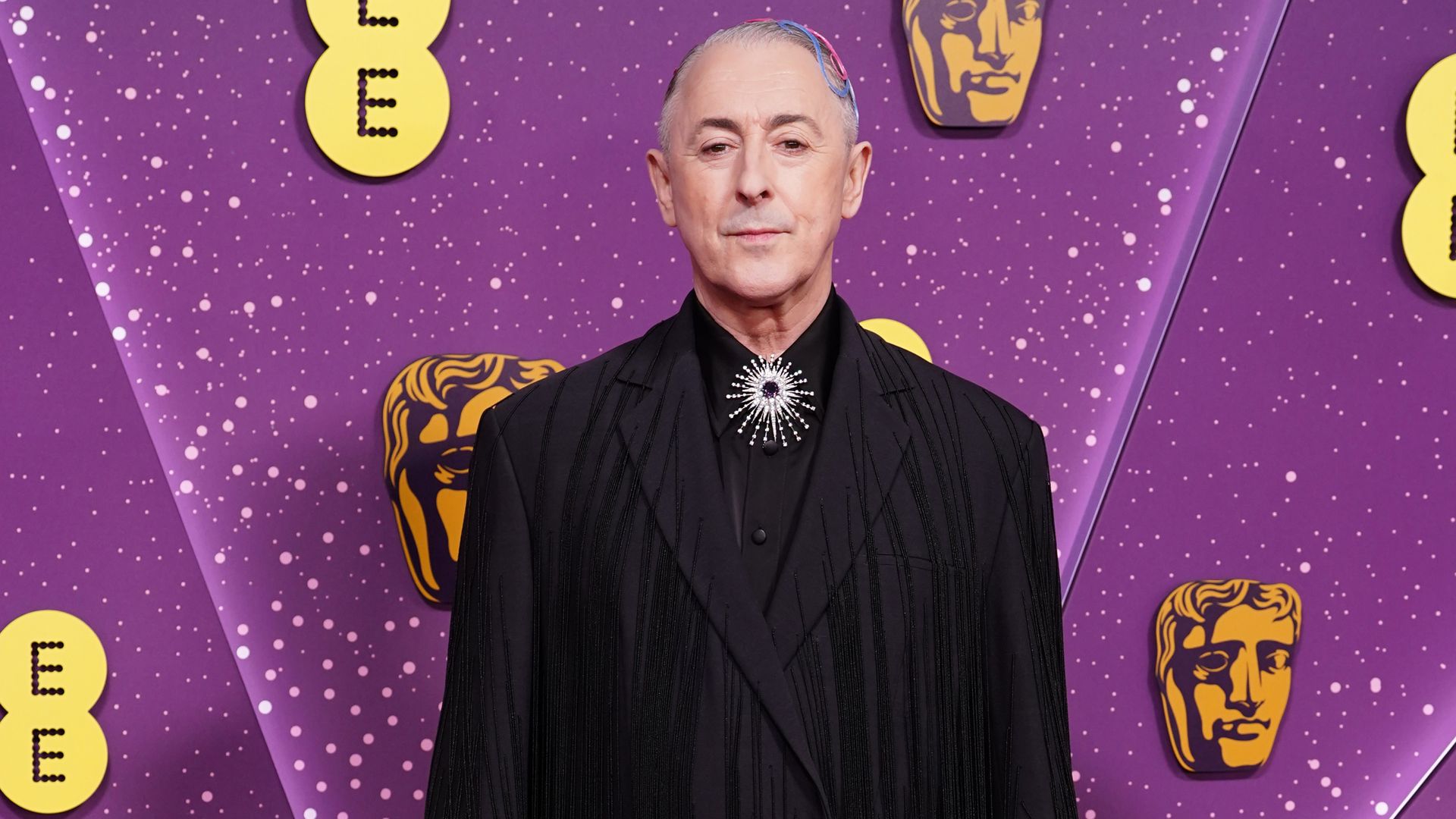
The 2026 BAFTA Film Awards were supposed to be a victory lap for British cinema. Instead, the ceremony became a case study in how modern broadcast nerves can mangle a live performance beyond recognition. When Alan Cumming took the stage as host, the audience expected his trademark blend of Scottish wit and high-camp theatricality. What they got was a disjointed, heavily edited broadcast that Cumming himself later described as a "trauma-triggering" experience. This was not a failure of talent. It was a failure of the institutional machinery that sits between a live performer and the viewer at home.
The core of the issue lies in the growing chasm between the room and the screen. For those sitting in the Royal Festival Hall, the energy was electric. For those watching the delayed BBC broadcast, the experience was a jagged, over-sanitized mess. The industry calls this "polishing the product," but in reality, it is the systematic removal of the very friction that makes live awards shows worth watching. When Cumming addressed the fallout, he wasn't just complaining about bad edits; he was blowing the whistle on a production culture that has become so terrified of a "viral mistake" that it has started pre-emptively killing the art form.
The Two Hour Gap and the Illusion of Live
The BAFTAs have long operated on a time-delay system, usually airing on the BBC a couple of hours after the actual ceremony begins. This window is traditionally used to trim long-winded speeches and ensure the show fits into a tight two-hour slot. However, the 2026 broadcast pushed this practice to a breaking point.
Producers didn't just trim for time. They aggressively reordered segments, spliced in reaction shots that didn't match the timeline of the jokes, and effectively neutralized Cumming’s pacing. When a comedian builds a set, the timing is internal. It relies on the breath of the audience. By the time the BBC's editors were finished, Cumming appeared to be struggling, not because the jokes failed, but because the laughter was often buried or cut short to move to the next "safe" segment.
This isn't just about one host's ego. It represents a fundamental shift in how networks view live events. They no longer see them as happenings to be documented, but as raw data to be mined and reconstructed. The result is a sterile, uncanny-valley version of entertainment that pleases nobody—least of all the performers tasked with anchoring the ship.
The Policing of the Pivot
Alan Cumming is a veteran of the stage. He knows how to read a room. If a joke doesn't land, he pivots. If a segment feels dry, he injects energy. In a truly live environment, these pivots are where the magic happens. They remind the audience that anything can happen.
However, the modern broadcast infrastructure is designed to prevent the pivot. Scripted jokes are vetted by legal teams and brand managers weeks in advance. When Cumming attempted to lean into the spontaneity of the night, he was met with the rigid wall of a production schedule that had already decided what the "highlights" would be.
The Cost of Playing it Safe
The irony is that by trying to avoid "triggering" moments or controversial slip-ups, the production created its own kind of trauma. Cumming’s use of the word wasn't accidental. Watching a version of yourself perform—one that has been chopped and changed to the point of being unrecognizable—is a disorienting, professional nightmare.
- The Loss of Authenticity: Every time a reaction shot is faked, the audience loses a bit of trust.
- The Muting of Political Voice: In a year of global unrest, several winners used their platform to speak on issues ranging from labor rights to international conflict. Much of this was softened or removed in the broadcast edit.
- The Host as Scapegoat: When the edit fails, the host takes the heat. Social media doesn't blame the editor in the truck; they blame the face on the screen.
The Social Media Feedback Loop
We are living in an era where the "Twitter Jury" is considered more important than the actual audience in the seats. Networks are terrified of a ten-second clip being taken out of context and turned into a PR disaster. This fear has led to a defensive crouch in television production.
Instead of aiming for greatness, shows are now aiming for "un-offensiveness." But un-offensiveness is the death of comedy. Alan Cumming was hired precisely because he is provocative, stylish, and unpredictable. To hire a performer of his caliber and then attempt to curate his every move through a heavy-handed edit is a form of professional sabotage.
The industry is currently obsessed with "brand safety." Sponsors don't want their logos appearing next to a joke that might age poorly by Tuesday morning. This financial pressure filters down into the director’s chair, leading to the kind of "trauma-triggering" broadcast that Cumming rightfully criticized.
Reclaiming the Chaos
If the BAFTAs—and awards shows in general—want to survive, they need to stop trying to compete with the polished perfection of a Netflix special. They need to embrace the mess. The most memorable moments in Oscars or BAFTAs history have always been the ones that weren't in the script. The wrong envelope, the streaker, the impassioned, unscripted plea.
By sanitizing these broadcasts, networks are effectively training the audience to look elsewhere for genuine moments. Why sit through two hours of a pre-recorded, edited ceremony when you can wait for the unedited clips to leak online?
The technical ability to broadcast live has never been better. We have the bandwidth, the cameras, and the global reach. What we lack is the institutional courage to let a host like Alan Cumming actually do his job without a safety net—or more accurately, without a strangling net.
The Scripted Reality Trap
We see a similar trend in sports and political reporting, where the "narrative" is decided before the event even starts. In the case of the 2026 BAFTAs, the narrative was supposed to be "British Excellence." When the reality of the night was more complicated, or when Cumming’s humor veered into the irreverent, the producers panicked.
This panic manifests as a frantic edit. You can see it in the way the camera cuts away from a winner who is crying too hard, or how it lingers on a celebrity in the front row who isn't laughing at a joke. These are choices made to enforce a specific mood, rather than to reflect the truth of the event.
A New Contract for the Live Performer
Performers are starting to push back. Cumming’s public criticism of his own broadcast is a significant moment. It signals that the talent is no longer willing to be the "face" of a production they have no control over once the lights go down.
There needs to be a new understanding between broadcasters and hosts. If you hire an artist, you hire their perspective. You cannot treat a person like a digital asset to be manipulated in post-production. The "trauma" Cumming referred to is the experience of seeing one's identity and professional reputation weaponized by a production team that cares more about a smooth transition to the news at 10:00 PM than it does about the integrity of the performance.
The solution is remarkably simple, yet terrifying for modern executives: Go live. Truly live. No delay, no "polishing," no pre-planned reaction shots. Give the audience the raw, unfiltered energy of the room. If a joke fails, let it fail. If a speech is too long, let the music play them off in real-time.
Trust the host. Trust the audience. Without that trust, these ceremonies will continue to dwindle into irrelevance, becoming nothing more than long-form commercials for an industry that is increasingly afraid of its own shadow.
The next time a major network approaches a performer of Alan Cumming’s stature, they shouldn't be surprised if the answer is a polite, but firm, "no." Not because the work is hard, but because the broadcast has become a trap. If the industry wants to save its biggest nights, it has to stop trying to control them.
Demand better from the networks that hold the licenses to our cultural moments.