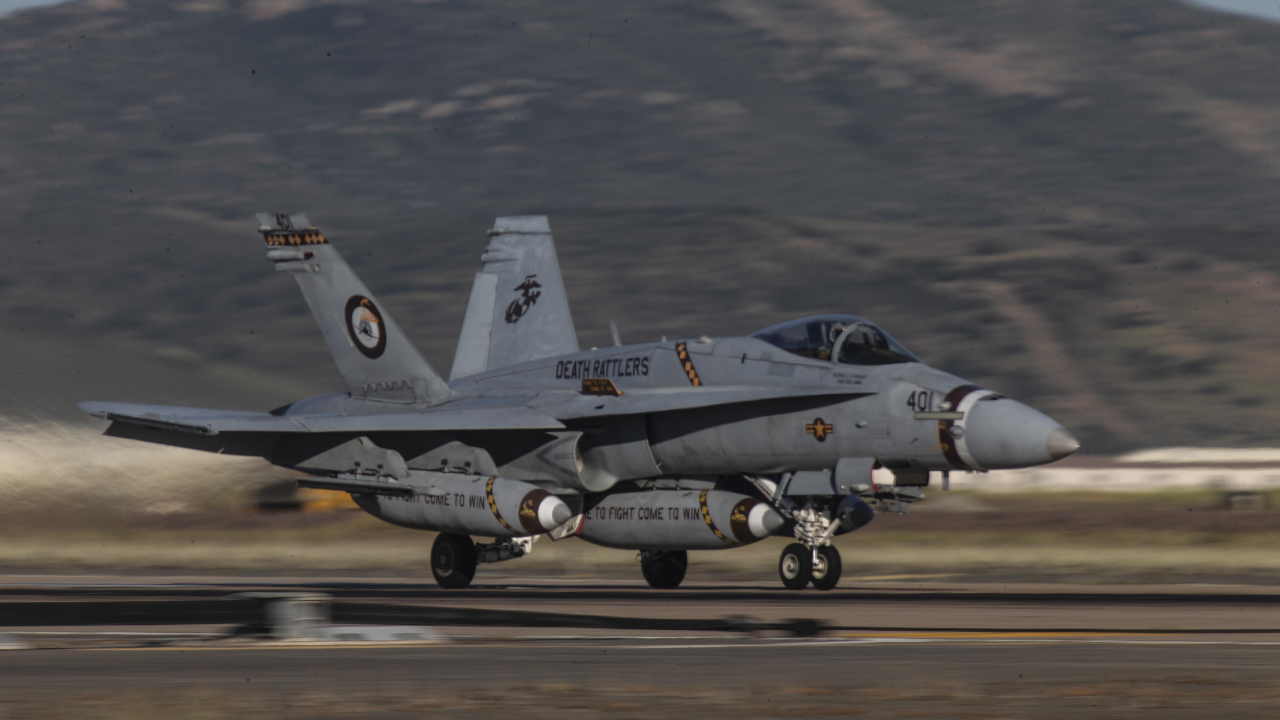
The reported destruction of a United States F/A-18 Hornet by Iranian air defense systems over Chabahar represents a case study in high-stakes information operations rather than a shift in kinetic reality. On March 25, 2026, the Islamic Revolutionary Guard Corps (IRGC) utilized state-affiliated media to broadcast footage of an alleged aerial intercept, claiming the fourth successful downing of a Western strategic asset in recent weeks. Within minutes, U.S. Central Command (CENTCOM) issued a categorical rebuttal, labeling the claim "FALSE" and asserting that no American aircraft had been lost.
This friction points to a deeper structural conflict: the use of tactical disinformation to offset strategic air inferiority. By analyzing the technical constraints, the geography of the engagement, and the patterns of narrative fabrication, we can identify the mechanisms driving this escalation.
The Triad of Disinformation: Video, Timing, and Domestic Consumption
The IRGC's claim relies on three distinct pillars to achieve psychological impact, regardless of factual accuracy.
- Visual Ambiguity: The footage shared by Press TV displays a fighter jet followed by a thermal flash and a subsequent loss of stability. The detachment of an object—framed as a pilot ejection—serves as the "closing argument" for a casual viewer. However, in modern electronic warfare, a "flash" near an airframe often indicates a flare deployment or a proximity fuse detonation that fails to achieve a catastrophic kill.
- Strategic Counter-Programming: The announcement occurred hours after Tehran rejected a 15-point U.S. ceasefire proposal. By projecting military success immediately after a diplomatic refusal, the Iranian leadership signals a "position of strength" to its domestic audience and regional proxies.
- The Cumulative Effect: This incident follows similar unverified claims involving an F-15 on March 5 and an F-35 on March 19. By creating a cadence of "victories," the IRGC attempts to normalize the idea of Iranian air defense parity with Gen-4 and Gen-5 Western platforms.
The Cost Function of Kinetic Engagement vs. Narrative Warfare
In a standard military engagement, the cost of losing an F/A-18 is approximately $66 million per unit, excluding the strategic loss of pilot expertise and regional prestige. For Iran, the cost of a "narrative kill" is nearly zero.
The IRGC utilizes what can be termed the Asymmetric Information Variable. Because the United States rarely releases classified flight telemetry to debunk every localized claim, Iran exploits the "verification lag." During the hours it takes for independent analysts or Western officials to provide a detailed rebuttal, the "fact" of the shootdown has already integrated into the regional information ecosystem.
Tactical Geography: The Chabahar Bottleneck
Chabahar, located on the Gulf of Oman, is a critical node in Iran's southeastern defense architecture. Its proximity to the Strait of Hormuz makes it a high-traffic area for U.S. carrier-based aviation.
- Detection vs. Engagement: Iran has recently deployed "fully indigenous, modern air defense systems"—likely variants of the Bavar-373 or the 15th Khordad. These systems have the theoretical range to track targets over the Indian Ocean.
- The Proximity Factor: For an F/A-18 to be "shot down" and crash into the Indian Ocean, as claimed, the engagement would likely occur in international airspace. This creates a legal and military paradox: if Iran fired on an aircraft in international waters, it would constitute an act of unprovoked aggression, yet the IRGC frames these incidents as "territorial defense."
Logic of Refutation: The CENTCOM Response Mechanism
The speed of the CENTCOM denial is a calculated tactical move. By using social media to overlay "FALSE" graphics on Iranian state media clips, the U.S. military is engaging in Active Fact-Checking. This process follows a strict internal logic:
- Accountability of Assets: The U.S. Navy and Air Force maintain real-time tracking of every airframe. A missing F/A-18 would trigger an immediate Search and Rescue (SAR) mission, which is impossible to hide from satellite surveillance and regional maritime traffic.
- Absence of Wreckage: In previous genuine shootdowns—such as the 2019 RQ-4A Global Hawk incident—Iran was quick to display physical debris. In the current March 2026 cycle, no physical evidence of an F-15, F-35, or F-18 has been produced.
Structural Implications of the "Impact-Driven" Strategy
Iranian Foreign Minister Abbas Araghchi’s statement that Tehran negotiates through "impact-driven strikes" suggests that these disinformation campaigns are viewed as a form of non-kinetic "striking." This strategy addresses three operational requirements:
- Internal Morale: Following reported Israeli strikes on IRGC facilities in South Khorasan and the loss of senior commanders like Amir-Ali Hajizadeh in 2025, the regime requires "wins" to maintain the loyalty of the Basij and IRGC rank-and-file.
- Deterrence Projection: By claiming the ability to hit high-end stealth and strike aircraft, Iran seeks to increase the perceived "risk premium" for U.S. and Israeli pilots operating near Iranian borders.
- Leverage in Ceasefire Talks: The 15-point U.S. plan involves heavy concessions on Iran's nuclear and missile programs. Falsified combat successes provide the regime with a rhetorical tool to claim they are entering negotiations from a position of tactical dominance.
The gap between Iranian claims and verifiable data points to a failing kinetic strategy being propped up by a robust propaganda machine. As long as the physical wreckage remains absent and U.S. flight lines remain accounted for, the "Chabahar incident" should be categorized as an exercise in domestic perception management.
To verify the validity of future claims, monitor for the activation of U.S. Navy SAR assets in the Gulf of Oman or the emergence of high-resolution imagery showing serial-numbered wreckage. Without these markers, the IRGC’s reports remain high-velocity, low-veracity operations.
Would you like me to analyze the technical specifications of the Iranian Bavar-373 system compared to the F/A-18's electronic warfare suite?