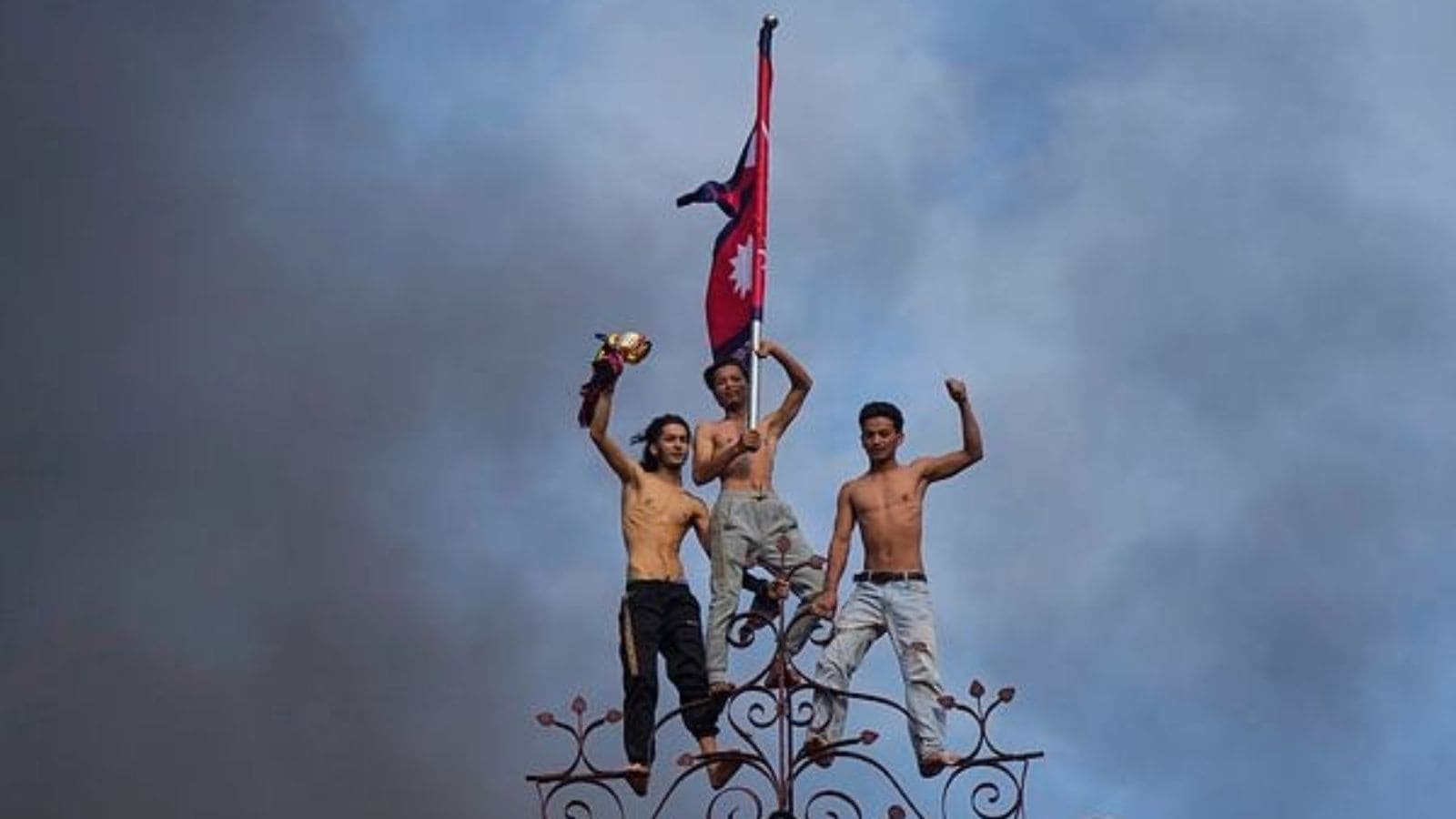
The Nepal General Election on March 5, 2026, functions as a high-stakes stress test for the country’s 2015 constitutional framework. Triggered by the September 2025 "Gen Z" uprising and the subsequent dissolution of the House of Representatives, this poll is not a scheduled transition but a forced re-equilibration. The primary driver is a profound collapse of trust in the "revolving door" leadership that has produced 31 prime ministers in 35 years. Success in this election will be measured by whether the nascent political energy of the youth can be codified into institutional power or if it will dissipate against the structural inertia of the mixed-member proportional representation system.
The Structural Mechanics of the 2026 Mandate
Nepal utilizes a dual-track electoral architecture designed to balance local accountability with national inclusivity. The 275 seats in the House of Representatives are divided into two distinct pools that dictate party strategy and coalition math.
- First-Past-The-Post (FPTP): 165 members are elected from single-member constituencies. This segment favors established party machinery and high-profile incumbents who possess deep localized networks.
- Proportional Representation (PR): 110 seats are allocated from a single nationwide constituency using the Webster method. A 3% threshold is required for seat eligibility. This track is the primary vehicle for smaller, reform-oriented parties and ensures the constitutional representation of marginalized groups, including Dalits, Janajatis, and Madhesis.
The "Gen Z" protests—which resulted in the resignation of K.P. Sharma Oli and the appointment of former Chief Justice Sushila Karki as interim Prime Minister—have fundamentally altered the voter pool. More than 800,000 new voters have registered, nearly two-thirds of whom belong to the Gen Z demographic. In a nation where 46% of the population is under 24, this cohort now holds the mathematical leverage to swing results in urban centers and key battleground constituencies.
High-Value Constituencies and Candidate Archetypes
The 2026 election features a clash between entrenched political capital and "outsider" disruption. Three specific constituencies serve as bellwethers for the national mood.
Jhapa-5: The Establishment vs. The Disruptor
The most critical tactical battleground is Jhapa-5, the traditional stronghold of K.P. Sharma Oli (CPN-UML). Oli faces a direct challenge from Balendra "Balen" Shah, the former Mayor of Kathmandu and current leader of the Rastriya Swatantra Party (RSP).
- The Conflict: Oli represents the legacy of the communist movement and centralized party discipline. Shah represents the technocratic, digital-native movement that emerged from the 2025 protests.
- The Demographic Variable: Approximately 40% of the 163,379 voters in this district are aged 18–40. A loss for Oli here would signal a definitive end to the "Big Three" party dominance (NC, CPN-UML, CPN-MC).
Sarlahi-4: The Leadership Pivot
Gagan Thapa, the newly elected president of the Nepali Congress, has shifted from Kathmandu-4 to Sarlahi-4 in the Madhesh province.
- Strategic Intent: Thapa is attempting to rebuild the Nepali Congress’s base in the southern plains, a region often alienated by the central government.
- Risk Profile: He faces Amresh Kumar Singh (RSP), a former Congress leader. Thapa’s performance is a proxy for whether the old guard can successfully internalize and brandish the "youth reform" narrative.
Rukum-1: The Insurgency Legacy
Pushpa Kamal Dahal "Prachanda" (Nepali Communist Party) has retreated to Rukum-1, a former Maoist stronghold. With 45% of the electorate under 40, Dahal is struggling to maintain relevance among a generation that views the 1996-2006 insurgency as a historical artifact rather than a badge of current legitimacy.
The Economic Cost Function of Political Instability
The 2025 uprising was not merely a reaction to social media bans; it was a response to a failing economic model. Analysts must view the election through the lens of three specific economic pressures:
- Human Capital Flight: Approximately 2,000 young Nepalis depart the country daily for foreign employment. This "brain drain" creates a dependency on remittances, which currently account for roughly 25% to 33% of the GDP.
- Digital Repression Scars: The 2025 protests were sparked by the shutdown of 26 social media platforms. The resulting economic disruption, including business closures and supply chain breaks, cost the economy an estimated Rs50 billion.
- The Employment Gap: Youth unemployment stands at 20.8%. The lack of domestic manufacturing or tech-sector growth has turned the "youth bulge" from a potential demographic dividend into a liability for state stability.
Voter Logistics and Integrity Metrics
The Election Commission of Nepal (ECN) has deployed a condensed "fast-track" schedule to transition from Karki’s interim administration.
- Polling Window: 7:00 a.m. to 5:00 p.m. at 23,112 polling centers.
- Observation: Approximately 4,500 observers from 37 national and 3 international organizations are monitoring the single-phase vote.
- Counting Latency: Due to manual counting and the complexity of two separate ballots, final PR results may take up to 30 days. FPTP results typically emerge within 48 to 72 hours.
The interim government’s ability to prevent violence is the primary metric for success. The September 2025 protests saw 76 deaths, including 19 in a single day. Security forces are under strict orders to adhere to crowd control protocols that were violated during the uprising.
Strategic Forecast: The Fragmented Coalition Trap
Despite the surge in new parties—126 are registered, the highest in Nepal’s history—the mixed electoral system is structurally predisposed toward a hung parliament.
The Rastriya Swatantra Party (RSP) is projected to make significant gains, potentially doubling its 2022 seat count. However, the path to the 138-seat majority remains obscured. The most likely outcome is a "hybrid coalition" where an established giant (Nepali Congress or CPN-UML) must partner with the RSP or regional Madhesi parties.
This creates a significant governance bottleneck: the RSP's platform is built on anti-corruption and systemic overhaul, which inherently conflicts with the patronage networks of the traditional parties. If the 2026 government fails to deliver on the "Gen Z" demands for accountability and job creation within the first 12 months, the country risks a return to extra-parliamentary activism. The election is less a conclusion to the 2025 crisis and more a relocation of the conflict from the streets of Kathmandu to the halls of Singha Durbar.
Monitor the Jhapa-5 and Sarlahi-4 results as early indicators. If both Oli and Thapa underperform their 2022 margins, the "youth wave" is not just a protest movement but a fundamental realignment of the Nepalese state.
Would you like me to analyze the specific seat-share projections for the Rastriya Swatantra Party (RSP) based on current urban vs. rural polling data?