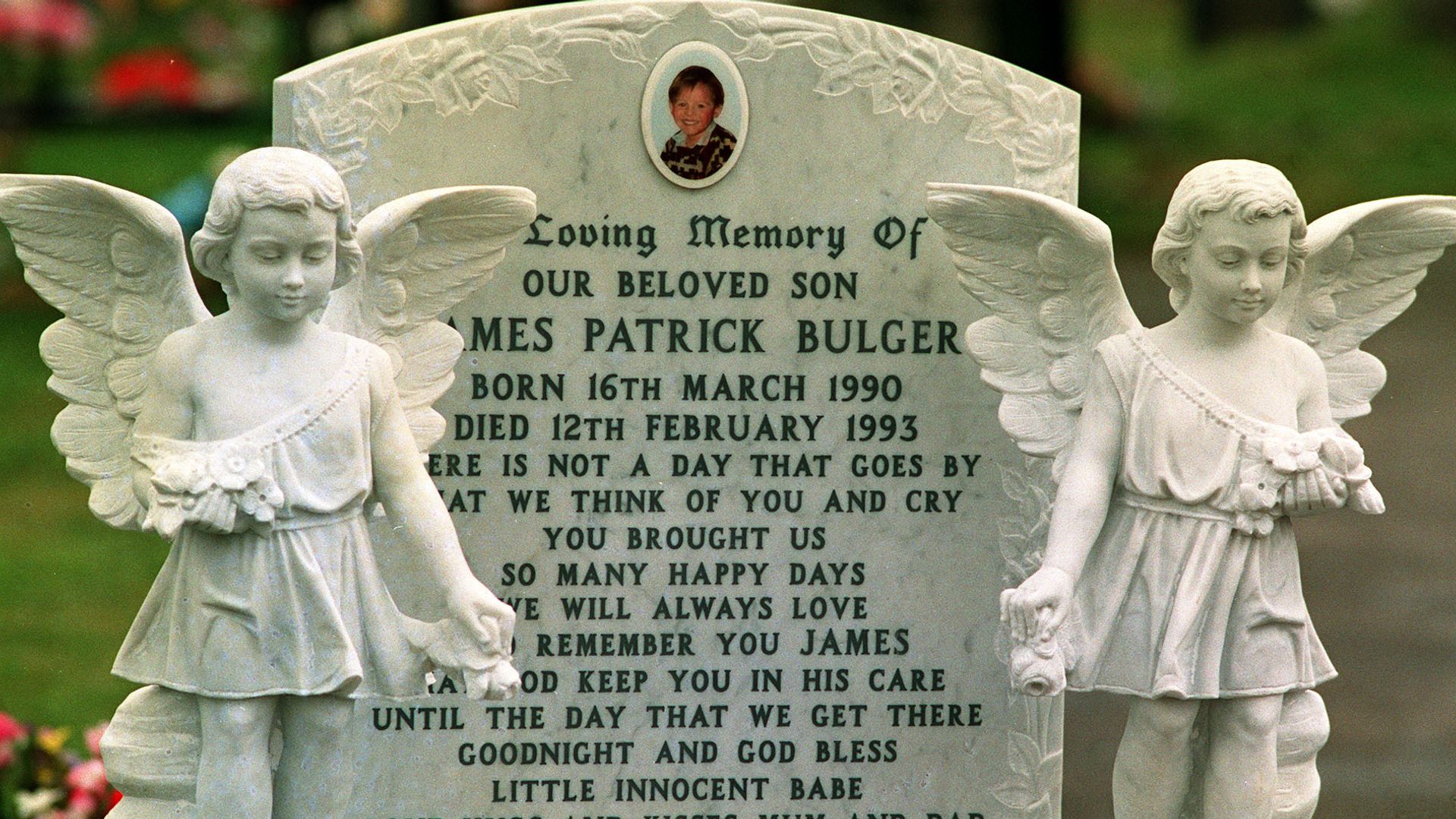
The air at Kirkdale Cemetery in Liverpool doesn't move like the air in the rest of the city. It is heavy, damp with the salt of the Mersey and the weight of thirty years of collective mourning. People walk here with their shoulders hunched, not against the wind, but against the memory of a crime that redefined the limits of human cruelty.
At the center of this silence lies a small plot of land. It belongs to James Bulger.
For three decades, this grave has been more than a final resting place. It is a shrine. It is a site of pilgrimage for those who still feel the phantom ache of 1993, the year two ten-year-old boys lured a toddler away from his mother at a shopping center and into the darkest pages of British history. To touch this grave is to touch a raw nerve in the national psyche.
So, when the news broke that a 78-year-old man had been arrested for the "targeted" vandalism of James's memorial, the shock wasn’t just about the act itself. It was about the age of the perpetrator and the sheer, inexplicable persistence of malice.
The Shadow in the Garden of Rest
Cemeteries operate on an unwritten contract of sanctity. We agree, as a society, that whatever battles we fight among the living, the dead are off-limits. Their names, etched in stone, are the last line of defense against being forgotten.
The vandalism wasn't a random act of teenage boredom. It wasn't a spray-painted tag or a knocked-over headstone from a drunken stumble. It was specific. It was repeated. It was a slow, methodical chipping away at the peace of a family that has already been hollowed out by loss.
Merseyside Police spent months investigating reports of damage at the site. Imagine the surveillance. Imagine the officers sitting in the dark, watching the monitor, waiting to see who would find it necessary to disturb the memory of a child who never got to grow up. They likely expected a monster. They likely expected a radical or a thrill-seeker.
They found a pensioner.
The Weight of Seventy-Eight Years
Age is supposed to bring a softening of the edges. We are taught to view our elders as the keepers of wisdom, the ones who have seen enough of life’s brutality to prize its remaining beauty. A 78-year-old man has lived through the height of the Cold War, the cultural revolutions of the sixties, and the entire lifespan of the boy whose grave he allegedly desecrated—twice over.
When the police finally made their move, arresting the man on suspicion of criminal damage, the neighborhood didn't erupt in cheers. It sank into a bewildered hush. There is something uniquely chilling about a crime committed by someone in the winter of their life against the memory of someone who died in his spring.
Consider the logistics of hate at that age. It requires a certain physical effort to travel to a cemetery, to locate a specific plot, and to commit an act of destruction. It isn't an impulse. It’s a mission. It suggests a grievance that has fermented for years, turning into something toxic and sharp.
The Invisible Stakes of a Memorial
To the casual observer, a headstone is just granite and gold leaf. But to Denise Fergus, James’s mother, that stone is the only part of her son she is allowed to groom, to clean, and to protect.
When a grave is vandalized, the crime isn't against the stone. It’s a secondary assault on the survivors. It tells them that their grief is not private. It tells them that the world hasn't finished hurting them.
The James Bulger case has always been a lightning rod for the worst parts of our nature. It sparked debates about the age of criminal responsibility, the nature of evil, and the efficacy of the justice system. But at its core, it was always about a mother who let go of a hand for one second and a boy who never came back.
The memorial was supposed to be the end of the story. The "Happily Ever After" of mourning, where the chaos of the trial and the media circus finally settled into a quiet, respectful memory. This arrest shatters that illusion. It reminds us that for some, the story never ends. The anger just changes shape.
The Mechanism of Malice
What drives a man with seven decades of history behind him to carry a grudge into a graveyard?
Psychologists often talk about "displacement." Sometimes, the world feels so uncontrollable and the passage of time so cruel that people lash out at symbols of innocence. They attack the things that others hold dear because it is the only way to feel a pulse of power in a life that is fading.
This isn't an excuse. It is a diagnosis of a specific kind of spiritual rot.
The police released the man on bail pending further inquiries. He returned to a quiet street, perhaps to a home filled with the mundane trappings of old age—pill organizers, old photographs, the hum of a television. Meanwhile, the Bulger family is left to look at the scratches on the stone and wonder why, after all this time, the world still refuses to let James sleep.
The Ripple Effect in the Community
Kirkdale isn't just a place for the dead; it’s a park for the living. Grandparents push strollers past the rows of crosses. Dog walkers pass by the floral tributes.
When a "targeted" attack happens here, the atmosphere changes. The security cameras feel more intrusive. The silence feels more suspicious. You start to look at the person on the next bench differently. You wonder what they are carrying in their pockets. You wonder what they are carrying in their hearts.
The arrest of a 78-year-old man forces us to confront the reality that there is no expiration date on bitterness. We like to think that we outgrow our darkest impulses, that the fire of youth eventually burns down into the embers of a peaceful old age. But for some, the fire just burns inward, charring everything until even a child's grave looks like a battlefield.
The Unbroken Circle of Protection
Despite the damage, the response from the public has been a tidal wave of restoration. People don't just leave flowers anymore; they leave a message. They stand guard in their own way, ensuring that for every scratch made by a bitter old man, there are a thousand hands ready to polish the stone back to a shine.
The police continue their work, weaving together the forensic trail and the witness statements. They are not just investigating criminal damage; they are investigating a breach of the social contract.
In the end, the stone will be repaired. The 78-year-old man will face the legal system. The cameras will continue to blink in the darkness of the cemetery.
But the image that remains isn't the vandal or the arrest. It is the image of a small, well-tended grave in Liverpool, standing as a stubborn defiant island of love in a world that, even after thirty years, sometimes forgets how to be kind.
The true weight of the crime isn't found in the cost of the repair. It’s found in the realization that even in the quietest corners of our lives, the shadows are always looking for a way back in.