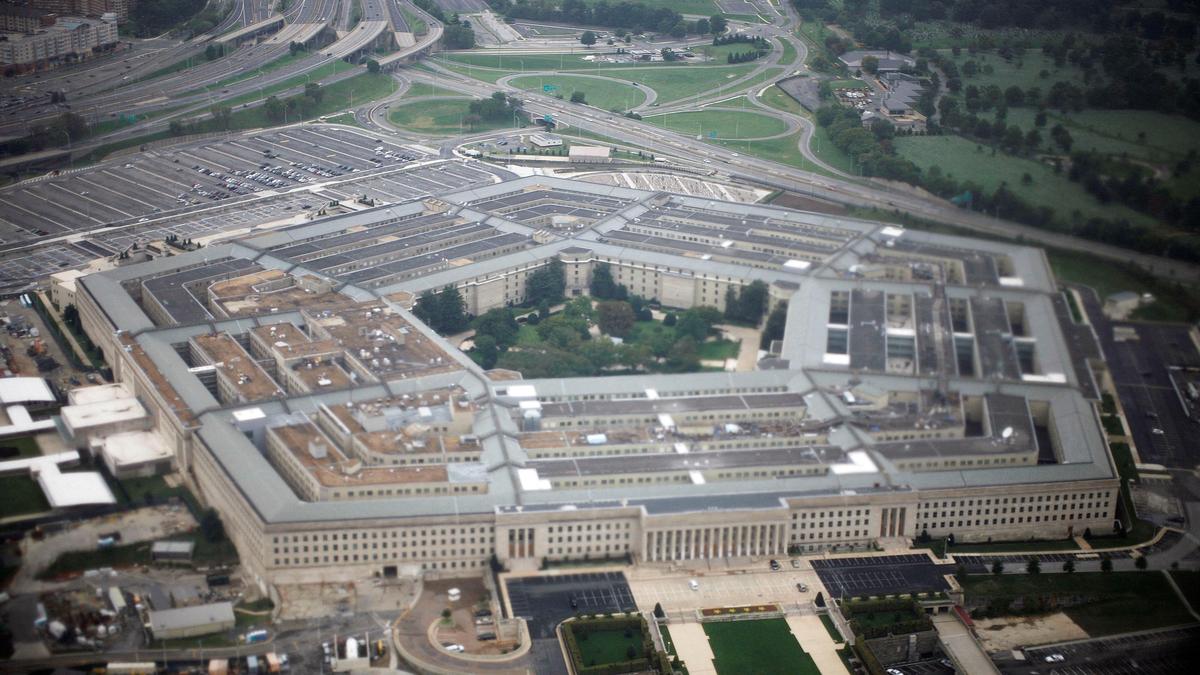
The legal confrontation between Anthropic and the Department of Defense (DoD) regarding the "Joint Warfighting Cloud Capability" or subsequent AI-specific procurement vehicles represents a systemic breakdown in the Defense Industrial Base’s ability to integrate non-traditional commercial technology. At its core, this is not merely a contract dispute; it is a friction point between the Sovereign Procurement Model, which prioritizes rigid compliance and established prime-contractor relationships, and the Iterative Scaling Model of Tier-1 AI labs.
To understand why a private entity valued in the billions would risk its relationship with the world's largest defense spender, one must quantify the structural barriers within the Federal Acquisition Regulation (FAR) and the specific "Other Transaction Authority" (OTA) mechanisms that often bypass the competitive transparency startups require to survive.
The Triad of Institutional Friction
The dispute hinges on three distinct structural failures that characterize the current state of military AI acquisition.
- Requirement Monoliths vs. Modular Composability: The Pentagon traditionally buys "platforms" (ships, tanks, proprietary software suites). Anthropic’s Claude models are "foundational utilities." When the DoD issues a solicitation that bundles infrastructure (compute) with the model layer and the application layer, it effectively creates a winner-take-all moat for legacy defense primes like Lockheed Martin or General Dynamics. Anthropic’s legal challenge suggests that these bundled requirements are anti-competitive by design, preventing "best-of-breed" selection.
- Data Sovereignty and Model Weights: A primary point of contention in any defense-AI contract is the treatment of Intellectual Property (IP). The DoD often seeks "unlimited rights" to software developed under government funding. For an AI lab, surrendering the underlying weights or the specific fine-tuning methodologies of a Large Language Model (LLM) is an existential threat to their commercial valuation. The litigation serves as a defensive wall to establish a precedent for "restricted rights" in high-compute commercial off-the-shelf (COTS) software.
- The OTA Loophole: The use of Other Transaction Authorities allows the Pentagon to move faster than standard FAR-based contracts. However, it also reduces the ability for bypassed competitors to file formal protests through the Government Accountability Office (GAO). By taking the fight to federal court, Anthropic is attempting to close the "discretionary gap" where the DoD can hand-select winners under the guise of "prototyping" without a transparent competitive baseline.
The Economics of the Protest: A Risk-Adjusted Calculation
A company does not sue the Pentagon for brand awareness. The decision is a calculated move based on the Opportunity Cost of Exclusion.
The "winner-takes-most" nature of cloud and AI infrastructure means that if a competitor—likely OpenAI or a consolidated prime like Microsoft—secures the foundational layer of the Pentagon’s AI stack, the switching costs for the government become insurmountable. The "stickiness" of the integrated data environment (the "Data Gravity" effect) means that being excluded from the initial $500M or $1B tranche effectively excludes Anthropic from the next decade of downstream applications.
The cost function of the lawsuit includes:
- Legal Spend: High, but negligible compared to the contract value.
- Relationship Degradation: Significant. The "incumbency bias" in D.C. favors players who don't rock the boat.
- Strategic Precedent: This is the primary driver. If Anthropic wins or forces a settlement, they establish a "Right to Compete" for all future AI-centric RFPs (Request for Proposals).
The Technical Bottleneck: Interoperability vs. Security
The Pentagon’s counter-argument often rests on the necessity of "Integrated Security." They argue that mixing and matching different AI providers (e.g., Claude for reasoning, a different model for coding, another for tactical edge processing) creates too many attack vectors.
This creates a logical fallacy in procurement:
- The Security Premise: A single-vendor solution is easier to harden and monitor (The "Single Throat to Choke" strategy).
- The Innovation Reality: A single-vendor solution leads to Model Collapse or Stagnation, where the government is tied to the rate of improvement of one specific company rather than the frontier of the entire industry.
Anthropic is positioned to argue that the "Security" justification is being used as a shield to hide "Preference for Incumbency." If Claude 3.5 or its successors outperform the models provided by the incumbent cloud provider, the DoD is technically violating its mandate to maintain "Technical Superiority" by opting for an inferior, bundled product.
The Jurisdictional Weaponization of "Fairness"
In federal procurement law, the "Rule of Two" and "Full and Open Competition" are the pillars of the Competition in Contracting Act (CICA). Anthropic’s legal team is likely targeting the Evaluation Criteria used in the Pentagon’s row.
Specifically, they must prove one of the following:
- Prejudicial Bias: The solicitation was written with "shadow requirements" that only one specific vendor could meet (e.g., requiring a specific hardware integration that the incumbent already owns).
- Lack of Rational Basis: The DoD’s decision to exclude certain vendors or use a specific non-competitive vehicle lacks a logical connection to the mission's technical requirements.
- Arbitrary and Capricious Action: The agency ignored its own internal evaluation metrics to reach a predetermined outcome.
The difficulty for Anthropic lies in the "National Security" exception. Courts are notoriously hesitant to second-guess the Pentagon when a general states that a specific procurement path is vital for "rapid deployment against peer-state adversaries."
Operational Consequences of a Prolonged Litigation
The immediate result of this litigation is Speed Decay. While the court deliberates, the "Stay of Performance" (if granted) freezes the deployment of AI tools to the warfighter.
- Impact on the Technical Roadmap: Engineers at the Defense Innovation Unit (DIU) and the Chief Digital and Artificial Intelligence Office (CDAO) are forced to pause integration pipelines.
- The Talent Drain: Top-tier AI researchers joined labs like Anthropic to solve the hardest alignment and reasoning problems. If those problems are locked behind a three-year court battle, the "Mission Driven" incentive for these labs to work with the government evaporates, pushing them back toward purely commercial/consumer products.
The Strategic Play: Forcing the "Open Architecture" Mandate
Anthropic’s end-state goal is likely not the total reversal of a specific contract, but the imposition of an Open Architecture Requirement on all future Pentagon AI spending. By challenging the current "walled garden" approach, they are lobbying for a future where:
- API-Agnostic Frontends: The DoD must use an interface that can call Claude, GPT, or Llama interchangeably.
- Decoupled Compute and Intelligence: The government buys the "compute" (chips/cloud) separately from the "intelligence" (the models).
- Continuous Competition: Instead of 10-year contracts, the DoD must move to "Compute-Hour" or "Token-Based" procurement, allowing them to swap the underlying model as the state-of-the-art evolves.
The Pentagon must now decide if it will defend its legacy "Prime Contractor" model at the cost of excluding the world's most advanced reasoning engines, or if it will evolve its procurement logic to mirror the modularity of the 21st-century software economy. Anthropic is betting that the court will find the current model not just antiquated, but legally indefensible.
The optimal move for the Department of Defense is to settle by creating a parallel "Foundational Model Sandbox" that grants Anthropic and other non-incumbents a direct path to production-grade accreditation (IL5/IL6) outside of the bundled prime contracts. This avoids the risk of a judicial precedent that could dismantle the OTA system entirely, while simultaneously solving the "Technological Stagnation" risk of being tethered to a single provider. Failure to provide this path will result in a fragmented defense AI ecosystem where the most capable models remain strictly in the civilian domain, widening the gap between commercial capability and military application.