The $10 million embezzlement of funds from a Salomon Brothers partner by a personal assistant is not a failure of character, but a failure of institutional architecture. When a trusted agent bypasses internal controls over an extended period—in this case, nearly six years—the breakdown occurs at the intersection of administrative autonomy and the erosion of transactional friction. High-Net-Worth (HNW) individuals often prioritize convenience over compliance, creating a "trust vacuum" that sophisticated internal actors can exploit with clinical precision.
This case study reveals the mechanics of how a single point of failure within a private household or family office can liquidate significant assets through incrementalism and the strategic manipulation of bank-client communication loops.
The Triad of Insider Malfeasance
The theft of approximately $10.9 million from the victims highlights three structural deficits that define modern white-collar embezzlement: the centralization of authority, the absence of independent verification, and the exploitation of emotional proximity.
Centralization of Authority
The perpetrator, Melissa Arstark, held unilateral power over the victims' financial logistics. In high-stakes wealth management, the "Assistant Bottleneck" occurs when a single individual manages the intake of physical mail, the digital login credentials for brokerage accounts, and the direct communication with bankers. By centralizing these functions, the assistant becomes the sole filter for information.
The mechanism of the fraud relied on:
- Intercepted Reporting: Diverting bank statements and tax notices before the principals could review them.
- Forged Authorization: Utilizing the partner’s signature or digital credentials to initiate wire transfers and checks.
- Liquidity Exploitation: Targeting cash-heavy accounts or lines of credit where sudden outflows might not trigger the same scrutiny as the sale of illiquid securities.
The Erosion of Transactional Friction
Financial institutions rely on multi-factor authentication and confirmation calls to prevent fraud. However, these systems assume the contact information on file belongs to the principal. By updating contact records to her own devices or managing the partner's secondary email accounts, the assistant effectively became the "voice" of the client. This bypasses the most critical security layer in private banking: the direct confirmation between the institution and the asset owner.
Quantifying the Cost of Incrementalism
The $10.9 million loss was not the result of a single catastrophic event, but rather a series of approximately 350 unauthorized transactions. This strategy, known as "salami slicing," leverages the scale of a victim's lifestyle to hide illicit activity. In an estate where monthly outflows reach six figures, a $30,000 unauthorized wire transfer can easily be categorized as a standard operating expense or a vendor payment.
The Mechanics of the "Burn Rate" Defense
Embezzlers operating within HNW environments utilize the victim's "burn rate"—the total monthly cash outflow—as a statistical shield. If the total monthly expenses fluctuate naturally by 15% due to travel, art acquisitions, or property maintenance, the perpetrator can embed their theft within that 15% margin of error. The fraud remains undetected until the cumulative total exceeds the available liquidity or triggers a tax audit.
The $10 million figure represents more than just lost capital; it represents:
- The Opportunity Cost of Capital: Assuming a conservative 7% annual return, the $10.9 million stolen over six years represents a total loss of utility exceeding $15 million in projected net worth.
- The Compliance Burden: The cost of forensic accounting, legal fees, and the subsequent overhaul of personal security infrastructure.
- Tax Liability Risk: Unauthorized distributions often trigger unintended tax events or penalties if they are falsely classified as business expenses or deductible gifts.
The Failure of External Audits and Institutional Blindness
The fact that this fraud persisted for years points to a systemic failure in the "Third-Party Oversight" model. Banks and wealth managers often defer to the personal assistant as a proxy for the client to provide "concierge-level service." This cultural bias toward high-touch service creates a vulnerability where the banker becomes an unwitting accomplice to the fraudster.
The Conflict of Interest in Concierge Banking
Private bankers are incentivized to maintain a frictionless relationship with the client. If an assistant makes a request, the banker may hesitate to "bother" the principal with a confirmation call for fear of appearing inefficient or bureaucratic. This creates a psychological loophole. The perpetrator in the Salomon Brothers partner case exploited this by presenting themselves as the indispensable gatekeeper, effectively training the bank to communicate only through her.
The Missing Reconciliation Loop
Standard corporate governance requires the separation of duties. In a private household, these roles are often collapsed. The person who initiates the payment must not be the same person who reconciles the bank statement. Without this separation, the reconciliation process is a theater of compliance where the perpetrator merely confirms their own fraudulent entries.
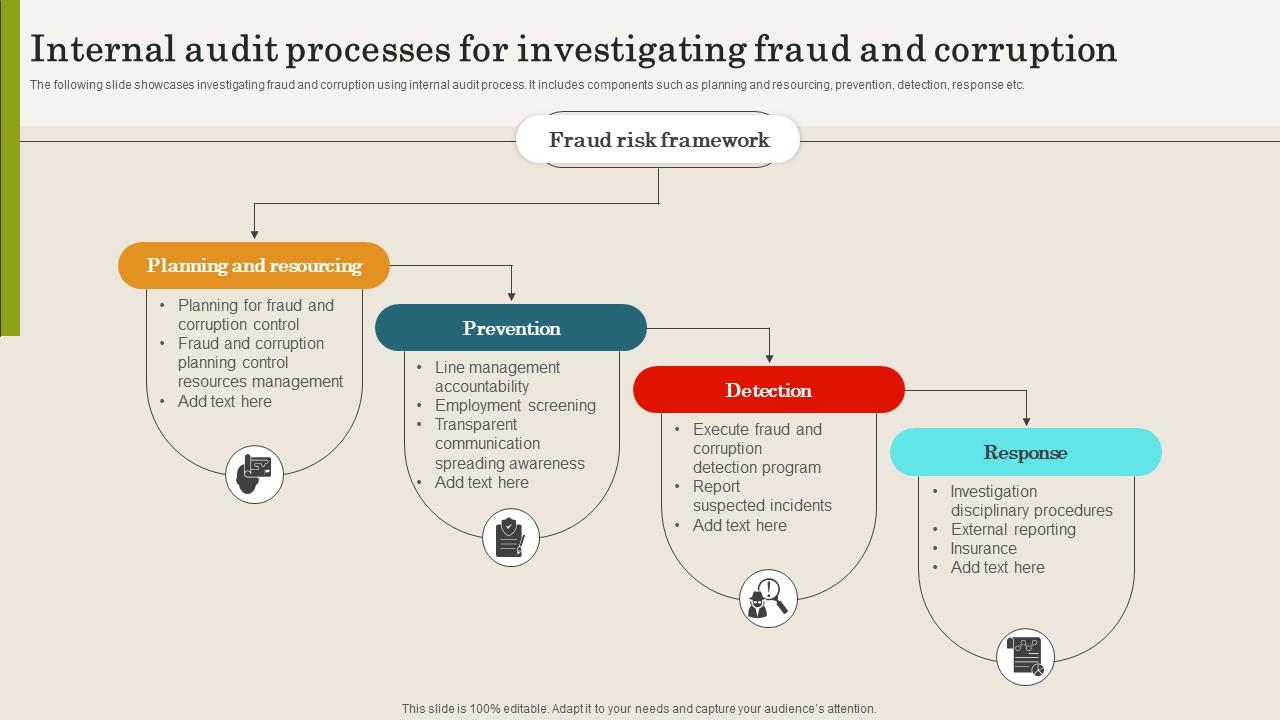
Risk Mitigation Framework for Private Wealth
Eliminating internal fraud requires shifting from a trust-based model to a systems-based model. The objective is not to eliminate the personal assistant role, but to decouple administrative tasks from executive financial authority.
Implementation of the Dual-Control Protocol
Every HNW individual or family office must implement a Dual-Control Protocol (DCP). This framework dictates that no single individual can initiate and finalize a capital movement exceeding a predefined threshold (e.g., $5,000).
- Independent Statement Delivery: Financial statements must be sent to a secure, independent address or a third-party CPA firm that does not report to the personal assistant.
- Hard-Coded Communication Channels: Financial institutions must be instructed, via a formal letter of instruction, that certain transactions (wires, new accounts, address changes) require a voice-authenticated "Call Back" to a specific, non-delegated number.
- Forensic Spot-Checks: Conduct quarterly "micro-audits" where a random sample of five expenditures is traced back to an original invoice and a verified vendor.
Identifying the Behavioral Red Flags
While the Salomon Brothers partner case is a legal and financial matter, the behavioral indicators are often visible long before the first million is missing.
- Resistance to Cross-Training: A refusal to let others handle financial tasks or take vacations is a primary indicator of "maintenance fraud," where the perpetrator must be present to intercept mail or answer calls.
- Unexplained Wealth Disparity: Sudden lifestyle changes in staff that do not align with their known salary are the most common external signal of embezzlement.
- Territoriality Over Communication: If an assistant becomes an aggressive gatekeeper between the principal and their professional advisors (lawyers, CPAs, bankers), the integrity of the information flow is compromised.
The Strategic Shift to Institutionalized Governance
The resolution of the Arstark case—a guilty plea and potential 20-year sentence—serves as a punitive measure, but it does not recover the lost decade of compounded growth or the psychological security of the victims. For HNW individuals, the transition from a "Household Staff" model to a "Virtual Family Office" (VFO) model is the only viable defense against sophisticated insider threats.
A VFO distributes duties across multiple, unaffiliated firms. A bill-pay service handles the accounts payable, a CPA handles the reconciliation, and a wealth manager handles the assets. By fragmenting the financial workflow, you create a system where collusion is required to commit fraud, significantly raising the barrier to entry for a lone perpetrator.
The ultimate takeaway for the HNW community is that trust is a feeling, but security is a process. The moment an individual feels they "don't need to check" because their staff is like family is the exact moment the structural risk reaches its zenith. To protect $10 million, one must be willing to spend 10 minutes a month verifying the friction points.