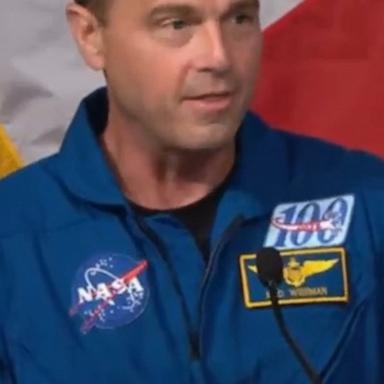
The advice currently flowing from the Artemis II crew—Reid Wiseman, Victor Glover, Christina Koch, and Jeremy Hansen—is polished, inspiring, and largely incomplete. As they prepare to loop around the Moon, their message to the next generation focuses on the virtues of teamwork, persistence, and STEM proficiency. While these sentiments make for excellent press junkets, they obscure a harder truth about the current state of aerospace. The path to the stars is no longer a linear climb through military flight schools or engineering labs. It is a volatile, high-stakes gamble dictated by private capital, geopolitical tension, and a rapidly narrowing window of physical eligibility.
For a young person looking at the Artemis II mission, the "dream" is being sold as a meritocracy. The reality is far more transactional. To actually get a seat on a spacecraft in the 2030s and beyond, grit is merely the entry fee. The industry is shifting from government-led exploration to a commercial frontier where the rules of engagement are being rewritten by billionaires and defense contractors. If you liked this post, you might want to read: this related article.
The Myth of the Generalist Astronaut
For decades, the NASA astronaut corps looked for the "Renaissance Man" or Woman. They wanted pilots who could also perform surgery or geologists who could fix a nuclear reactor. Artemis II represents perhaps the last gasp of this archetype. When you look at the crew, you see a traditional lineup of decorated military veterans and seasoned researchers.
However, the industry is moving toward hyper-specialization. The rise of private stations like those planned by Axiom Space or Blue Origin means that future "astronauts" will likely be employees with specific, narrow mandates. We are seeing the birth of the space-faring blue-collar worker. For another look on this development, see the latest update from Mashable.
This isn't a romantic notion. It’s a logistical one.
The cost to train a generalist is astronomical. Private entities would rather fly a technician who knows one specific life-support system inside and out than a pilot who has a passing familiarity with everything. Aspiring astronauts need to stop trying to be "well-rounded" and start becoming indispensable in a single, niche field like orbital manufacturing, closed-loop ecology, or remote robotics.
The Physical Gatekeepers are Not Moving
We often hear that space is becoming "accessible." That is a half-truth. While the price of a launch is dropping thanks to reusable rocketry, the biological toll of leaving the gravity well remains unchanged.
The Artemis II crew undergoes grueling physical conditioning, but they are also genetic outliers. We don't talk enough about the "genetic lottery" aspect of spaceflight. If your bone density is slightly below average or if your cardiovascular system reacts poorly to fluid shifts, no amount of "hard work" will get you past the flight surgeon.
Radiation and the Deep Space Reality
Low Earth Orbit (LEO), where the International Space Station sits, is a protected cocoon. The Earth’s magnetic field shields those astronauts from the worst of solar flares and cosmic rays. Artemis II is going beyond that shield.
The advice given to kids rarely mentions the permanent biological damage associated with deep space travel. To be an astronaut in the lunar era is to accept a statistically significant increase in the lifetime risk of cancer and degenerative tissue issues. When the crew tells students to "follow their dreams," they are omitting the part where those dreams might require sacrificing a decade of life expectancy.
The Geopolitical Chessboard Overrides Talent
You could be the most qualified engineer on the planet, but if you weren't born in a country with a specific memorandum of understanding with NASA or the CNSA (China National Space Administration), your chances are effectively zero.
Space is not a global commons. It is a series of walled gardens.
Jeremy Hansen’s presence on the Artemis II crew is a perfect example. Is he brilliant? Undeniably. But his seat exists because of a strategic deal between the United States and Canada regarding the contribution of the Canadarm3. Astronaut selection is as much about international trade agreements and defense treaties as it is about individual capability. Young aspirants in non-spacefaring nations face a wall that "passion" cannot climb. They must either migrate or hope their government buys a seat.
The Private Sector Pivot
If NASA is the prestigious university, SpaceX and its contemporaries are the aggressive startups. The culture is different, and the "advice" for getting in is different.
In the private sector, the "Right Stuff" has been replaced by "Speed of Innovation." These companies value a certain brand of reckless brilliance that traditional government agencies often filter out. If you want to go to the Moon, you might be better off learning how to write code for autonomous docking systems in a garage than joining the Air Force.
The industry is currently split into two distinct paths:
- The NASA Path: High prestige, low frequency, extreme bureaucracy, and a focus on safety above all else.
- The Commercial Path: High risk, high frequency, mission-specific, and driven by a "move fast and break things" ethos.
Aspiring astronauts must choose their path early. You cannot easily pivot from the chaotic, iterative environment of a private rocket lab to the rigid, checklist-driven world of government flight operations.
The Technical Debt of the Lunar Ambition
We are heading back to the Moon using technology that is, in many ways, a Frankenstein’s monster of Cold War legacies and modern sensors. The SLS (Space Launch System) is a collection of Shuttle-era parts pushed to their limit. This creates a precarious environment for the Artemis II crew.
The "advice" for the youth should include a sobering lesson in technical debt. To succeed in this industry, one must understand how to manage aging systems while integrating new ones. The most valuable skill in the 2030s won't be flying a ship—it will be systems integration. It will be the ability to make 40-year-old hardware talk to a quantum computer.
The Psychology of Isolation
Living on the Moon or orbiting it isn't like a stay on the ISS. On the ISS, you can see home. It’s right there, a massive blue marble filling the window. You can see the lights of cities.
On a lunar mission, Earth becomes a small, fragile marble that you can hide behind your thumb.
The psychological profile required for this is different. We are moving away from the "extroverted leader" model to something more akin to a submariner. The advice to "work well with others" is a massive understatement. You need the ability to remain functional while experiencing a level of isolation that no human in history, save for a few dozen men in the 60s and 70s, has ever felt.
We are seeing a rise in interest in "behavioral health" for long-duration missions, but the reality is that we are guessing. We don't actually know what happens to the human psyche when it is cut off from the planetary cradle for months or years at a time.
Follow the Money Not the Stars
If you want to know where the seats on Artemis III, IV, and V are going, look at the budget appropriations. The aerospace industry is currently being propped up by a mix of "prestige spending" and the "space economy" hype.
There is a real risk of a "Space Bubble."
If the Artemis missions don't find a way to make the Moon economically viable—whether through Helium-3 mining (which is decades away) or as a refueling station—the funding will dry up. The next generation of astronauts might find themselves trained for a mission that has been canceled by a new administration or a market crash.
True "career advice" for a 15-year-old today is to diversify. Don't just be an astronaut candidate; be a mining engineer who understands orbital mechanics. Be a doctor who specializes in low-gravity pharmacology. Ensure you have a career that exists on Earth, because the window to leave it is small, expensive, and politically fragile.
The Illusion of Choice
The Artemis II crew speaks of a future where many will go. In reality, the "many" will likely be a few dozen elite individuals for the next twenty years. The bottleneck isn't talent; it’s the cost of life support.
Every gram of oxygen, every drop of water, and every calorie of food sent to the Moon is a logistical nightmare. Until we can "live off the land" (In-Situ Resource Utilization), the number of people in space will remain artificially capped.
Young people should be focused on the chemistry of lunar regolith and the physics of water extraction from shadowed craters. That is the only way the "advice" given by the current crew becomes a reality for more than a handful of people.
Stop looking at the astronauts in their clean flight suits. Look at the people in the dirty labs trying to figure out how to bake bricks out of Moon dust. Those are the people who will actually determine if the next generation ever leaves the ground.
Identify a bottleneck in the supply chain of human survival in a vacuum. Solve it. That is the only resume that will matter when the private stations start hiring their first hundred inhabitants.


 (1).webp)
