The Distance Record Is A PR Stunt Not A Milestone
The space industry is currently obsessed with a number: 400,171 kilometers. That is the distance Apollo 13 reached from Earth in 1970, a record born of a life-threatening malfunction. Now, NASA is positioning Artemis II to edge past that mark by a few hundred kilometers. The media is eating it up. They shouldn't.
Focusing on "farthest distance traveled by humans" is a vanity metric that masks the actual technical stagnation we are witnessing. If we wanted to break distance records, we could have sent a capsule into deep space decades ago. We didn't, because distance without utility is just expensive sightseeing. The Apollo 13 record wasn't an achievement; it was a trajectory correction designed to keep three men from suffocating in a dead spacecraft. Using it as a benchmark for "progress" in 2026 is like a marathon runner bragging that they finally walked further than their grandfather did when he was lost in the woods. For a more detailed analysis into similar topics, we recommend: this related article.
We are watching a multi-billion-dollar mission get reduced to a Guinness World Record attempt. This isn't how we build a multi-planetary civilization. It’s how we justify a budget to a public that has been conditioned to value superlatives over substance.
The Orion Heat Shield Problem Everyone Is Ignoring
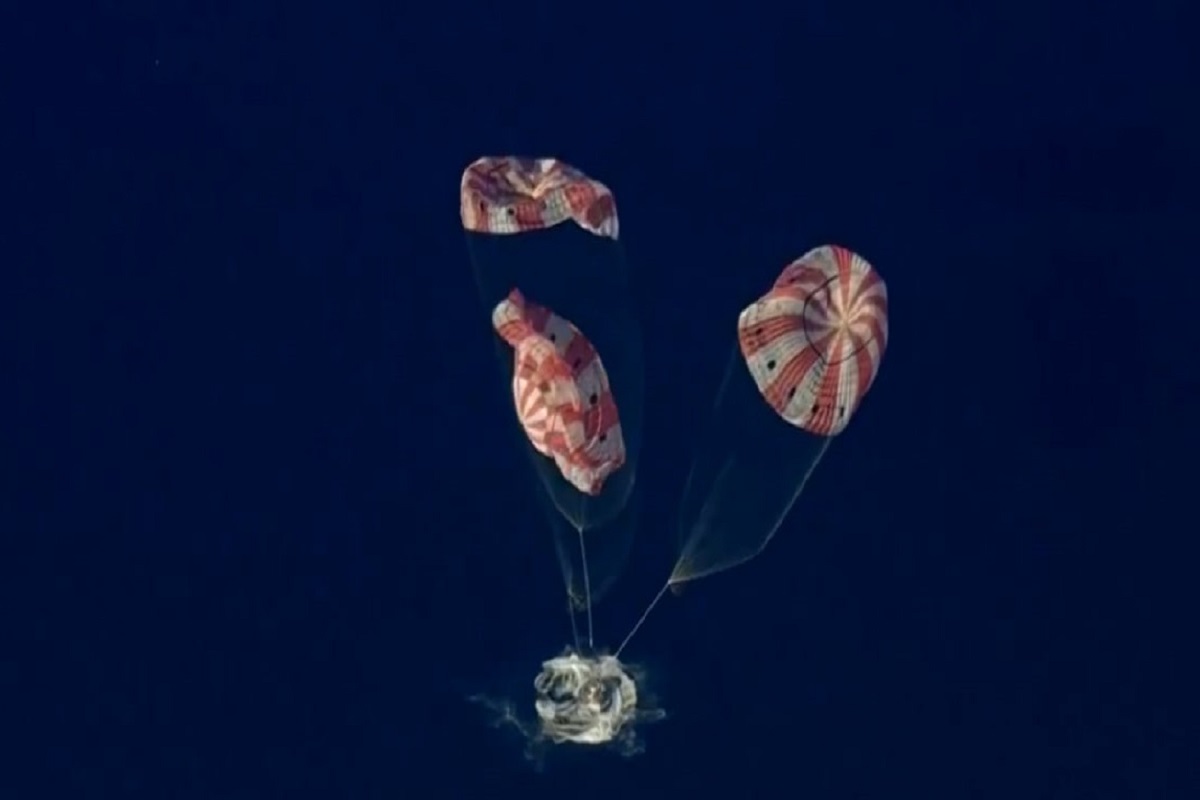
While the headlines scream about distance, the real story is buried in the heat shield data. During the Artemis I uncrewed flight, the Avcoat material on the Orion capsule didn't char the way engineers predicted. It skipped. Pieces of the shield broke off in a way that wasn't seen in computer modeling or wind tunnel testing. To get more context on this development, comprehensive analysis can also be found at The Next Web.
NASA has spent the last year "investigating" this. The official line is that the crew is safe, but the decision to proceed with Artemis II without a fundamental redesign of the thermal protection system is a calculated risk that smells of political pressure. We are prioritizing a schedule—and a record-breaking flyby—over the rigorous hardware iteration that defined the early days of Mercury and Gemini.
In the 1960s, if a heat shield behaved unexpectedly, you didn't just cross your fingers and put humans on the next one to beat a distance record. You tore the thing apart. Today, we have "risk posture" meetings where we convince ourselves that "good enough" is acceptable because the optics of a delay are worse than the possibility of a catastrophic re-entry failure.
The Physics Of Re-entry Is Not A Marketing Brief
When Orion hits the atmosphere coming back from its lunar "record-breaker," it will be traveling at roughly $11,000$ meters per second. At those velocities, the kinetic energy converts into plasma at temperatures exceeding $2,700$°C.
$$Q = \frac{1}{2}mv^2$$
The math doesn't care about your PR strategy. If the charring isn't uniform, you get localized hot spots. If you get hot spots, you get structural compromise. The focus should be on the $11$ kilometers per second, not the $400,000$ kilometers away.
The Free Return Trajectory Is A Safety Net Not An Exploration
The competitor articles love to describe the "Lunar Flyby" as a daring leap. It’s actually a "free-return trajectory." This means the spacecraft uses the Moon’s gravity to slingshot back to Earth without needing to fire its main engine to get home.
It is the most conservative mission profile possible.
Calling Artemis II a "Moon Mission" is technically true but intellectually dishonest. They aren't going into orbit. They aren't landing. They are throwing a ball around a pole and catching it on the way back.
- Apollo 8 did 10 orbits of the Moon.
- Artemis II will do zero.
We are doing less with more. The SLS (Space Launch System) costs roughly $2$ billion per launch. To spend that much money on a mission that doesn't even attempt lunar orbit is a staggering admission of lack of confidence in the hardware. We are treating the most powerful rocket ever built like a delicate antique.
Stop Asking If We Are Going Back To The Moon
The popular question is: "When will we see boots on the ground?"
The honest answer is: "Not until we stop building rockets like it’s 1965."
The SLS is a "Franken-rocket." It uses RS-25 engines from the Space Shuttle era—engines designed to be refurbished and reused—and throws them into the bottom of the ocean. It’s an exercise in industrial-era waste. While SpaceX and Blue Origin are arguing over how to land boosters on moving ships, NASA is still using expendable boosters that cost more than the GDP of small nations.
The Artemis II crew—Reid Wiseman, Victor Glover, Christina Koch, and Jeremy Hansen—are world-class pilots and scientists. They deserve a mission that pushes the envelope of human capability, not a mission that serves as a high-altitude photo op to prove the SLS can move a capsule.
Why The Lunar Gateway Is A Speed Bump
Beyond Artemis II, the plan involves the Lunar Gateway—a small station in orbit around the Moon. Proponents claim it’s a staging ground. In reality, it’s a toll booth.
Every kilogram of fuel spent stopping at a gateway is a kilogram of fuel you can't use to land on the surface or go to Mars. It adds complexity, risk, and cost without providing a clear tactical advantage for a landing. If the goal is a permanent base, you go to the surface. You don't hang out in a high-radiation halo orbit waiting for a connecting flight.
The High Cost Of Risk Aversion
I have talked to engineers who worked on the Apollo program. They are horrified by our modern timeline. We have better computers in our pockets than they had in their entire mission control center, yet it is taking us longer to repeat a mission we already did than it took them to invent it from scratch.
This is the "Safety-Industrial Complex." We have become so afraid of failure that we have engineered out the possibility of rapid progress. We spend five years on a "lessons learned" report for a minor sensor glitch.
If we want to actually break records that matter, we should be looking at:
- In-situ resource utilization (ISRU): Turning lunar regolith into oxygen and fuel.
- Nuclear Thermal Propulsion: Cutting the trip to Mars from months to weeks.
- Autonomous Lunar Manufacturing: Building bases without shipping every brick from Florida.
Artemis II does none of these. It carries four people on a loop. It’s a victory lap before the race has even started.
The Real People Also Ask Answers
Is Artemis II safe?
It is as safe as a high-stakes gamble on a 50-year-old heat shield design can be. The risk isn't the distance; it’s the lack of iterative testing.
Why is it taking so long?
Because we are using 20th-century procurement methods to build 21st-century dreams. Every component is built in a different congressional district to ensure political survival, not engineering efficiency.
Is it worth the money?
Only if we view it as a very expensive "Hello World" program for a rocket that should have been flying ten years ago. If we don't follow this up with immediate, risky surface missions, the money is wasted.
Stop Applauding The Minimum Viable Product
We need to demand more than "records" that are based on orbital mechanics and bad luck from 50 years ago. Artemis II is a necessary step, but let’s stop pretending it’s a giant leap. It’s a baby step, taken by a giant that has forgotten how to run.
The distance to the Moon is $384,400$ kilometers. The distance from our current bureaucratic stagnation to actual exploration is much, much further.
Quit celebrating the flyby. Start demanding the landing.