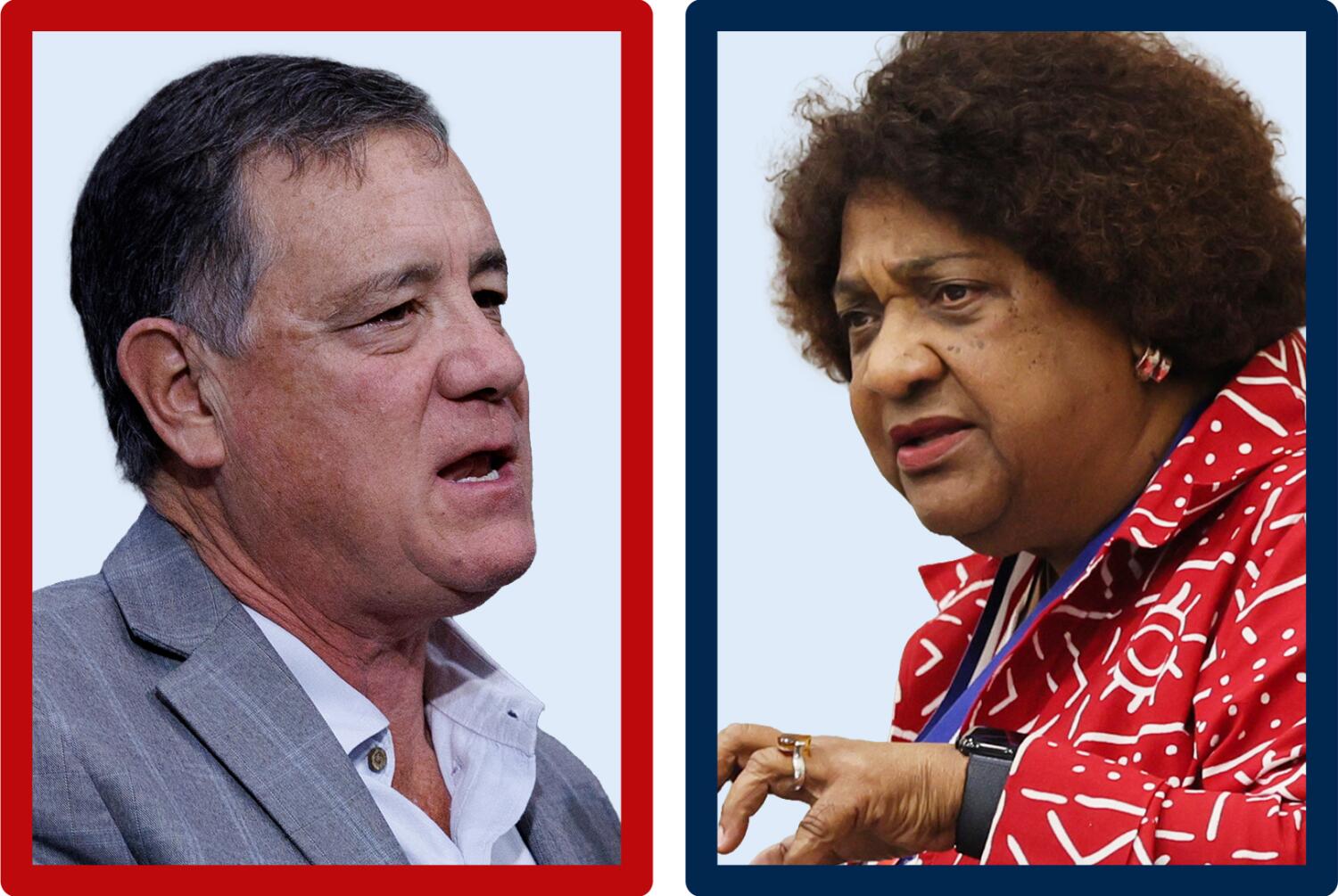
California is currently the site of a fundamental collision between two irreconcilable visions of American democracy. On one side stands Shirley Weber, the incumbent Democrat and first Black Secretary of State in California's history, who views the expansion of the franchise as a moral and historical imperative. On the other is Don Wagner, an Orange County Supervisor and Republican veteran who argues that the state’s current system is so porous and slow that it has effectively broken public trust. This isn't a mere administrative shuffle; it is a high-stakes fight over how—and if—California will continue its experiment with universal mail-in voting.
The Long Count and the Credibility Gap
The most glaring vulnerability in Weber’s tenure is the calendar. California is notorious for a ballot-counting process that drags on for weeks. It is a system where legislative winners are often decided long after their peers in other states have already been sworn into office. This delay provides fertile ground for skepticism. When it takes thirty days to certify an election, the vacuum of information is inevitably filled by conspiracy theories and doubt.
Wagner has centered his campaign on this specific failure. He points to the 2024 cycles where close races remained in limbo for a month as evidence of administrative lethality. His argument is straightforward: speed is a component of security. If the state cannot produce a result in a reasonable timeframe, the legitimacy of the outcome is compromised before the first audit even begins.
Weber counters that accuracy is the only metric that matters. She views the thirty-day window as a necessary protection, a buffer that ensures every last ballot from a rural outpost or a military base is accounted for. For her, the push for speed is a Trojan horse for disenfranchisement. She argues that the pressure to call races early disproportionately affects the very communities she has spent her career trying to bring into the fold.
The Voter ID Initiative and the Bully Pulpit
The race took a sharp turn in April 2026 when a GOP-backed voter ID initiative officially qualified for the November ballot. This measure would amend the state constitution to require government-issued identification at the polls and personal data—like the last four digits of a Social Security number—on the outside of mail-in envelopes.
This initiative has become the proxy war for the Secretary of State seat. Wagner, while distancing himself from the "stolen election" rhetoric of the national GOP, fully embraces the measure. He frames it as a "common sense" restoration of integrity. He knows that as Secretary of State, he would lack the power to unilaterally change the law in a state controlled by a Democratic supermajority. However, he plans to use the office as a bully pulpit to bypass the legislature and talk directly to a frustrated electorate.
Weber has already begun the counter-offensive. She recently fended off a Department of Justice inquiry into voter registration data and has labeled the new ID initiative as "anti-voting." Her office argues that the measure would create a "privacy nightmare" by exposing sensitive data on the exterior of envelopes. To Weber, this is not about security; it is about building a wall around the ballot box.
Two Decades of One-Party Rule
To understand why Wagner’s long-shot bid matters, you have to look at the math of California politics. No Republican has won a statewide race here since 2006. The GOP brand is so toxic in the urban centers of Los Angeles and the Bay Area that a Republican candidate often starts with a 20-point deficit.
Yet, the Secretary of State’s office is different. It is the one role where "competence" can occasionally trump "ideology" in the minds of moderate voters. If Wagner can convince the electorate that the current system is not just progressive, but dysfunctional, he has a narrow path. He isn’t running against Weber’s personal history or her status as a pioneer; he is running against the logistics of a state that seems unable to count its own votes.
The Logistics of Disenfranchisement
There is a quiet irony in the debate over "accessibility." While Weber has expanded registration on campuses and in rural areas, disability advocates have actually sued her office. They argue that the state’s refusal to allow electronic ballot returns for voters with disabilities is a form of exclusion. Weber won that legal battle in 2024, but the scar remains. It highlights a recurring theme in her administration: a rigid adherence to the existing mail-in infrastructure, even when it creates new barriers.
Wagner’s proposed "fix" is to roll back universal mail-in ballots. He wants to return to a system where voters must request a ballot rather than receiving one automatically. It is a move that would fundamentally alter the "California Model." He argues it would reduce the number of live ballots floating around the state, thereby reducing the potential for error or fraud. Weber sees this as a direct assault on the progress made during the pandemic—a period that saw record turnout specifically because the barriers to entry were lowered.
The choice for California voters is now binary. They can endorse the status quo—slow, inclusive, and overseen by a veteran of the civil rights movement who views every ballot as a hard-won victory. Or they can pivot to a critic who promises to tighten the screws, speed up the clock, and introduce a layer of verification that hasn’t been seen in the Golden State in a generation. The outcome won't just decide who signs the election certificates; it will define the mechanics of power in the nation's most populous state for the next decade.
Keep a close eye on the signature verification audits in June.


