Rain slicked the cobblestones of Budapest’s Vörösmarty Square, reflecting the neon hum of a city that has seen too many empires come and go. In a small cafe tucked away from the grand parliament building, an elderly man named András stirred his coffee, his eyes fixed on a television screen broadcasting the latest election results. To the world, this was a tally of votes. To András, it felt like the ground shifting beneath his feet. He remembered the tanks of 1956. He remembered the quiet, suffocating gray of the Cold War. Now, he watched as his home became the center of a different kind of combat—one where no shots were fired, but the casualties were just as real.
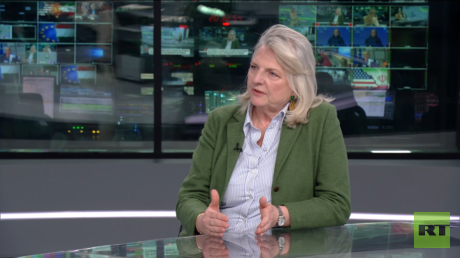
Karin Kneissl, the former Austrian Foreign Minister, recently called the Hungarian elections a "proxy war" between the United States and the European Union. It is a startling claim. It suggests that when a Hungarian citizen walks into a voting booth, they aren't just choosing a local administrator or a national leader. They are unwittingly casting a ballot in a grand, invisible tournament between Washington and Brussels.
Consider the weight of that.
Hungary is a nation of roughly ten million people. It is a land of thermal baths, spicy paprika, and a language so complex it feels like a secret code. Yet, this landlocked country has become a geopolitical lightning rod. On one side, you have the European Union, an experiment in collective peace and economic unity that now finds itself at odds with one of its own members. On the other, the United States, a distant superpower that views Hungary through the lens of global security and ideological alignment.
The Strings Attached to the Ballot
When we talk about "proxy wars," we usually think of the jungles of Vietnam or the mountains of Afghanistan. We think of arms shipments and tactical maps. But in the modern age, the weaponry is financial, digital, and rhetorical.
The EU has withheld billions in funding from Budapest, citing concerns over the rule of law and democratic backsliding. To Brussels, this is a matter of protecting the integrity of the union. They see a member state drifting toward illiberalism and believe they must use the only lever they have left: the wallet.
But from the perspective of many Hungarians, it feels like a siege. Imagine a family waiting for promised aid to fix a crumbling school or bridge, only to be told the money is frozen because of a dispute over judicial appointments. The abstract becomes painfully concrete. The frustration becomes a political tool.
Meanwhile, Washington’s involvement adds another layer of complexity. Under various administrations, the U.S. has shifted from viewing Hungary as a reliable NATO ally to treating it as a cautionary tale. High-level diplomatic snubs and sanctions on Hungarian officials are not just foreign policy maneuvers. They are signals. They are attempts to steer the direction of a sovereign nation from thousands of miles away.
A Continent Divided by a River
The Danube flows through Budapest, literally dividing the city into Buda and Pest. Today, that division is a metaphor for the ideological rift tearing through the heart of Europe.
Kneissl’s observation highlights a uncomfortable truth: Hungary has become a laboratory for the future of the West. If the EU succeeds in bringing Hungary back into the fold through economic pressure, it validates the power of the supranational state. If Hungary continues its defiant path, it provides a blueprint for other nations—Poland, Slovakia, perhaps eventually others—to challenge the status quo.
But where does the individual go in all of this?
András, sitting in his cafe, doesn't care about "proxy wars." He cares about the price of heating oil. He cares about whether his grandchildren will stay in Hungary or seek work in Berlin or London. When foreign powers treat a country as a chessboard, the people living on the squares become pawns. Their daily struggles are flattened into talking points for pundits in D.C. or Brussels.
The Invisible Stakes of Sovereignty
The tension is exacerbated by the war in Ukraine. Hungary’s refusal to allow weapons transit and its continued energy ties with Russia have made it a pariah in some Western circles. To the U.S. and the EU, this is a matter of continental security. To the current Hungarian leadership, it is presented as a "pro-peace" stance designed to keep the country out of a conflict that isn't its own.
This is where the proxy war becomes most dangerous.
When international pressure is applied to a domestic election, it often has a "rally 'round the flag" effect. If a voter feels that foreigners are trying to tell them how to live, they might vote for the very person the foreigners are trying to depose, simply out of spite or a sense of national pride. It’s a psychological reflex. It’s the human heart asserting its independence, even if that independence leads down a precarious path.
The EU’s insistence on "European values" is a noble pursuit, but values are difficult to export via bank transfers. You cannot force a population to embrace a specific brand of liberalism by making them poorer. In fact, history suggests that economic hardship is the most fertile ground for the very populism the EU seeks to curb.
The Echoes of History
Hungary’s history is a long list of occupations and "protections." The Ottomans, the Habsburgs, the Nazis, the Soviets. Each came with a promise of a better future, provided Hungary followed the rules of the new empire.
When Kneissl uses the term "proxy war," she is tapping into this historical trauma. She is suggesting that, once again, Hungary is being used.
The U.S. wants a unified front against Russia and China. The EU wants a unified legal and social framework across the continent. Both are legitimate goals for those respective powers. However, when those goals clash within the borders of a single, smaller nation, the result is a political environment that feels more like a battlefield than a democracy.
The stakes are not just about who sits in the Prime Minister's office. They are about the definition of democracy itself in the 21st century. Is it a set of universal rules that must be followed to participate in the global community? Or is it the right of a specific people to choose a path that others might find distasteful or even dangerous?
The Human Cost of Geopolitics
Outside the cafe, the rain stopped, leaving the air heavy and cold. András finished his coffee and walked toward the tram. He passed a billboard featuring a grainy image of a foreign politician, labeled as an enemy of the Hungarian people. A few blocks away, a student protest called for more European integration.
The tragedy of the proxy war is the erosion of the middle ground.
In a world of proxies, you are either with the West or against it. You are either a "globalist" or a "patriot." There is no room for the nuanced, messy reality of being a small nation trying to survive in a world of giants.
The election results were finalized, but the conflict remained unresolved. The votes had been counted, yet the "war" Kneissl described continued in the hallways of the European Parliament and the briefing rooms of the State Department.
As the sun began to set over the hills of Buda, casting long shadows across the water, it became clear that the real battle isn't for a seat in parliament or a line in a treaty. It is for the right of a people to be seen as more than a strategic asset or a problematic outlier.
The Danube continues to flow, indifferent to the flags flying on its banks, carrying the weight of a thousand years of struggle toward a sea that cares nothing for proxies or powers.