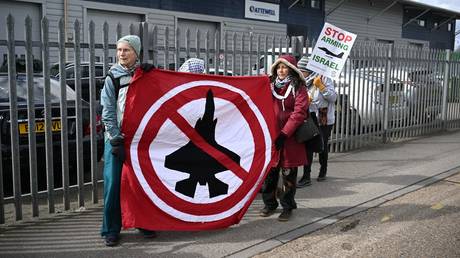
Belgium just intercepted a shipment of military equipment headed for Israel. The headlines are screaming about a massive shift in European foreign policy and the "moral high ground" of port authorities. They are wrong. This isn't a policy shift. It's a bureaucratic glitch masquerading as a grand ethical stand.
If you think stopping a few crates at a terminal in Antwerp or Zeebrugge actually changes the trajectory of a modern conflict, you haven't been paying attention to how global logistics work. This seizure is the geopolitical equivalent of a TSA agent taking away your four-ounce bottle of shampoo while ignoring the guy with a hacksaw in his carry-on.
The Logistics Illusion
The media loves a David vs. Goliath story. They want you to believe that a brave group of customs officials and activists just threw a wrench into the gears of a global military superpower.
Here is the reality of the defense industry: supply chains are not linear. They are a web. A shipment of aircraft parts or ammunition components "seized" in Belgium is often just a minor accounting headache for the manufacturer. Within hours of a seizure, logistics teams are rerouting backup inventory through Rotterdam, Hamburg, or bypass routes in the Mediterranean.
Modern defense contracts aren't fulfilled via one-off shipping containers. They are multi-year, multi-billion-dollar agreements with built-in redundancies. When Belgium "seizes" cargo, they aren't stopping a war. They are forcing a logistics firm to pay a late fee.
The Myth of Export Control Efficacy
The "lazy consensus" suggests that these seizures represent a tightening of EU export controls. In truth, they represent a failure of the Belgian administrative state to coordinate with its own federal guidelines.
Belgium is a federalized mess of regional and national regulations. The Walloon region might ban exports while the Flemish region allows them, leading to a shell game at the docks. This specific seizure isn't the result of a sudden moral awakening in Brussels; it’s the result of a paperwork discrepancy that activists managed to exploit.
Wait six months. The legal appeals will quiet down, the "seized" goods will be quietly released or "returned to sender," and they will eventually end up exactly where they were headed—just via a different flag-carrier.
Virtue Signaling at the Port
Why do these seizures happen now? Because it’s cheap politics.
Governments can’t stop the flow of capital, and they won't stop the flow of intelligence sharing. But they can let a crate of electronics sit in a warehouse for a few weeks to appease a restless domestic voter base.
I’ve watched this play out in various industries for a decade. A company gets "raided" for tax reasons, or a shipment is "blocked" for environmental concerns. It’s rarely about the tax or the environment. It’s about the optics of action. In this case, Belgium gets to claim it is "holding the line" on human rights without actually risking its standing within NATO or its deeper security partnerships.
The Real Cost of Security Theater
When you prioritize optics over actual policy, you break the system. By seizing goods based on high-pressure activism rather than a consistent, predictable legal framework, Belgium is making itself a "black hole" for international transit.
International shipping companies hate unpredictability. If a port starts seizing legal, documented cargo because the political wind shifted that morning, the shipping companies move. This doesn't stop the weapons; it just stops the revenue for Belgian ports.
- Financial Leakage: Cargo diverted to neighboring ports means lost tariff revenue.
- Reputational Risk: Belgium becomes a "high-friction" transit zone.
- Ineffectiveness: The cargo still reaches its destination via a different route.
Imagine a scenario where a pharmacy refuses to sell a specific medication because the manager disagrees with the pharmaceutical company's pricing. The patient doesn't go without the medicine; they just drive three miles to the next town. The only person who loses is the local business owner.
Why the "Success" is a Failure
The activists celebrating this seizure are asking the wrong question. They ask, "How can we stop this shipment?"
The question they should be asking is, "Why do we think a shipping manifest is a substitute for a diplomatic treaty?"
You cannot fix a fundamental disagreement on foreign policy through the brute force of customs enforcement. It’s a category error. If the EU actually wanted to halt military support, they would implement a unified, ironclad embargo across all member states. They don't do that because the economic and strategic cost is too high. Instead, they allow these "seizures" to act as a pressure valve for public anger.
The Ghost Ship Reality
For every shipment stopped in Belgium, there are ten others moving through "gray ports" or via private military contractors who operate outside the standard commercial shipping lanes.
The defense industry moved beyond "crates on a ship" decades ago. We are talking about digital blueprints for 3D-printed parts, cloud-based targeting software updates, and components that are so deeply integrated into civilian technology that you couldn't "seize" them without shutting down the entire global electronics market.
Belgium seizing a physical crate is like trying to stop a data leak by confiscating a single USB drive. The information is already in the cloud. The military capability is already in the field.
Disruption or Distraction?
This isn't disruption. Disruption would be a fundamental shift in how the EU handles defense procurement. Disruption would be a transparent, unified audit of all dual-use technology leaving European soil.
What we have instead is a distraction. A flashy headline that makes people feel like something happened.
Stop looking at the docks. Start looking at the bank accounts. If the money is still flowing, the "seized" equipment is already being replaced. The dockworkers can go home and feel like they did something, but the reality is that the machinery of war doesn't care about a Belgian warehouse. It just buys a new ticket.
The next time you see a headline about a "heroic seizure," ask yourself one thing: Did the conflict stop? Or did the shipping route just get a little more expensive?
You’re being sold a moral victory that doesn’t exist.
The ports are clear. The ships are moving. The theater continues.