Brussels is spinning a tale of "energy sovereignty." The narrative suggests that by wrestling control of its nuclear fleet away from the French giant Engie, Belgium is securing its borders and its light switches.
It is a lie. Don't forget to check out our recent post on this related article.
What we are witnessing is not a strategic acquisition. It is a slow-motion hostage negotiation where the hostage-taker—Engie—has successfully convinced the victim to pay for the privilege of being robbed. The Belgian government isn't "nationalizing" an asset; they are inheriting a liability graveyard under the guise of public utility.
The Myth of the Strategic Buyback
The lazy consensus among energy analysts is that owning the means of production is always a win for the state. They point to the energy crisis of 2022 and scream about "control." But let’s look at the actual plumbing of this deal. If you want more about the context of this, Reuters Business provides an excellent breakdown.
Engie, a savvy corporate predator, has spent years trying to offload the headache of aging reactors. Nuclear power is a business of immense upfront costs and terrifying back-end risks. The middle—the part where you actually make money—is getting squeezed by subsidized renewables and volatile gas prices.
By "nationalizing" these assets, Belgium is taking on the radioactive equivalent of a 1998 Ferrari. It’s beautiful to look at, it’s fast when it runs, but the moment a gasket blows, you’re looking at a bill that could bankrupt a small city.
I’ve watched governments play this game before. They mistake "possession" for "power." In reality, Engie is laughing all the way to the bank because they just capped their waste disposal liabilities. They traded an uncertain, multi-billion-euro cleanup bill for a neat, tidy exit strategy funded by Belgian taxpayers.
The Radioactive Math Everyone Ignores
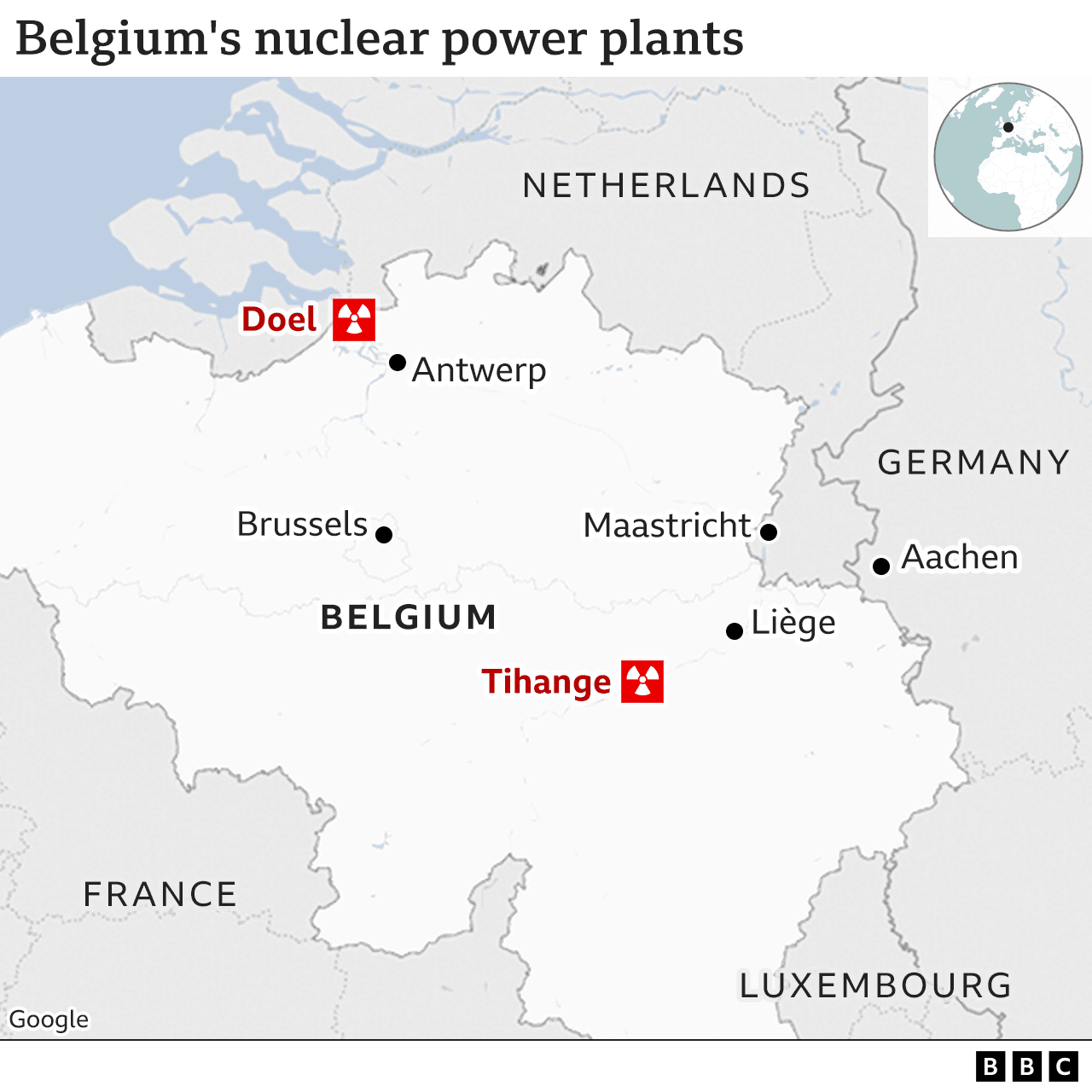
Let’s talk about the LCOE (Levelized Cost of Energy). Proponents of this deal argue that keeping the Doel and Tihange plants running is the cheapest way to meet net-zero targets.
This ignores the "Refurbishment Trap."
When you extend the life of a reactor designed in the 1970s, you aren't just changing the oil. You are dealing with neutron embrittlement—the literal degradation of the steel pressure vessels that hold the core. You cannot "fix" embrittlement; you can only manage the risk until it becomes politically or physically impossible.
The Belgian state is now the primary risk-bearer for:
- Unexpected outages: As these plants age, "unplanned maintenance" becomes the norm, not the exception.
- Regulatory creep: Every time a safety standard changes, the taxpayer, not a corporate board, writes the check.
- The Waste Wall: The cost of decommissioning and long-term geological storage is a number that only goes up.
By taking a 50% stake in the nuclear units, the Belgian government has effectively signed a blank check. If the refurbishment of Doel 4 and Tihange 3 goes over budget—and in the history of nuclear power, when has it not?—the public picks up the tab.
The "Energy Sovereignty" Delusion
The most irritating part of this discourse is the claim that this move grants Belgium independence.
Total nonsense.
Belgium still lacks a domestic uranium enrichment industry. It still relies on a global supply chain for fuel rods. It still exists within the integrated European grid where prices are set by the marginal cost of gas in Germany or the wind speeds in the North Sea.
Ownership does not equal insulation from market forces. If the price of gas spikes, your nuclear-heavy grid doesn't suddenly become a low-cost paradise. You just have a state-owned entity generating power that it must sell at market rates to remain solvent, or subsidize at a loss that further bloats the national deficit.
Why Engie Won and You Lost
Engie’s CEO, Catherine MacGregor, is playing chess while Belgian politicians are playing marbles.
For Engie, the Belgian nuclear fleet was a "distraction" from their pivot toward renewables and services. It sat on their balance sheet like a ticking time bomb. By negotiating this "partnership," they have:
- De-risked their portfolio.
- Offloaded the political optics of potential accidents.
- Secured a fixed price for waste management.
In any other industry, this is called a "bad bank" strategy. You spin off the toxic assets into a separate entity so the parent company can look shiny for investors. Belgium just volunteered to be the "bad bank."
Dismantling the "People Also Ask" Propaganda
Does this mean Belgium will have cheaper electricity?
No. Electricity prices are decoupled from the ownership of the plant. Unless the government plans to run these plants at a massive loss—which violates EU state aid rules—your monthly bill will still dance to the tune of international markets.
Is it safer under state control?
Gravity and physics don't care who signs the paychecks. In fact, one could argue that a state-owned operator is less likely to be transparent about safety failures because of the political fallout. Private companies fear the regulator; the state is the regulator. That’s a conflict of interest that should keep you awake at night.
Why not just build new reactors?
Because Belgium has spent twenty years debating whether to turn the lights off or leave them on. You don't build a new EPR (Evolutionary Power Reactor) in a decade. You build it in twenty years at three times the quoted price. Ask Flamanville or Olkiluoto how "new nuclear" is working out for their budgets.
The Cold Reality of the Energy Transition
The Belgian government is obsessed with 2035. They are trying to bridge a gap that they created through decades of indecision.
The real contrarian take? This nationalization isn't about energy. It’s about Political Cowardice.
It is easier to buy a dying asset and pretend you’ve "saved" it than it is to build a modern, decentralized energy infrastructure that doesn't rely on 50-year-old technology. The state is doubling down on a centralized, twentieth-century model in a twenty-first-century world.
If Belgium actually wanted sovereignty, they would be pouring this capital into massive-scale storage, grid hardening, and interconnections. Instead, they are buying a seat on a sinking ship and calling themselves the captain.
Imagine a scenario where the €15 billion or more earmarked for nuclear liabilities was instead used to insulate every home in the country. You’d drop baseload demand so significantly that the "need" for these aging reactors would vanish. But insulation isn't a "grand project." It doesn't get you a photo op in a hard hat.
Stop Calling It an Investment
An investment implies a return. This is a salvage operation.
The Belgian public needs to stop viewing this as a win for the common man. You are being asked to underwrite the retirement of a private company’s most problematic assets. You are paying for the cleanup while Engie takes the profit from the "renewables transition."
If you want to see where this ends, look at the history of state-owned coal mines in the UK or the steel industry in the Rust Belt. When the state takes over an industry that is structurally challenged, it doesn't "save" it. It just ensures that the inevitable collapse is as expensive and painful as possible.
The "deal of the century" is indeed a deal—but only for Engie. Belgium didn't buy a power plant; they bought a mortgage on a house that’s already on fire.
Stop congratulating the negotiators. Start checking your pockets.