Local news thrives on a very specific, repeatable script. A small town wakes up to an unfamiliar substance. Panic ensues. Residents demand immediate government intervention, claiming they are being actively poisoned. The media frames it as a classic David versus Goliath battle—innocent citizens fighting a faceless, malicious corporate entity.
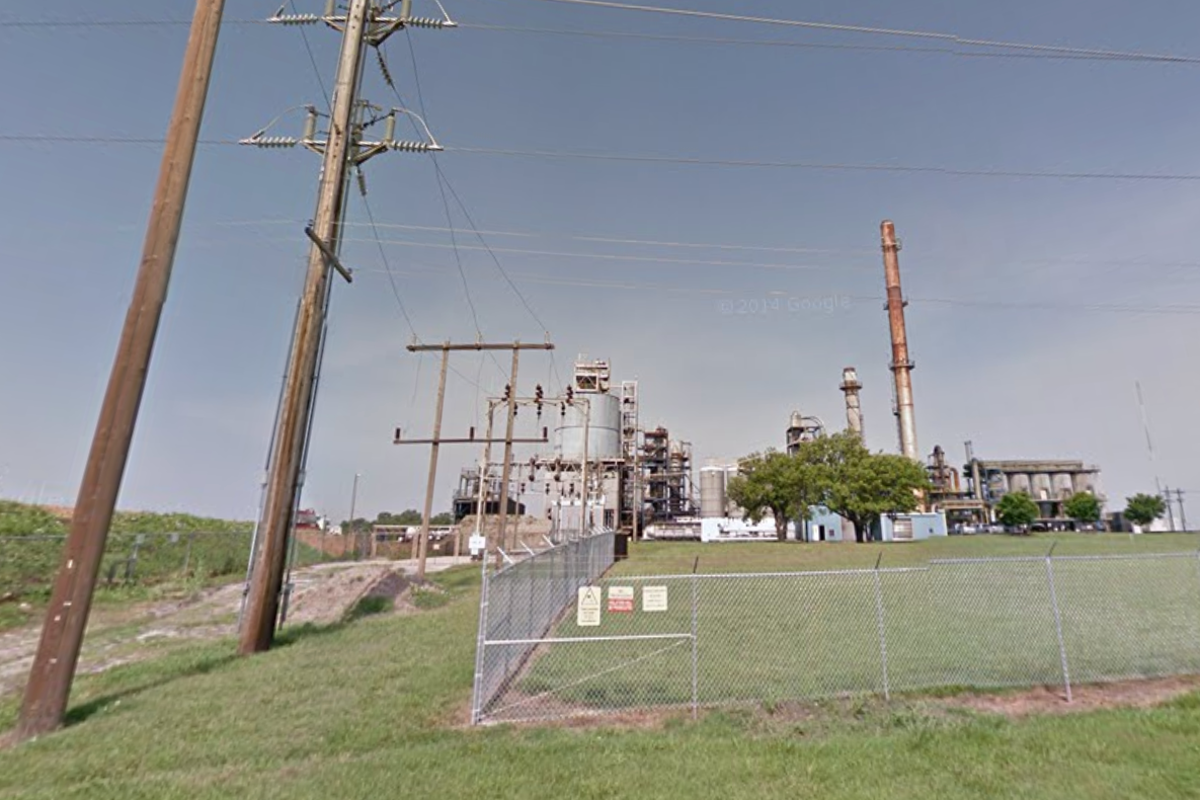
We are seeing this exact script play out right now in Blackwell, Oklahoma.
The standard narrative surrounding the mysterious black dust blanketing local neighborhoods is lazy, predictable, and fundamentally wrong. The media is feeding a frenzy by treating a routine, highly regulated industrial byproduct as an unprecedented ecological disaster. If you look at the actual mechanics of heavy industry, the infrastructure of the American Midwest, and the physics of particulate matter, the reality is far more mundane—and far less terrifying—than the headlines suggest.
Stop looking for a corporate cover-up. Start looking at the data.
The Flawed Premise of the Environmental Mystery
The local outcry centers on a simple premise: if there is black dust on a porch, someone must be operating illegally.
This reaction ignores the reality of living in an industrial corridor. Blackwell, like dozens of small towns across the plains, has a century-long history of smelting, refining, and heavy manufacturing. The soil itself carries the legacy of old zinc smelters closed decades ago. When modern operations process materials nearby, or when high winds scour the Oklahoma landscape, old particulates mix with new ones.
The media calls it a "mysterious black dust." To an industrial engineer, it is almost certainly a variation of carbon black, coal dust, or slag particulate. These are not exotic, alien toxins synthesized in a secret lab. They are the foundational elements of modern manufacturing, tire production, and energy generation.
To understand why the panic is manufactured, we have to look at the scale of particulate matter.
Understanding PM10 versus PM2.5
When evaluating air quality and settling dust, the public usually conflates visibility with toxicity. This is a massive analytical error.
- Coarse Particulate Matter (PM10): This is the dust you can actually see on your car hood or patio furniture. It is heavy. It falls out of the air quickly. Because of its size, the human respiratory system is remarkably adept at filtering it out. Your nose and upper airways trap these particles long before they reach your lungs.
- Fine Particulate Matter (PM2.5): This is the truly dangerous stuff. It is invisible to the naked eye, stays suspended in the air for days, and can penetrate deep into the bloodstream.
The irony of the Blackwell situation? The very fact that residents are complaining about a visible blanket of black dust means they are dealing primarily with larger, coarse particles that have settled out of the air. The visible nuisance is rarely the invisible threat. Yet, public policy and media outrage are driven entirely by what can be photographed for an evening news segment.
The Industrial Insiders View on "Zero Risk"
I have spent years navigating the regulatory frameworks that govern manufacturing facilities. Here is the uncomfortable truth that environmental activists refuse to admit: zero risk is an economic and physical impossibility.
Every time you turn on a light, drive a car, or buy a manufactured good, you are validating the existence of the factories that produce these emissions. The regulatory agencies—like the Oklahoma Department of Environmental Quality (DEQ) and the federal EPA—do not enforce a standard of absolute purity. They enforce a standard of acceptable, managed risk.
Industrial Operation -> Controlled Emission -> Atmospheric Dispersion -> Regulated Deposition
When a plant operates within its permitted limits, it is legally allowed to emit a specific quantity of particulates. If a weather inversion or an unusual wind pattern carries those emissions into a residential area, it represents a failure of dispersion mechanics, not necessarily a violation of environmental law.
Why the "Toxic Exposure" Claims Frequently Fail in Court
Residents in these situations immediately seek class-action attorneys. They expect a massive payout. But decades of environmental litigation show us that these lawsuits almost always fall apart during the discovery phase. Why?
- The Baseline Problem: To prove a facility poisoned your property, you must establish what the background levels of that substance were before the incident. In a town with a history of heavy smelting like Blackwell, the soil is already highly anomalous. Disentangling new dust from historical contamination is a forensic nightmare.
- Causation vs. Correlation: Showing that a substance is present is not the same as showing it caused a specific health outcome. The human body is exposed to thousands of particulate sources daily, from backyard barbecues to highway brake dust.
- Permit Compliance as a Shield: If the corporate entity can produce continuous emissions monitoring data proving they stayed under their state-allotted cap, they are largely insulated from punitive damages. The state gave them permission to operate; you cannot sue a company for doing exactly what its license allows.
Dismantling the "People Also Ask" Consensus
The public discourse around industrial dust is warped by a few fundamental questions that people answer with emotion rather than science. Let’s address them directly.
Is black dust inherently toxic?
No. Color tells you nothing about chemical toxicity. Carbon black, which is used to reinforce rubber in tires, is completely black and turns everything it touches into a dark mess. It is also fundamentally elemental carbon—chemically inert and non-hazardous to ingest in small quantities. The assumption that dark equals deadly is a psychological reaction, not a medical one.
Why won't the state just shut the source down?
Because the economic destruction of shutting down a primary employer or logistics hub without definitive, peer-reviewed proof of an imminent health hazard is a catastrophic trade-off. Regulatory agencies operate on administrative law, not public anger. They require verifiable, calibrated air sampling data that takes weeks to analyze in a certified laboratory. A smartphone video of dust on a windowsill is not admissible evidence.
Can't factories just install better filters?
They use baghouses, electrostatic precipitators, and scrubbers that capture upwards of 99% of process emissions. Imagine a system operating at 99.9% efficiency. If that system processes 100 tons of material a day, that remaining 0.1% still equals hundreds of pounds of particulate escaping into the atmosphere over time. Short of shutting down global manufacturing entirely, that fractional escape is the cost of doing business in the modern world.
The Real Risk Nobody Is Talking About
The true danger in Blackwell is not the chemistry of the dust. It is the systemic failure of zoning laws and the economic reality of small-town survival.
For decades, American towns have allowed residential neighborhoods to creep closer and closer to industrial zones because the land was cheap. Developers built houses right up against the fence lines of facilities that handle bulk materials. Then, a new generation of buyers moves in, shocked to discover that an active industrial plant behaves like an active industrial plant.
Imagine a scenario where a town completely bans any visible emission whatsoever. The factory closes its doors. The tax base evaporates. The school district collapses. Property values plummet to zero. The residents are suddenly free from the black dust, but they are also broke, unemployed, and trapped in a ghost town.
That is the trade-off nobody wants to put on a protest sign.
Stop Demanding Miracles, Demand Better Data
If you are a resident dealing with environmental fallout, stop relying on emotional appeals and local news cameras. The system does not care about your feelings. It cares about metrics.
- Deploy Independent Monitors: Do not wait for the state to set up stations. Communities can deploy low-cost, continuous particulate monitors (like PurpleAir sensors) to establish a real-time, public data log of PM10 and PM2.5 levels.
- Analyze the Speciation: Stop shouting that the dust is "mysterious." Pay an independent, accredited lab to run an X-ray diffraction (XRD) or scanning electron microscopy (SEM) analysis on a sample. Find out exactly what the mineral or chemical composition is. If it matches a specific industrial process, you have leverage. If it turns out to be topsoil mixed with agricultural run-off, you save yourself a useless legal fee.
- Acknowledge the Geography: You live in the windiest corridor of the United States. Dust migrates. Dust mixes. Attribution is the hardest problem in environmental science, and assuming the closest chimney is the sole culprit is a rookie mistake.
The situation in Blackwell is an uncomfortable reminder that our high-tech, clean-energy future is still built on a foundation of dirty, heavy infrastructure. We want the products, we want the jobs, but we refuse to look at the exhaust. The black dust isn't a mystery; it is the visible receipt for our modern standard of living. Turn off the cameras, put away the hyperbole, and look at the chemistry report. Otherwise, you are just yelling at the wind.