History is not a collection of dusty dates but a series of high-stakes gambles that frequently went off the rails. Between May 10 and May 16, the world witnessed the violent birth of a nation-state, the quiet erasure of a Himalayan kingdom, and a glass-ceiling-shattering appointment in Paris that proved to be a political suicide mission. To understand these events, we have to look past the commemorative plaques and examine the desperate political math that drove them.
The Impossible Statehood of 1948
On May 14, 1948, David Ben-Gurion stood in the Tel Aviv Museum and read the Declaration of Independence for the State of Israel. This was not a pre-ordained victory. It was a frantic race against a ticking clock. The British Mandate for Palestine was set to expire at midnight. Behind the scenes, the United States was wavering, and the surrounding Arab nations were mobilizing for an immediate invasion.
The "why" of the timing was purely logistical. Had Ben-Gurion waited even twenty-four hours, the legal vacuum would have been filled by international pressure to postpone statehood indefinitely. The gamble was total. Israel declared independence without defined borders, a move that reflected the raw reality of the ground war already in progress. It was a declaration of existence first and a search for security second.
The immediate aftermath was not a celebration but a desperate fight for survival. The 1948 Arab-Israeli War shifted the map of the Middle East in ways that remain the primary source of global geopolitical friction today. We see the echoes of that May afternoon in every headline coming out of the Levant. The conflict wasn't just about land; it was about the collision of two nationalist movements, neither of which could afford to lose.
The End of the Chogyal Dynasty
While the world focuses on the Middle East, a massive geopolitical shift occurred on May 16, 1975, in the shadows of the Himalayas. Sikkim, once a sovereign kingdom, officially became the 22nd state of India. This was not a sudden impulse. It was the culmination of years of internal unrest and cold-blooded regional strategy.
India’s Prime Minister, Indira Gandhi, viewed the tiny kingdom as a strategic vulnerability. With China looming over the "Chicken's Neck" corridor—the narrow strip of land connecting India's mainland to its northeastern states—a neutral or potentially pro-Beijing Sikkim was a risk Delhi would not tolerate. The internal narrative was one of democracy. The kingdom’s people, largely of Nepali origin, had long chafed under the rule of the Chogyal (the king).
When the Sikkimese parliament voted to abolish the monarchy and join India, the transition was swift. Critics at the time called it an annexation. Proponents called it an integration. Regardless of the label, the result was the permanent alteration of the Himalayan map. It secured India’s northern flank but left a lingering question about how small buffer states survive when the giants next door decide the status quo is no longer profitable.
The Edith Cresson Sacrifice
On May 15, 1991, Edith Cresson became the first female Prime Minister of France. To the casual observer, this looked like a milestone for progress. To those inside the Élysée Palace, it looked more like a lightning rod. President François Mitterrand was facing plummeting approval ratings and a stagnant economy. He needed a distraction, and he needed a fighter.
Cresson was known for her bluntness and her fierce protection of French industry. However, the political establishment—and the French media—treated her with a level of vitriol that was nakedly gendered and deeply personal. Her tenure lasted less than a year. She was frequently undermined by her own cabinet and pilloried for comments she made about international trade and social issues.
The lesson of the Cresson premiership isn't just about breaking barriers. It’s about the "glass cliff" phenomenon, where women are often handed leadership roles during periods of crisis when the risk of failure is at its highest. Mitterrand didn't appoint her to succeed; he appointed her to absorb the blows that would have otherwise hit him. When she became too unpopular, he replaced her, having successfully reset the political clock at her expense.
The Nelson Mandela Inauguration
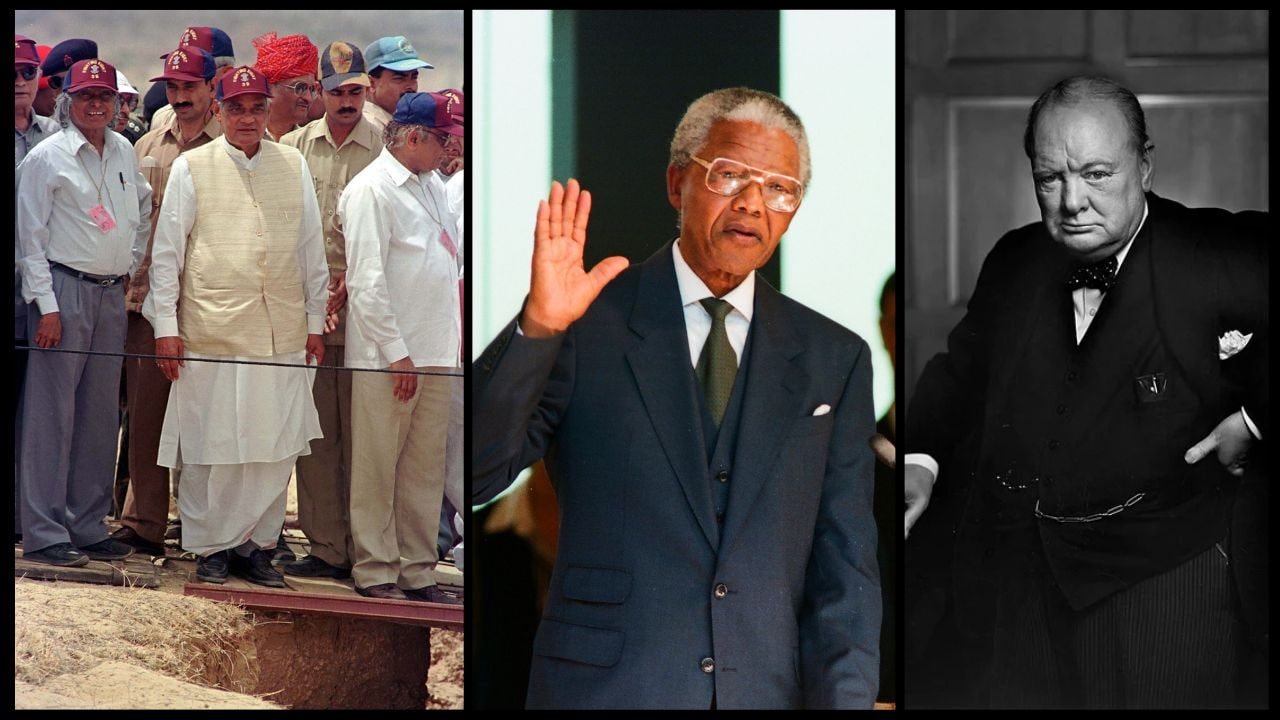
If May 14 belongs to Israel, May 10 belongs to the new South Africa. In 1994, Nelson Mandela was inaugurated as the country's first Black president. This was the definitive end of the Apartheid era on paper, but the actual work was far more precarious than the televised images of cheering crowds suggested.
Mandela’s primary challenge wasn't just governing; it was preventing a civil war. The radical right-wing white elements were armed and angry, while many in the Black majority demanded immediate, radical redistribution of wealth. Mandela chose a path of reconciliation that frustrated his most ardent supporters and baffled his enemies.
He understood that a scorched-earth policy would lead to capital flight and a collapse of the state. He spent his first week in office convincing the old guard to stay and the new guard to wait. It was a masterpiece of psychological warfare. By wearing a Springbok rugby jersey or inviting his former jailers to his inauguration, he wasn't just being "nice." He was neutralizing threats through radical inclusion.
The First Flight of the Jet Age
Technical history often gets buried under political drama, but May 15, 1941, changed how we perceive distance. On that day, the Gloster E.28/39, the first British jet-engined aircraft, took to the skies. While the Germans had flown a jet earlier, the British flight represented the beginning of a viable, long-term propulsion system that would eventually shrink the planet.
Frank Whittle, the man behind the engine, had been dismissed by the Air Ministry years earlier. They thought his ideas were "impracticable." His success on that May morning proved that the era of the piston engine was over. This wasn't just a win for the military; it was the birth of the globalized economy. Without the development of the jet engine, the international travel and trade we take for granted would be impossible. The world became smaller, faster, and much louder because of a small, experimental plane flying over Lincolnshire.
Winston Churchill’s Gritty Ascension
On May 10, 1940, Winston Churchill became Prime Minister of the United Kingdom. History books paint this as an obvious choice, but at the time, it was a desperate, messy transition. Neville Chamberlain had lost the confidence of the House of Commons after the disastrous Norwegian campaign. The man the establishment actually wanted was Lord Halifax, a dignified diplomat who preferred the idea of a negotiated peace with Hitler.
Churchill was viewed by many in his own party as a reckless drunk and a relic of the Victorian age. He got the job because Halifax realized he couldn't lead a war cabinet from the House of Lords and because Churchill refused to play second fiddle.
Within hours of taking office, Germany invaded the Netherlands, Belgium, and Luxembourg. There was no honeymoon period. Churchill’s first days were spent managing a total military collapse on the continent. His rise to power was not a triumph of popularity; it was a triumph of timing and the sudden, terrifying realization that the "safe" leaders had no idea how to fight a total war.
The Fire in the Library of Louvain
War isn't just about soldiers; it’s about the systematic destruction of memory. On May 16, 1940, the Library of the University of Louvain in Belgium was set ablaze for the second time in twenty-six years. During the German invasion, nearly 900,000 books and manuscripts were turned to ash.
This wasn't an accident of war. It was a deliberate strike against the intellectual heart of a nation. When we look at this week in history, we see a pattern of creation and destruction. For every state born, like Israel, or integrated, like Sikkim, there is a loss of an older order. The burning of Louvain serves as a reminder that progress is often accompanied by the erasure of what came before.
The Silent Architect of the DNA Revolution
While the politicians were fighting over borders, science was rewriting the code of life. On May 14, 1951, Rosalind Franklin started her work at King’s College London. Her work on X-ray diffraction images of DNA was the critical piece of evidence that led to the discovery of the double helix structure.
She is often remembered as a victim of the male-dominated scientific establishment, with Watson and Crick famously using her data without her knowledge. But focusing only on the "theft" of her work diminishes her actual brilliance. Franklin wasn't just a lab assistant; she was a world-class chemist who understood the physical structure of matter better than almost anyone in her field. Her entry into the DNA race in mid-May was the catalyst for the entire genomic era. Every modern medical breakthrough, from mRNA vaccines to forensic testing, traces its lineage back to her X-ray plates.
The Skylab Launch and the Near Disaster
On May 14, 1973, NASA launched Skylab, the first United States space station. It was supposed to be a triumph, a follow-up to the Apollo moon missions. Instead, it nearly became a multi-billion-dollar piece of space junk within sixty seconds of liftoff.
A micrometeoroid shield ripped off during ascent, taking one of the main solar panels with it and pinning the other one shut. The station reached orbit, but it was overheating and lacked power. This set the stage for one of the greatest "MacGyver" moments in history. Astronauts had to deploy a makeshift parasol to cool the station and use a pair of bolt cutters during a spacewalk to free the remaining solar wing.
The Skylab crisis changed how NASA approached mission control. It shifted the focus from rigid flight plans to real-time problem-solving and in-orbit repair. It proved that humans could survive and work in space for extended periods, but only if they were willing to improvise with whatever tools they had on hand.
The Economic Ghost of the Credit Anstalt
On May 11, 1931, the Credit Anstalt, Austria’s largest bank, collapsed. This was the "Lehman Brothers moment" of the Great Depression. While the 1929 stock market crash started the decline, the failure of Credit Anstalt triggered a systemic collapse across Europe.
It led to a run on the German banks and eventually forced Britain to abandon the gold standard. The fallout wasn't just financial. The ensuing economic misery in Central Europe provided the perfect environment for political extremism to flourish. We often think of economic policy as a boring side-note to history, but the collapse of a single bank in Vienna did more to destabilize the 20th century than almost any single battle. It showed that the global financial system is only as strong as its weakest link.
The Last Execution in France
On May 11, 1977, the guillotine was used for the last time in France. The execution of Hamida Djandoubi ended a centuries-old tradition of state-sponsored beheading. It was a quiet, grim affair that marked the end of the Enlightenment's most efficient killing machine.
The abolition of the death penalty in France didn't happen overnight. It was a slow, painful cultural shift. This final execution forced the public to confront the reality of the practice. By the time the law was officially changed in 1981, the guillotine had already become a ghost of a different era. This moment in May 1977 represents the final closing of a door on a specific type of state power—the power to take a life in the name of the law.
The Irony of the 1968 Riots
In mid-May 1968, the streets of Paris were barricaded. A student protest had morphed into a general strike involving ten million workers. The government of Charles de Gaulle was on the verge of collapse. This was the peak of the global counter-culture movement.
The irony is that the "revolution" failed. De Gaulle called a snap election in June and won by a landslide. The middle class, terrified by the chaos they saw in May, retreated to the safety of the conservative status quo. The events of May 1968 didn't change the government, but they fundamentally changed French society. They broke the rigid social hierarchies of the post-war years and ushered in a more individualistic, socially liberal era. Sometimes, losing the political battle is the only way to win the cultural war.
The Takeaway for the Modern Observer
When we look at this week across the decades, a clear theme emerges: The fragility of the status quo. Whether it is the sudden emergence of Israel, the disappearance of Sikkim, or the collapse of a Viennese bank, the structures we think are permanent can dissolve in a matter of hours.
The leaders who survived these moments—Mandela, Churchill, even the engineers on Skylab—did so not by following a script, but by recognizing that the old rules no longer applied. They embraced the chaos of the moment to build something new. As we move through our own uncertain period of history, the lesson is to look for the "May 10th" moments in our own lives: the points where the old system fails and the new one has yet to be written.
Identify the risks before they become catastrophes. Don't wait for permission to innovate. Understand that every ending is the silent beginning of a different story.