The map on the wall of a briefing room usually looks like a geometry problem. Lines of latitude, colored zones, and the sharp, jagged edges of national sovereignty. But for a rancher in the Rio Grande Valley or a family navigating the concrete labyrinth of Panama City, those lines are breathing. They are made of dust, heat, and the quiet, crushing weight of uncertainty. When Donald Trump stood before the cameras to announce the "Shield of Americas," he wasn't just talking about a policy. He was proposing a change in the very architecture of the Western Hemisphere.
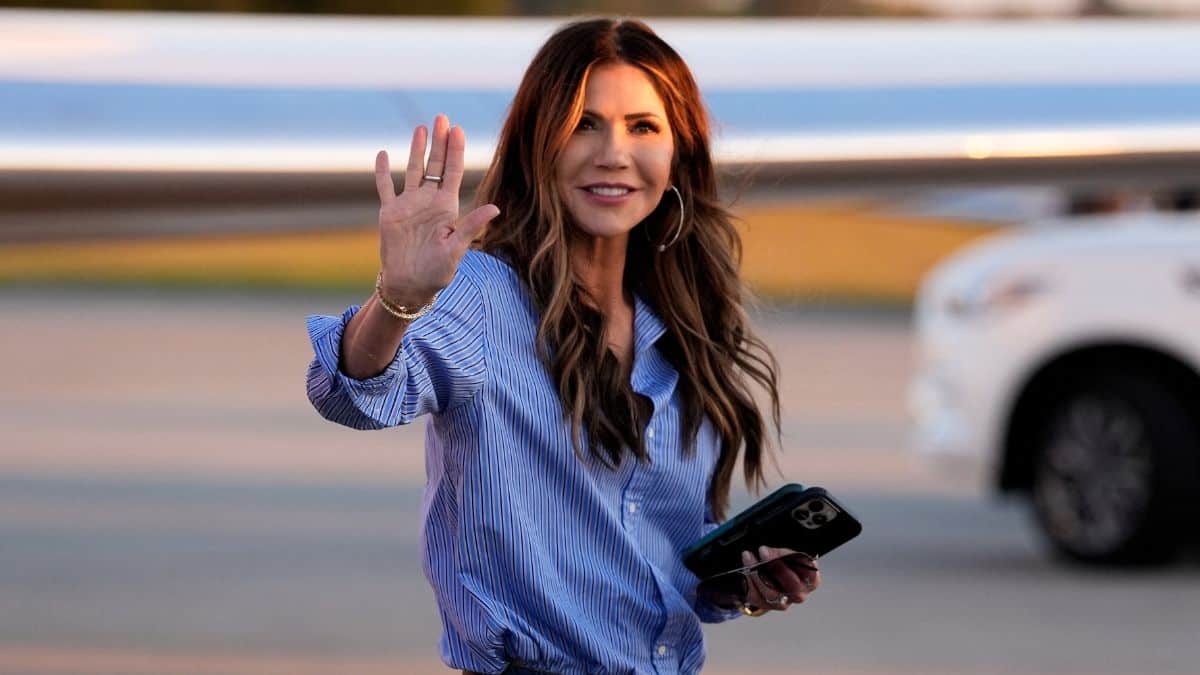
At the center of this architectural shift stands Kristi Noem.
She is no longer just the former governor of South Dakota. As the newly minted special envoy for this initiative, she has become the primary architect of a wall that doesn't just sit on the dirt. This is a regional net, a series of diplomatic and security anchors designed to hold the entire continent in place. To understand why this matters, you have to look past the political theater and into the quiet rooms where the real decisions happen.
Consider a hypothetical town on the edge of the Darién Gap. We’ll call it Esperanza. In Esperanza, the local economy isn't built on coffee or textiles anymore. It is built on the movement of people. The "Shield of Americas" aims to dismantle the infrastructure of that movement by turning the entire hemisphere into a synchronized security zone. It is a bold, perhaps desperate, attempt to solve a problem that has defied every previous administration.
The Geography of Anxiety
The Shield of Americas is built on a simple, if controversial, premise: the U.S. border doesn't start at the Rio Grande. It starts thousands of miles south. By naming Noem as the envoy, Trump is signaling a shift toward a more aggressive, personal form of diplomacy. Noem is a known quantity in the MAGA universe—loyal, telegenic, and unafraid of a fight. Her task is to convince, or perhaps coerce, Latin American leaders into becoming the outer layers of the American defense.
This isn't just about stopping people from walking. It’s about the flow of money, drugs, and influence. The initiative proposes a "security ring" that involves shared intelligence, joint military exercises, and a massive infusion of technological surveillance. Imagine a drone hovering over a jungle path in Colombia, feeding data directly to a processing center in Texas. That is the vision.
But the human cost of such a vision is often obscured by the technical jargon. When we talk about "security rings," we are talking about the lives of people who live in the shadows. For the mother in Esperanza, the Shield of Americas means the path she thought would lead to a better life is now blocked by a wall of high-tech sensors and foreign soldiers. The stakes are invisible until you are the one standing in front of them.
The Envoy and the Iron Will
Kristi Noem’s appointment is a calculated move. She represents a brand of Heartland grit that resonates with the base, but she is entering a world of delicate Latin American politics where grit can sometimes look like arrogance. Her role is to be the face of an American "No." No more open routes. No more turning a blind eye.
The logic behind the Shield is that the current system is broken because it is reactive. We wait for people to arrive at the border before we decide what to do with them. The Shield is proactive. It seeks to break the chain of migration at the source. It’s a massive logistical undertaking that requires the cooperation of nations that haven't always seen eye-to-eye with Washington.
How does she do it? She uses the leverage of the American economy. The Shield isn't just a security pact; it’s a trade deal wrapped in a uniform. "If you want access to our markets," the subtext goes, "you must help us secure our borders." It is a hard-nosed approach to foreign policy that prioritizes American safety above all else.
The Invisible Stakes
We often talk about migration as a tide, a natural force that cannot be stopped. But a tide is made of individual drops of water. Each drop has a name. Each drop has a reason for moving. The Shield of Americas treats the tide as a threat to be managed, but for those caught in the middle, it feels like a cage.
There is a tension here that we rarely acknowledge. We want security. We want to know who is coming into our country. We want to protect our jobs and our communities. These are valid, deeply felt needs. But we also have a history of being a refuge, a place where the desperate find a home. The Shield is a direct challenge to that identity. It asks us to decide which is more important: the gate or the garden.
The Shield also addresses the "unseen" threats—the cartels that have turned human misery into a multi-billion dollar industry. By tightening the grip on the entire hemisphere, the administration hopes to choke off the revenue streams that fuel the violence in countries like El Salvador and Honduras. If you stop the movement, you stop the money. If you stop the money, you stop the power.
A New Map of the West
The Shield of Americas is more than just a series of checkpoints. It is a reimagining of the Western Hemisphere as a single, fortress-like entity. In this new world, the distinctions between domestic and foreign policy begin to blur. What happens in a small village in Guatemala is now a matter of national security in Ohio.
This interconnectedness is the real story. We are no longer an island. The problems of our neighbors are our problems, whether we like it or not. The Shield is an admission of that reality. It is a way of saying that we cannot simply ignore the chaos beyond our borders and hope it doesn't reach us. We have to go out and meet it.
But as Noem begins her work, she will find that the map is not the territory. You can draw a line on a piece of paper, but you cannot easily control the movement of a million souls driven by hope or fear. The Shield will be tested, not by armies, but by the slow, persistent pressure of human need.
The Quiet Before the Shift
There is a stillness that comes before a major change in policy, a moment where the old rules still apply but the new ones are already being written. We are in that moment now. The Shield of Americas is a blueprint, but the house hasn't been built yet.
The critics will say it’s a violation of sovereignty. The supporters will say it’s a long-overdue defense of the homeland. Both are probably right. But for the people living in the path of this new initiative, the debate is secondary to the reality of the ground. They are watching the horizon, waiting to see if the shield will protect them or if they will be the ones crushed beneath its weight.
The Shield is a gamble. It’s a bet that American power, combined with technological surveillance and hard-edged diplomacy, can override the fundamental human drive to seek a better life. It is a bet that Kristi Noem can navigate the complex web of Latin American politics and emerge with a continent that is more secure, or at least more controlled.
As the sun sets over the Rio Grande, the lights of the patrol vehicles begin to flicker on. They are the visible edge of a much larger, much more ambitious project. The Shield of Americas is moving from a campaign promise to a physical reality. It is a wall made of people, of data, and of a brand-new kind of American influence.
The map is changing. The lines are being redrawn. And somewhere in the Darién Gap, a traveler stops to look at the sky, unaware that their journey has just become a chess piece in a game being played thousands of miles away. The world is getting smaller, and the walls are getting taller, even if you can't always see them.
The dust never truly settles on a border. It just waits for the next wind to blow it into a new shape.