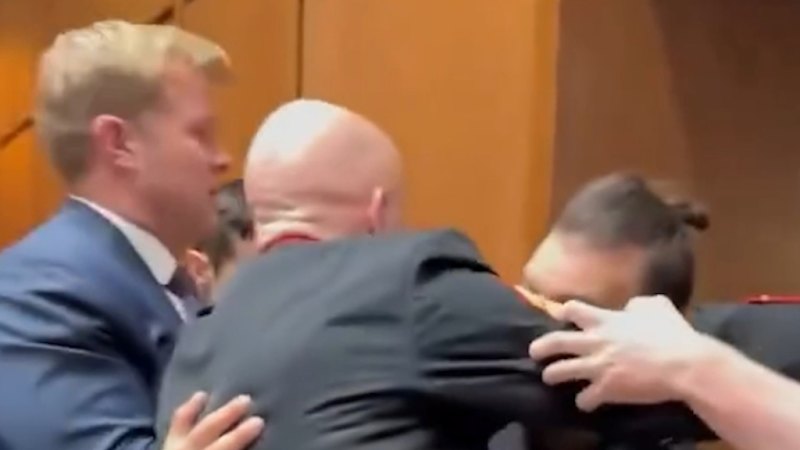
The image of a veteran with a broken arm after a protest in the halls of Congress isn’t just a bad look for Capitol security. It’s a systemic failure. When a man who spent years wearing the uniform of this country ends up in a cast because he wanted to speak his mind to the people who represent him, something has gone fundamentally sideways. This isn't about partisan politics. It’s about the basic right to petition the government without leaving in an ambulance.
You’ve likely seen the headlines. A veteran's arm broken as he protests in Congress. Usually, these stories get buried under a mountain of soundbites within twenty-four hours. But we need to talk about what actually happened on that marble floor and why the "official" version of events rarely captures the physical reality of a peaceful protest gone wrong.
The Reality of the Incident
Capitol Police often find themselves in an impossible position. They’re tasked with guarding the heartbeat of American democracy while managing thousands of visitors, many of whom are rightfully angry about the state of the world. However, the use of force against a non-violent veteran raises questions that a standard "incident report" can’t answer.
During this specific confrontation, witnesses describe a scene that escalated in seconds. The veteran, whose identity has been verified through military records, was participating in a localized demonstration regarding veterans' healthcare and disability benefits. He wasn't armed. He wasn't throwing punches. He was holding a sign and using his voice.
In the scuffle that followed an order to disperse, the veteran was taken to the ground. That’s where the injury occurred. A broken radius and ulna. It’s a clean break that requires surgery, metal plates, and months of physical therapy. For a veteran already dealing with service-related injuries, this isn't just a bump in the road. It’s a life-altering event.
The immediate question is why. Why did a veteran's arm get broken in a building that’s supposed to be the People’s House? The answers aren’t simple. They’re buried in layers of protocol, understaffing, and a culture of heightened tension that’s defined the Capitol since 2021.
What Most People Get Wrong About Protesting in Congress
There’s a massive misconception about what you can and can’t do inside the Capitol building. Most people think it’s like a park or a public square. It isn't. Not even close.
When you enter the Capitol, you're entering a highly controlled environment. The rules are strict. You can't hold up signs. You can't shout. You can't even stand still in certain hallways for too long. If you've been there, you know the vibe. It's quiet, it's intense, and the security presence is overwhelming.
For veterans, this environment can feel particularly stifling. They’ve fought for the very rights that seem to be restricted the moment they walk through those metal detectors. That creates a friction point that can turn a peaceful protest into a physical confrontation in the blink of an eye.
The veteran who left with a broken arm likely knew the rules. But when the message you're trying to deliver feels like a matter of life or death—like healthcare for toxic exposure or suicide prevention—the rules of decorum tend to fall by the wayside. That doesn't make the protest illegal, and it certainly doesn't justify a broken bone.
Security Protocol vs. Common Sense
Capitol Police have a set of protocols for "removing" individuals who violate house rules. These involve "pain compliance" and "joint locks." While these techniques are designed to minimize long-term injury, they are inherently dangerous when applied in a chaotic, crowded environment.
The disconnect happens when a veteran’s muscle memory kicks in. If you've spent a decade in the infantry, your physical response to being grabbed by a stranger is different from a typical civilian's response. You tense up. You resist. Not because you’re trying to start a fight, but because that’s how your body is wired to survive.
When a police officer applies a wrist lock to a tensed arm, things break. That’s the physics of the situation. It’s a failure of training on the part of the officers to recognize the specific demographic they are dealing with.
The Veteran Experience and the Cost of Silence
We love to talk about supporting our veterans. We put the stickers on our cars. We say "thank you for your service" at the grocery store. But when a veteran shows up at the Capitol to demand the benefits they were promised, the script changes.
The veteran in this story wasn't there for a photo op. He was there because the VA system is a labyrinth that leaves people behind. He was there because his friends are dying of cancers they got from burn pits. He was there because he felt like he had no other way to be heard.
Breaking a veteran's arm in the halls of Congress is the ultimate metaphor for how we treat our former service members. We demand their sacrifice, then we break them when they ask for help. It’s a cycle that needs to stop.
Why This Story Still Matters in 2026
You might be thinking, "It’s just one incident." But it’s not. It’s a symptom of a much larger problem. As we move through 2026, the political landscape is only getting more volatile. The stakes for veterans are higher than ever as budgets get slashed and promises get forgotten.
This specific case of a veteran's arm being broken as he protests in Congress serves as a warning. If we can't figure out how to let people—especially those who have served—protest peacefully in the center of our democracy, we've lost something essential.
The physical injury to this veteran is real. The medical bills are real. But the damage to the trust between the government and the veteran community is even more significant. You don't get that trust back with a public relations statement or a half-hearted apology.
The Legal and Ethical Fallout
What happens next for the veteran with the broken arm? Usually, it starts with a lawsuit. The Federal Tort Claims Act allows individuals to sue the government for injuries caused by the negligence or wrongful acts of federal employees.
But suing the government is a marathon, not a sprint. It takes years. It costs a fortune in legal fees. For a veteran with a broken arm and a limited income, this is another battle they shouldn't have to fight.
Ethically, the burden is on Congress to change the way it interacts with the public. We need a system that prioritizes de-escalation over physical force. We need security officers who are trained to handle protestors who might have PTSD or physical limitations from their time in service.
The Real Cost of a Broken Arm
Let's talk about the actual injury. A broken arm for a veteran in his fifties or sixties isn't the same as a broken arm for a teenager. It often leads to permanent loss of grip strength. It can trigger dormant nerve issues. It can mean losing a job that requires manual labor.
The veteran in this case has already undergone one surgery. He’s looking at a second one to remove the hardware once the bone heals—if it heals correctly. The psychological impact of being physically restrained and injured by the very government you swore an oath to protect is a heavy burden to carry.
It’s easy to dismiss a protestor as "disruptive." It’s much harder to dismiss a man with a Purple Heart and a shattered forearm.
Stop Overthinking the Security Issue
The solution isn't more fences or more guards. The solution is more access. If veterans felt like their voices were being heard through the proper channels, they wouldn't feel the need to shout in the hallways of the Capitol.
If you want to understand why a veteran's arm was broken as he protested in Congress, you have to look at the massive gap between the people and their representatives. That gap is where the frustration lives. That gap is where the violence happens.
We don't need "holistic" solutions or "seamless" transitions. We need lawmakers who are willing to walk out of their offices and talk to the people standing in their hallways. We need a security force that understands that a veteran with a sign is not a threat to the republic.
Moving Toward Accountability
If you want to support this veteran and others like him, the first step is staying informed. Don't let these stories disappear from the news cycle. Demand transparency from the Capitol Police. Ask your representatives why they haven't addressed the use of force against peaceful protestors.
The veteran with the broken arm is currently recovering at home, but his fight isn't over. He’s working with legal counsel to ensure that what happened to him doesn't happen to the next person who shows up with a sign and a grievance.
Here is what you can do right now.
Contact your local representative and ask for a statement on the incident involving the veteran's arm being broken in Congress. Hold them accountable for the culture of the building they work in. If they won't protect the people who protected us, who will they protect?
Support veteran advocacy groups that focus on legislative change. Organizations like the VFW and the American Legion are constantly working on the issues that drive veterans to protest in the first place. Getting involved with them is a practical way to ensure that these voices are heard before they have to resort to shouting in the halls of power.
Finally, pay attention to the court cases that will inevitably follow this incident. The rulings on these cases will set the precedent for how your right to protest is protected—or eroded—in the years to come. A broken arm is a physical injury, but the legal outcome of this story will affect the rights of every single American.
The halls of Congress should be a place where every citizen feels safe to speak. When that safety is replaced by the sound of a bone snapping, we all lose. It’s time to stop making excuses for "security protocols" and start making room for the voices that built this country.