The specter of $100 oil is haunting the headlines again. With the Strait of Hormuz effectively a shooting gallery and the threat of direct conflict involving Iran reaching a fever pitch, the knee-jerk reaction from most analysts is to brace for a triple-digit price surge. This logic is seductive, easy to sell to a nervous public, and almost certainly wrong.
Despite the geopolitical carnage, the global oil market is currently operating under a structural ceiling that the Middle East can no longer shatter. The math of 2026 is not the math of 1973 or even 2008. We are witnessing a fundamental decoupling of regional instability from global price discovery. Even a significant disruption in the world’s most critical maritime chokepoint is unlikely to keep Brent crude above the $100 mark for any meaningful duration. The reason lies in a combination of hidden spare capacity, aggressive non-OPEC production, and a Chinese economy that has lost its appetite for record-breaking energy bills.
The Hormuz Illusion
The Strait of Hormuz is often described as the jugular vein of the global economy. Roughly 20% of the world’s daily petroleum consumption passes through this narrow waterway. If Iran decides to sink a tanker or mine the shipping lanes, the immediate spike in insurance premiums and the literal removal of physical barrels from the water should, in theory, send prices to the moon.
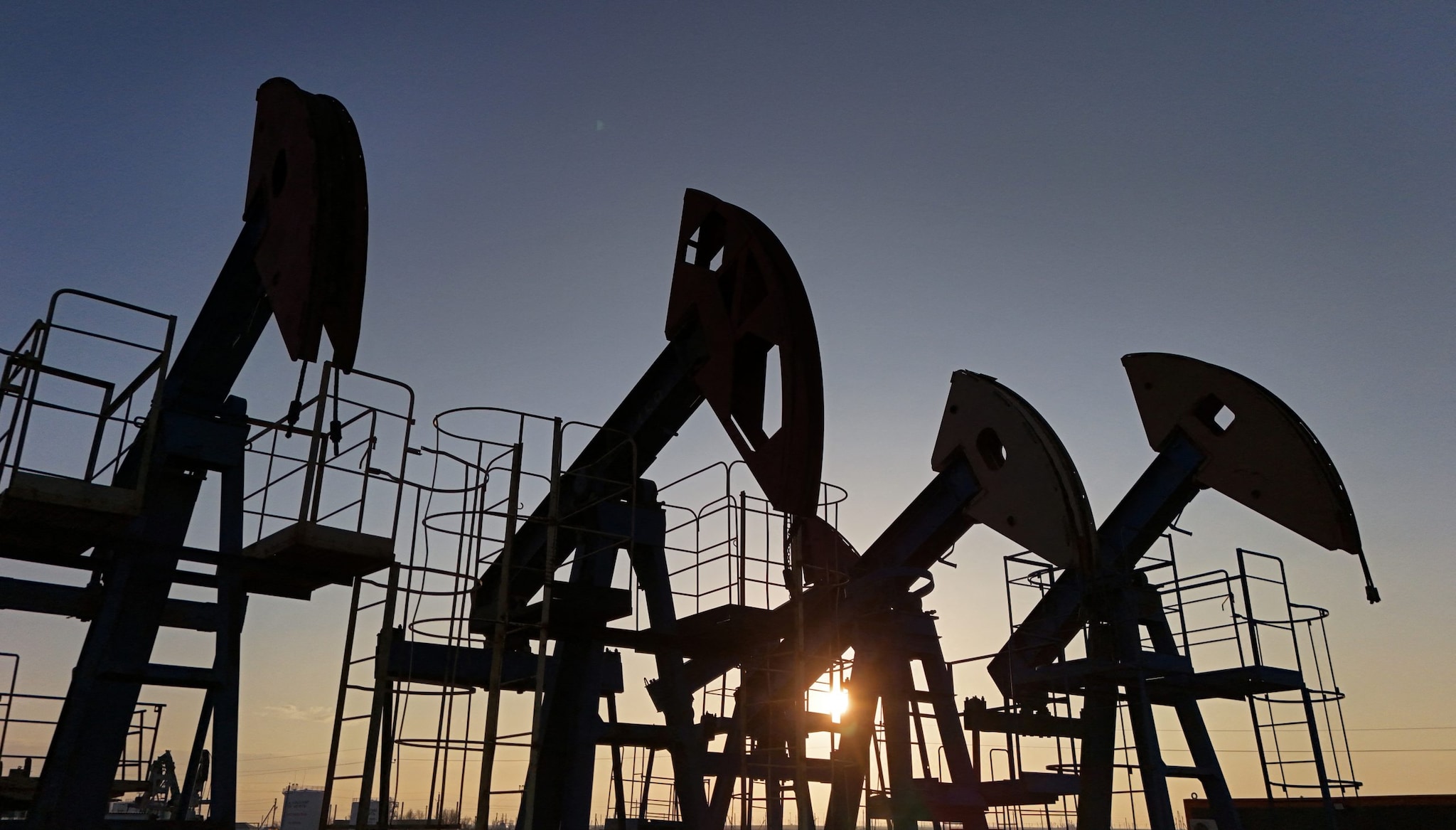
But theory rarely accounts for the "shale buffer." Unlike previous decades where the world waited on OPEC’s grace, the Americas now provide a relentless stream of supply. The United States, Brazil, and Guyana have added millions of barrels to the daily tally over the last few years. This isn't just a slight increase; it's a structural shift. For every barrel that might be trapped behind a blockade in the Persian Gulf, there is a frantic driller in the Permian Basin or off the coast of Georgetown ready to ramp up operations. The agility of modern drilling technology means the time-to-market for new supply has shrunk from years to months.
Furthermore, the physical blockade of the Strait is a tactical nightmare for Iran. It is their own economic lifeline. Closing the door on their neighbors also closes it on themselves. It is the ultimate act of self-immolation, and while Tehran often blusters about "choking" the world, their primary goal remains regime survival. Survival requires revenue, and revenue requires an open, if contested, waterway.
Why the $100 Barrier is Made of Concrete
Price spikes thrive on scarcity and fear. While the fear is real, the scarcity is increasingly artificial. Saudi Arabia and the United Arab Emirates are currently sitting on a massive amount of shut-in production capacity. This is oil that can be brought to market with the turn of a few valves.
The strategy of the OPEC+ alliance has been to keep prices stable by restricting supply, but this creates a paradoxical safety net for the West. If a war breaks out and prices threaten to spiral out of control, the pressure on Riyadh to release that spare capacity becomes irresistible. They don't want a global recession any more than the Americans do. A $120 barrel of oil might look good for a week, but the subsequent economic collapse would kill demand for a decade. The Saudis are playing a long game, and that game involves keeping oil as a viable, affordable energy source against the rising tide of electrification.
The China Factor
We cannot talk about oil prices without talking about the engine room of global demand. For twenty years, China’s insatiable thirst for crude was the primary driver of every bull market. That engine is now sputtering. The structural slowdown of the Chinese property sector and the rapid-fire adoption of electric vehicles in their domestic market have fundamentally altered their import needs.
When China sneezes, the oil market catches a cold. Their demand growth has peaked. Even if supply is constrained by a Middle Eastern skirmish, the "pull" from the world's largest importer isn't strong enough to sustain a triple-digit price point. Traders are looking at the data and seeing a world where demand is no longer an infinite upward slope.
The Logistics of a Modern Energy War
Warfare in 2026 looks different than it did in the Gulf War era. The threat to oil isn't just about blowing up tankers. It’s about cyberattacks on pipelines and refineries. However, even these disruptions are met with a more resilient infrastructure than we saw twenty years ago.
Strategic Petroleum Reserves (SPR) across the globe, while depleted in some nations, still offer a significant psychological and physical cushion. The mere announcement of a coordinated reserve release by IEA member countries acts as a fire extinguisher for speculative fever. Market participants know that the "missing" barrels from a Hormuz disruption can be replaced by government stocks almost instantly. This knowledge prevents the panic-buying that traditionally drives prices toward $100.
The Role of Speculative Capital
Wall Street plays a massive role in these price swings. When the first missile flies, the algorithms and hedge funds pile into long positions. This creates an initial "war premium" of $5 to $10 per barrel. But this is paper trading, not physical delivery.
Once the initial shock wears off, the reality of the physical market sets in. Refiners look at their margins and realize they can't afford $100 crude if consumers are cutting back on gasoline. The speculative bubble pops. This cycle is getting shorter. In previous conflicts, it took months for the premium to bleed out. Now, with high-frequency trading and instant information flow, the market prices in the risk and then looks for the exit within weeks.
The Margin of Error
Nothing is certain in a war zone. If a conflict expands to include the total destruction of Saudi Arabian processing facilities—reminiscent of the 2019 Abqaiq–Khurais attack but on a much larger scale—then all bets are off. If the physical infrastructure that processes the oil, not just the lanes that transport it, is turned to rubble, we will see a price shock that defies logic.
But that is not the scenario most analysts are predicting when they talk about "Hormuz disruption." They are talking about a maritime bottleneck. And a bottleneck is a logistical problem, not a geological one. The world has become very good at solving logistical problems. We have more pipelines bypassing the Strait than ever before, including the East-West Pipeline in Saudi Arabia and the Habshan-Fujairah line in the UAE. These aren't just redundant systems; they are the pressure release valves of the global economy.
Redefining Energy Security
The old definition of energy security was owning the wells. The new definition is having the most diverse supply chain. The West has diversified. Europe has spent the last two years untethering itself from Russian energy, a process that was painful but left them with a more robust, varied infrastructure. This resilience makes them less susceptible to a single point of failure in the Middle East.
When you look at the tankers currently at sea, you see a map of a world that has learned to adapt. We see oil moving in ways that would have been unthinkable a decade ago. Russian crude flowing to India, American crude flowing to Europe, and Middle Eastern crude fighting for market share in a crowded room. In this environment, a regional war is a tragedy, but it is no longer a global economic death sentence.
The Reality Check
The market is currently pricing in a reality where oil is a plentiful commodity, not a rare treasure. To get past $100, you need more than just a war; you need a total systemic failure of the global supply chain. You need the US shale patch to dry up, the Saudi spare capacity to vanish, and the Chinese economy to suddenly rediscover its 8% GDP growth. None of those things are happening.
Investors should watch the insurance markets more closely than the military briefings. If the cost to insure a hull in the Persian Gulf doesn't go parabolic, the oil price won't either. The "smart money" is already betting that the ceiling will hold. They see the underlying weakness in global demand and the overwhelming strength of non-OPEC supply.
The era of $100 oil as a standard response to Middle Eastern chaos is over. The world has built too many walls, dug too many wells, and designed too many batteries to be held hostage by a single waterway.
Monitor the spread between Brent and West Texas Intermediate (WTI). If that gap doesn't widen significantly during the next flare-up, it’s a sign that the global market is absorbing the shock with ease. Focus on the physical barrels, not the headlines.