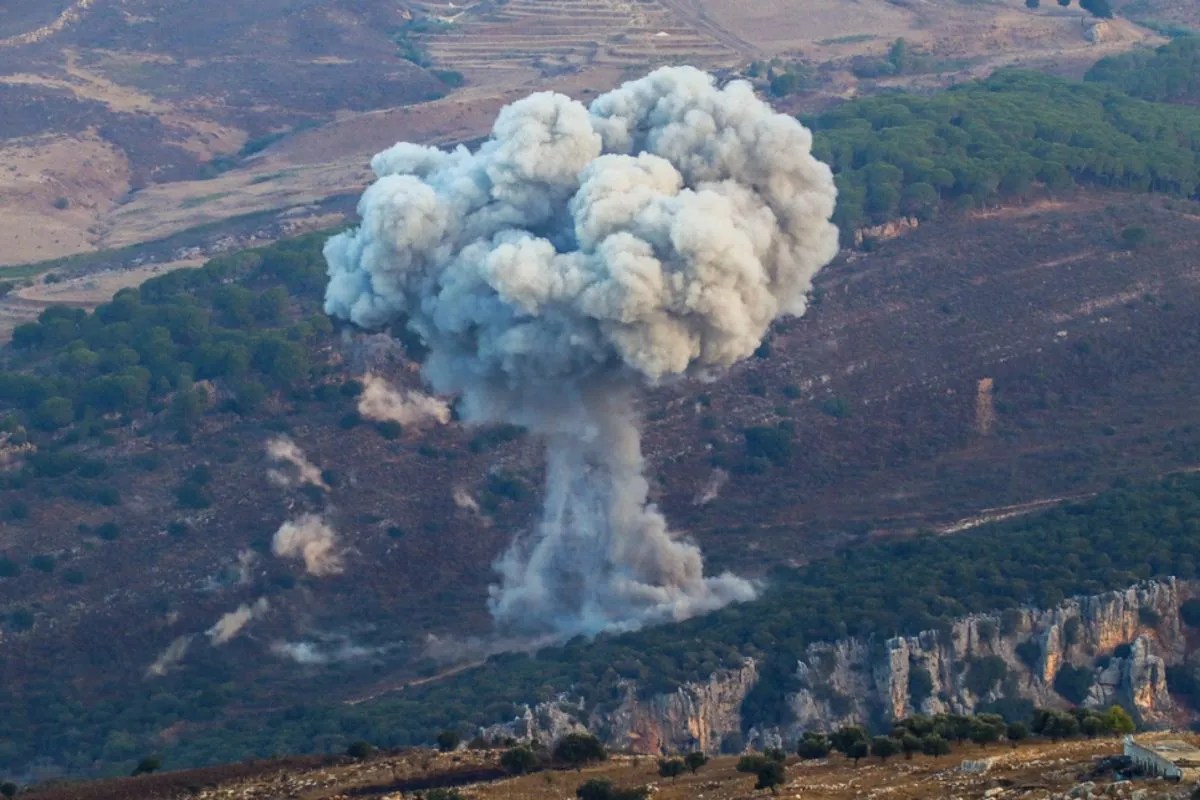
The escalation of Israeli airstrikes across Lebanon has moved past the stage of targeted operations into a campaign of systematic attrition. While initial reports focused on a single day of strikes that claimed at least 24 lives, the reality on the ground reflects a much broader strategic shift. This isn't just about reactionary fire. It is a calculated attempt to dismantle the logistical backbone of a non-state actor while the civilian population pays the inevitable price of proximity. The mechanics of this conflict are shifting from border skirmishes to a full-scale aerial siege designed to force a political collapse through kinetic pressure.
Israel’s air force is currently operating under a doctrine of maximum visibility. By striking deep into Lebanese territory, well beyond the traditional Litani River boundary, the military command is signaling that no geography remains off-limits. The recent casualties are not merely statistics in a decades-old feud; they represent the failure of international de-escalation efforts that have tried, and failed, to keep this theater from boiling over.
The Strategy of Dislocation
The primary objective of these strikes is dislocation. In military terms, this means stripping an opponent of their ability to coordinate, move, or sustain their forces. When an airstrike hits a residential block in a southern village or a warehouse on the outskirts of Beirut, the immediate effect is death and destruction. The long-term goal, however, is to sever the connection between the militant infrastructure and the social fabric of the country.
This approach assumes that by making the cost of hosting certain groups unbearable, the local population will eventually turn against them. It is a high-stakes gamble. History suggests that such pressure often has the opposite effect, radicalizing survivors and hardening resolve. Yet, the Israeli security cabinet appears convinced that "escalating to de-escalate" is the only remaining path to returning their own displaced citizens to the northern Galilee.
The Intelligence Gap and Civilian Toll
One must look at how these targets are selected to understand the rising death toll. Modern warfare relies on a "target bank"—a massive database of locations compiled over years through signals intelligence, satellite imagery, and human assets. When the pace of strikes accelerates, the window for verifying human presence shrinks.
A missile hitting a building results in what planners call collateral damage, but for the families in Lebanon, it is the total erasure of their world. The precision of the munitions—often GBU-series guided bombs—contrasts sharply with the messy reality of urban warfare. A "smart" bomb is only as intelligent as the data fed into it. If the intelligence is stale, or if a target moved five minutes before impact, the result is a pile of rubble containing nothing but civilians.
We are seeing a pattern where the distinction between military and civilian infrastructure is becoming increasingly blurred. If a garage is suspected of housing a launcher, it becomes a target. If a basement is thought to hold a communication node, the entire apartment block above it is considered fair game under current engagement rules. This logic is what leads to 24 deaths in a single afternoon, a number that continues to climb as the sorties increase.
The Failure of the Buffer Zone
For months, the international community pinned its hopes on UN Resolution 1701. The idea was simple: keep armed groups away from the border and let the Lebanese Army and UNIFIL peacekeepers manage the space. That framework is now effectively dead. The air campaign serves as a violent admission that diplomacy has no teeth in the current environment.
The strikes are now targeting the very roads and bridges that allow for movement within the country. By restricting mobility, Israel aims to create a de facto buffer zone through fire rather than boots on the ground. This saves Israeli lives in the short term by avoiding a messy ground invasion, but it turns southern Lebanon into a "kill zone" where anyone moving is viewed as a potential combatant.
Economic Warfare by Proxy
Lebanon was already a failed state economically before the first bomb fell in this latest round. The currency is worthless, the central bank is hollowed out, and the government is paralyzed by sectarian gridlock. The air campaign acts as a final hammer blow to a crumbling structure.
When strikes hit near major transit hubs or industrial areas, they don't just kill people; they kill the remaining slivers of the economy. Insurance rates for shipping skyrocket. Foreign workers flee. The cost of basic goods rises because the risk of transport is too high. Israel knows this. Part of the "how" in this war is the understanding that a country that cannot feed itself or keep its lights on is a country that eventually loses its appetite for a prolonged fight.
The Regional Shadow
No analysis of the Lebanon strikes is complete without looking at the supply chain. The rockets being fired back into Israel do not appear out of thin air. They travel through a sophisticated "land bridge" stretching across the Middle East. The airstrikes are increasingly targeting the reception end of this bridge.
By hitting transit points in the Bekaa Valley, the Israeli Air Force is trying to plug a hole that has been open for twenty years. This is an attempt to create a vacuum. If the flow of sophisticated weaponry can be slowed, the threat to Tel Aviv and Haifa diminishes. However, this assumes that the stockpiles already buried in the Lebanese hills aren't enough to sustain a war of months, if not years.
The Irony of Precision
There is a grim irony in the use of high-tech weaponry in these strikes. The more precise the weapon, the more the attacker is held responsible for every life lost. In the 1980s, "dumb" bombs provided a shield of incompetence; today, every strike is a deliberate choice. When 24 people die in a series of hits, it is because those hits were programmed, tracked, and executed with mathematical certainty.
The international community watches these numbers with a practiced detachment, issuing statements of "deep concern" while the machinery of war continues to grind. The reality is that as long as the strategic objectives remain unmet, the frequency of these strikes will only increase. The threshold for what constitutes an acceptable loss of life is being recalibrated in real-time.
The Illusion of a Limited Conflict
Many analysts have tried to categorize this as a "limited conflict" or a "containment strategy." That is a comfort for those living far from the blast radius. For the people of Lebanon, there is nothing limited about it. When your neighbor’s house vanishes in a flash of grey smoke, the war is total.
The escalation is now feeding itself. Every strike creates a need for a response, and every response provides the justification for a heavier strike. We are witnessing the dismantling of the "rules of the game" that governed the border for nearly two decades. Those rules were based on a mutual understanding of destruction. Now, one side has decided that the status quo is no longer tolerable and is willing to burn the table to change the result.
The air campaign is a blunt instrument being used to solve a surgical political problem. It is an admission that words have failed and that the only language left is the impact of a thousand-pound warhead. As the sorties continue and the target list grows, the distinction between a military operation and a national catastrophe disappears.
The question is no longer whether Lebanon will be drawn into a wider war. The strikes of the last 48 hours prove that the wider war has already arrived. The strategy of attrition is in full swing, and the calculus of the planners suggests that the human cost is simply a secondary variable in a much larger, much more dangerous equation.
Monitor the movement of heavy armor toward the northern border. If the air campaign transitions into a sustained artillery barrage, the window for any diplomatic exit will have officially slammed shut.


