When you pull up to a gas station and stare at the digits rolling over on the pump, you aren't just paying for fuel. You are paying for a global supply chain that is currently fighting a war against geography, chemistry, and tax law. Most drivers assume the price they pay is a direct reflection of "big oil" greed or the current occupant of the White House. The reality is far more clinical and, in many ways, more frustrating. The retail price of gasoline is the result of four distinct cost drivers: the price of crude oil, refining costs and profits, distribution and marketing expenses, and federal and state taxes.
While the ratio fluctuates, crude oil typically accounts for roughly 50% to 60% of what you pay at the nozzle. The rest is a volatile cocktail of industrial overhead and government levies. Understanding this breakdown is the only way to see through the political theater that accompanies every price spike.
The Crude Reality of Global Benchmarks
Crude oil is the primary raw material, but it is not a monolithic product. What you pay in Ohio or California depends heavily on whether the refinery that supplied your station is processing West Texas Intermediate (WTI) or Brent North Sea crude. These are the two primary benchmarks that dictate global prices.
WTI is usually cheaper because it is "light" and "sweet," meaning it has low density and low sulfur content, making it easier to process into gasoline. Brent, sourced from the North Sea, often carries a premium. When geopolitical tensions flare in the Middle East or Eastern Europe, Brent prices climb, dragging the global market with them.
Refineries don't buy oil on the day you buy gas. They buy it weeks or months in advance through futures contracts. This creates a "lag effect" that drives consumers mad. When the price of crude drops on the news, the price at the pump stays high because the station owner is still trying to recoup the cost of the expensive fuel already sitting in their underground tanks. Conversely, when crude prices jump, station owners often raise prices immediately to ensure they have enough cash to buy their next, more expensive delivery. It is a survival mechanism, not necessarily a conspiracy.
The Refining Bottleneck
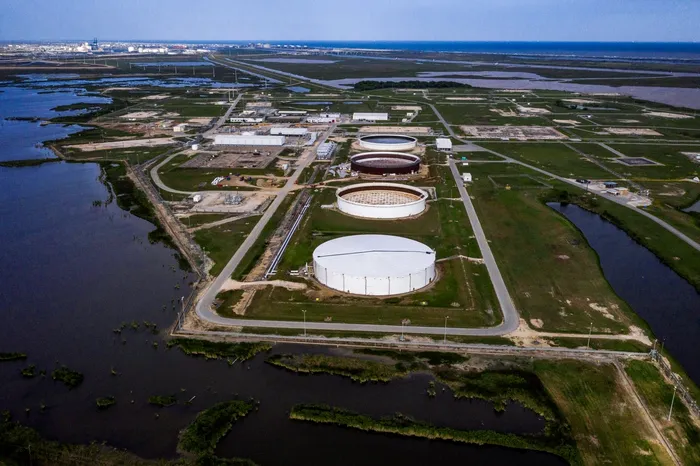
If crude oil is the flour, the refinery is the bakery. For decades, the United States has faced a shrinking number of refineries. We haven't built a major, high-capacity refinery from the ground up since the 1970s. Instead, we have relied on expanding existing facilities. This creates a precarious "just-in-time" supply chain where a single power outage at a plant in Louisiana or a hurricane in the Gulf of Mexico can send prices screaming upward across several states.
Refining costs generally make up about 15% to 20% of the retail price. This includes the physical act of "cracking" the oil—using heat and chemical catalysts to break down heavy molecules into the lighter ones that power your engine.
The Seasonal Switch
Twice a year, the refining industry undergoes a massive, expensive shift that most consumers never notice until they see the price board change. The Environmental Protection Agency (EPA) mandates different gasoline blends for summer and winter. Summer-blend gasoline is designed to be less prone to evaporation, which helps reduce smog during hot months.
This blend is more expensive to produce. It requires more complex refining steps and costlier components. Every spring, as refineries draw down their winter stocks and perform "turnaround" maintenance to switch their equipment over, supply tightens and prices rise. This is a predictable, annual event, yet it is treated as a fresh crisis every May.
Distribution Logistics and the Neighborhood Markup
Once the fuel leaves the refinery, it travels through a massive network of pipelines to regional terminals. From there, it is loaded into tanker trucks for the "last mile" delivery to your local station. This distribution and marketing phase accounts for roughly 10% to 15% of the total price.
The cost of this stage is highly localized. A station located right next to a major pipeline terminal will have lower freight costs than a station in a rural mountain town that requires a truck to drive three hours uphill.
The Myth of the Wealthy Station Owner
There is a common misconception that the person owning the gas station is getting rich off a $4.00 gallon. In reality, the retail margin—the difference between what the station pays for the fuel and what they sell it for—is razor-thin. After paying for credit card processing fees (which are often 2% to 3% of the total transaction), electricity, insurance, and labor, many station owners make only a few cents of profit per gallon.
This is why the gas station has transformed into a convenience store that happens to sell fuel. The "markup" is on the $2.50 bottle of water and the $5.00 bag of jerky, not the gasoline. If you want to hurt a station owner's bottom line, buy the gas and skip the snacks.
The Tax Collector’s Share
Taxes are the most stable part of the gas price equation, but they vary wildly by geography. The federal excise tax has been stuck at 18.4 cents per gallon since 1993. It does not move with the price of oil.
State taxes are a different story altogether. In states like Pennsylvania or California, state taxes and environmental fees can add an additional 50 to 60 cents per gallon. In states like Alaska or Mississippi, that burden is significantly lower. This explains why you can drive across a state line and see a 40-cent price difference within five miles. These taxes are generally earmarked for infrastructure, though the "diversion" of these funds into general state budgets is a perennial point of political contention.
Why Prices Are Sticky
Economists often refer to gas prices as "rockets and feathers." They shoot up like a rocket when crude prices rise, but they drift down like a feather when crude prices fall. This isn't just psychological; it's a reflection of the extreme risk managed by small retailers.
If a station owner lowers their price too quickly and the wholesale price suddenly spikes, they may find themselves unable to afford the next delivery, effectively putting them out of business. They wait for a clear, sustained downward trend in the market before they dare to trim their margins at the pump.
The Invisible Hand of Ethanol
Since the Energy Policy Act of 2005, most gasoline sold in the United States contains about 10% ethanol (E10). This mandate was intended to reduce oil imports and support domestic agriculture. While ethanol is often cheaper than pure gasoline, it has lower energy density, meaning your car gets slightly fewer miles per gallon.
The price of corn, therefore, has a direct, if small, impact on the price of your commute. When droughts hit the Midwest or international demand for corn exports rises, the cost of blending E10 increases. It is another layer of complexity in a price tag that most people think is determined solely by oil moguls in boardrooms.
Regional Anomalies and Environmental Mandates
California is the ultimate case study in price complexity. The state requires a unique "boutique" blend of gasoline that is not used anywhere else. Because this fuel cannot be easily shipped in from other states, California is essentially an "energy island." If a refinery in Richmond or El Segundo goes offline, the state cannot simply pipe in gas from Texas. They have to wait for specialized tankers to arrive or for the refinery to be repaired. This isolation, combined with the highest carbon taxes in the nation, ensures that West Coast drivers will almost always pay a massive premium over the national average.
The Financialization of the Pump
Finally, we have to acknowledge the role of Wall Street. Oil is a traded commodity. Speculators—hedge funds, pension funds, and individual traders—bet on the future price of oil. While they don't physically touch the barrels, their collective sentiment can drive prices up based on the expectation of a supply shortage, even if that shortage hasn't happened yet.
When you see the price of gas rise because of a "threat" of a strike in a foreign port, you are seeing speculation in action. The physical supply hasn't changed, but the perceived risk has. This creates a volatility that is disconnected from the actual cost of pulling liquid out of the ground.
The next time you see the price change on the marquee, ignore the political stickers on the pump. Look instead at the crude benchmarks, the calendar date for the summer blend switch, and the tax rate of the zip code you are standing in. The math is cold, transparent, and entirely indifferent to your budget.
Your commute is a hostage to a system that prioritizes global liquidity and refining uptime over consumer convenience.