The Cuban economy is not merely stagnating; it is being systematically dismantled by a pincer movement of internal bureaucracy and external pressure. For decades, the narrative surrounding U.S.-Cuba relations focused on the Cold War hangover. However, the strategy solidified during the Trump era and maintained by subsequent shifts created a specific, lethal form of uncertainty. It wasn't just about high-level diplomacy. It was a targeted strike on the emerging Cuban entrepreneur.
By labeling the entire island a state sponsor of terrorism and activating Title III of the Helms-Burton Act, the U.S. government effectively choked the life out of the "cuentapropistas"—the small business owners who were supposed to be the bridge to a modernized Cuba. These weren't communist apparatchiks. They were taxi drivers, bed-and-breakfast hosts, and software developers who suddenly found their bank accounts frozen and their supply chains severed. The core premise was simple: make life so difficult that the system would collapse. Instead, the system hardened, and the people in the middle were the ones who broke.
The Myth of the Surgical Sanction
Washington often talks about "targeted sanctions" designed to hurt the government without harming the populace. In the Cuban context, this is a fantasy. When the U.S. Treasury Department banned "people-to-people" educational travel and restricted cruise ships, they didn't just hit the Cuban military’s tourism arm. They decimated a massive ecosystem of private laundry services, independent tour guides, and family-run restaurants.
Consider the mechanics of a private restaurant in Havana. To serve a steak, the owner needs meat, spices, and reliable electricity. Under the tightened embargo, importing equipment became a logistical nightmare involving three different intermediary countries and a 300% markup. When the U.S. restricted remittances—the literal lifeblood of the Cuban private sector—the capital required to fix a broken refrigerator or buy bulk flour evaporated overnight. This wasn't a side effect; it was the mechanism of the policy.
The Dual Threat of Bureaucracy and Blacklists
While Washington tightened the noose from the outside, the Cuban Communist Party provided the rope from the inside. The tragedy of the Cuban entrepreneur is that they are viewed with suspicion by both the White House and the Plaza de la Revolución.
The Cuban government’s response to external pressure has historically been to retreat into "centralized planning." For a private business owner, this means navigating a labyrinth of shifting regulations where "legal" today can become "illicit enrichment" tomorrow. The state maintains a monopoly on wholesale trade, forcing private shops to buy supplies at retail prices or turn to the black market.
The Currency Chaos
In 2021, the Cuban government attempted to unify its dual-currency system. It was a disaster of timing and execution. The Cuban Peso (CUP) plummeted in value while the government introduced "MLC" (freely convertible currency) stores that only accepted foreign cards.
For a local business, this created a math problem that couldn't be solved. They earned in pesos from local customers but had to buy supplies in MLC or on the street at exorbitant exchange rates.
$$Inflation\ Rate = \frac{Price_{New} - Price_{Old}}{Price_{Old}} \times 100$$
When inflation hits triple digits, the concept of a "business plan" becomes a joke. You aren't managing a company; you are managing a daily survival operation. The uncertainty isn't a cloud on the horizon; it is the air they breathe.
Why Engagement Failed to Stick
The Obama-era "thaw" was built on the idea that an influx of American capital and culture would naturally erode the edges of the Cuban state. It was a soft-power play. The reversal under the Trump administration proved how fragile that progress was because it relied on executive orders rather than codified law.
When the policy flipped, the American companies that had dipped their toes into the Cuban market—Airlines, hotel chains, and tech firms—didn't just leave. They fled. The legal risk of being sued under Title III for using "confiscated property" was too high. This left the Cuban private sector completely isolated. They had been told to build a bridge to the North, only to watch the North set the bridge on fire while they were standing in the middle of it.
The Migration of the Middle Class
The most devastating result of this sustained uncertainty isn't economic; it’s demographic. Cuba is currently experiencing the largest mass exodus in its history. This isn't just people fleeing political oppression; it is a brain drain of the very entrepreneurs the U.S. claimed it wanted to support.
When a 28-year-old engineer in Havana realizes that no amount of hard work will allow them to buy a car or even a consistent supply of eggs, they leave. They sell their tools, their furniture, and their dreams of owning a local business to pay a smuggler in Nicaragua.
- The Loss of Talent: The people leaving are often the most educated and most motivated.
- The Aging Population: Cuba has one of the oldest populations in the Western Hemisphere, with fewer young workers to support them.
- The Death of Innovation: Local tech startups are moving to Mexico or Spain, taking their intellectual property with them.
The Geopolitical Vacuum
As the U.S. pulls back, other players move in. Russia and China are not interested in "fostering democracy" or "supporting entrepreneurs." They are interested in strategic ports and intelligence gathering. By making it impossible for Western-aligned private businesses to thrive, U.S. policy has effectively handed the Cuban government back into the arms of its old Cold War allies.
Moscow has already begun discussing "reforming" the Cuban economy along the lines of its own oligarchic model. This isn't a win for the Cuban people. It replaces a stagnant state-run economy with a predatory one where the only people who succeed are those with direct ties to the military or foreign intelligence services.
The Disconnect in Washington
There is a fundamental misunderstanding in the U.S. political theater regarding how change happens in Cuba. One side believes that total isolation will lead to a popular uprising. The other believes that total engagement will lead to a democratic transition. Both are wrong because they ignore the reality on the ground.
The Cuban state is remarkably resilient to pressure. It has survived the collapse of the Soviet Union and sixty years of sanctions. The only thing that has ever truly challenged the state's total control was the rise of the independent private sector between 2014 and 2017. By crushing that sector through a combination of travel bans and financial restrictions, the U.S. didn't weaken the government; it eliminated the government's only internal competition.
Realities of the Modern Blockade
It is important to look at the specifics of the restricted entities list. The U.S. State Department maintains a list of hundreds of hotels, stores, and companies that Americans are forbidden from doing business with because they are linked to the Cuban military.
On paper, this sounds logical. In practice, the military-run conglomerate GAESA controls nearly every significant piece of infrastructure in the country. If you want to rent a warehouse, it belongs to GAESA. If you want to process a credit card payment, the terminal likely belongs to a state bank. By making these interactions illegal, the U.S. makes it nearly impossible for a private business to scale. A small coffee shop is fine, but a coffee roasting plant is a legal impossibility.
The Failure of Hope as a Strategy
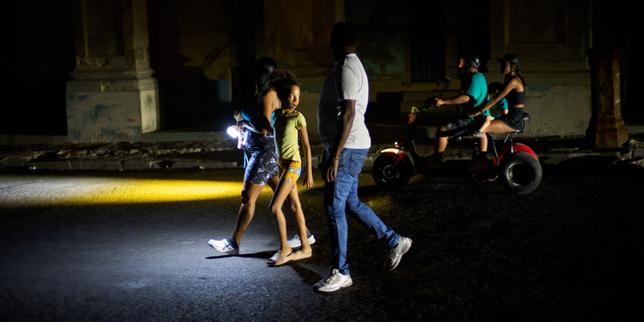
The current status quo is a zombie policy. It is maintained not because it works, but because the political cost of changing it is seen as too high in Florida. Meanwhile, the Cuban people are trapped in a cycle of shortages and blackouts.
The private sector in Cuba is currently in a state of suspended animation. There are over 10,000 "SMEs" (Small and Medium Enterprises) legally registered now, a major concession by the Cuban government. Yet, they cannot access the U.S. banking system. They cannot buy American products directly. They are forced to operate through expensive intermediaries in third countries.
If the goal of U.S. policy was to create a vibrant, independent middle class that could push for reform, the current strategy of maximalist pressure is its own worst enemy. You cannot build a middle class while simultaneously cutting off its access to capital, electricity, and customers. The uncertainty is not a byproduct; it is the coffin.
Pressure the Cuban government to allow private wholesale imports directly from U.S. suppliers.