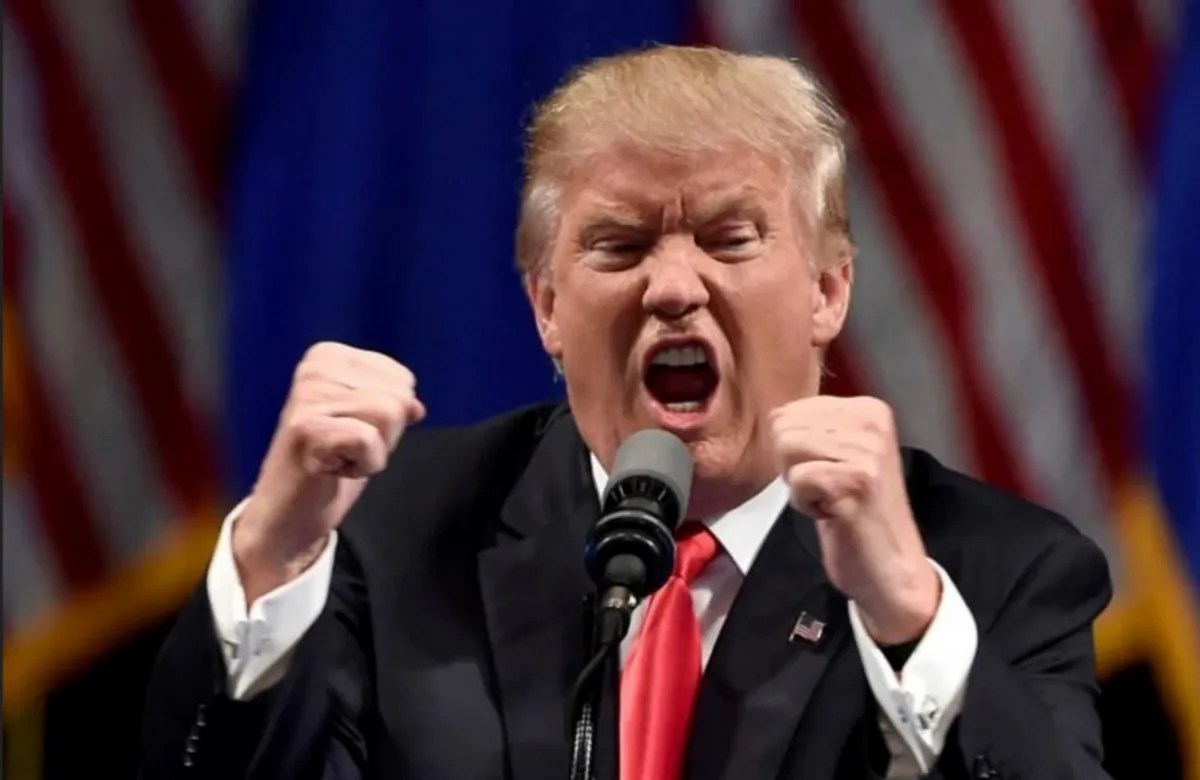
Donald Trump is framing the recent cessation of hostilities between the United States and Iran as a total capitulation by Tehran, but the reality on the ground suggests a far more complex transaction of power. While the former president claims this ceasefire is a definitive victory for American interests, a closer look at the mechanics of the deal reveals a high-stakes geopolitical trade-off. This isn't just a pause in firing; it is a fundamental realignment of Middle Eastern influence that prioritizes immediate stability over long-term containment.
The deal ostensibly halts direct military exchanges and freezes certain nuclear activities in exchange for significant sanctions relief. Trump argues that his "maximum pressure" campaign finally broke the Iranian economy, forcing them to the table on his terms. It is a compelling narrative for a domestic audience. However, the fine print of this agreement suggests that Iran has secured the one thing it needed most: time. By stopping the clock on escalations, Tehran avoids a direct confrontation it cannot win while retaining the infrastructure it has spent decades building.
The Mirage of Total Victory
Publicly, the rhetoric is one of dominance. Trump’s assertion that "Iran has never won a war but never lost a negotiation" is being put to the test. By declaring a win so early, the administration is betting that the mere absence of conflict will be viewed as success. This is a dangerous metric. History shows that in the Middle East, a ceasefire is often just a period of replenishment.
The "victory" claimed by the U.S. rests on the assumption that Iran’s compliance is driven by weakness rather than strategy. Veteran intelligence analysts see it differently. Tehran has mastered the art of "strategic patience." They are willing to take a tactical hit—such as pausing enrichment or pulling back proxy forces in specific corridors—if it means the flow of oil resumes and the internal pressure on the regime subsides. If the sanctions are lifted without a permanent, verifiable dismantling of the IRGC’s regional reach, the U.S. hasn't won; it has simply financed the next round of the shadow war.
Financing the Proxy Network
One of the most overlooked factors in this ceasefire is the "back-channel" agreement regarding frozen assets. Billions of dollars are expected to be unfrozen and moved through third-party intermediaries in Qatar and Oman. The administration insists these funds are earmarked for humanitarian purposes. This is a naive distinction in a centralized economy like Iran’s.
Money is fungible. When the state no longer has to use its own limited reserves to buy food and medicine, it can redirect those existing funds toward its ballistic missile program or its networks in Lebanon, Iraq, and Yemen. We have seen this movie before. The 2015 JCPOA followed a similar logic, and while it slowed the nuclear clock, it accelerated regional instability. By repeating this pattern, the current administration is choosing a quiet present at the expense of a chaotic future.
The Nuclear Threshold Problem
The ceasefire addresses the "symptoms" of the Iran-US conflict—the drone strikes and the tanker seizures—but it leaves the "disease" untouched. Iran remains a threshold nuclear state. They have the knowledge, the centrifuges, and the physics packages. No amount of rhetoric can "un-learn" the progress they made during the years of maximum pressure.
Current intelligence suggests that while Iran may stop enriching to 60%, they are keeping their stockpile of highly enriched uranium (HEU) within reach. A true victory would involve the physical removal of this material from Iranian soil. That is not on the table. Instead, we have a "freeze-for-freeze" arrangement that leaves the door open for a rapid breakout the moment the diplomatic climate shifts.
Regional Allies and the Price of Silence
Israel and the Gulf monarchies are watching this play out with a mixture of dread and pragmatism. While the U.S. celebrates a "win," Riyadh and Jerusalem are calculating the cost of American withdrawal. This ceasefire signals a clear desire by Washington to pivot away from the Middle East. Trump’s brand of isolationism is based on the idea that "great nations do not fight endless wars," but leaving a vacuum in the Levant is rarely a clean break.
The Abraham Accords were built on the premise of a united front against Iranian hegemony. If the U.S. makes a separate peace with Tehran, that front cracks. Israel has already hinted that it does not consider itself bound by any "gentleman’s agreement" between Trump and the Supreme Leader. If the U.S. won't stop the Iranian nuclear project, Israel will. This creates a scenario where the U.S. might be "at peace" while its primary regional ally is at war, potentially dragging Washington back into the fray under much worse conditions.
The Economic Engine of the Ceasefire
The true driver of this deal isn't just diplomacy; it’s the global energy market. The U.S. needs stable oil prices to maintain domestic economic growth and keep inflation in check. Iran, despite years of sanctions, remains one of the few players capable of injecting significant supply into the market quickly.
By bringing Iranian crude back into the legal fold, the administration is effectively using Tehran to subsidize American gas prices. It is a cynical but effective play. If the price of a gallon of gas drops because of a deal with a designated state sponsor of terrorism, most voters won't complain until the next crisis hits. This is the "hidden dividend" of the ceasefire that the White House won't mention in its press releases.
The Enforcement Gap
Any agreement is only as good as its verification mechanism. The International Atomic Energy Agency (IAEA) has been complaining for months about "blind spots" in Iranian facilities. This new deal supposedly restores access, but the IRGC has a long history of hiding work at military sites like Parchin, which fall outside standard inspections.
The administration is relying on "electronic surveillance" and "national technical means" to ensure Iran doesn't cheat. This is a gamble. Iran’s hardening of its facilities—moving them deeper into mountains like Fordow—makes remote monitoring increasingly unreliable. Without "anytime, anywhere" inspections, the claim of victory is built on sand.
The Weaponization of the Narrative
Trump’s messaging is designed to contrast his "deal-making" prowess with the perceived "weakness" of his predecessors. By framing the ceasefire as a win, he preemptively mutes criticism from the hawks in his own party. It is a masterful stroke of political branding. He is claiming the mantle of the peacemaker while simultaneously maintaining the image of the tough-as-nails negotiator.
But branding is not strategy. A strategy requires a clear end-state. If the end-state is simply "no more headlines about American soldiers being attacked by drones," then the mission is accomplished. If the end-state is a denuclearized Iran that no longer threatens to wipe its neighbors off the map, then this deal is a monumental failure.
The Shift in Proxy Warfare
We are seeing a shift from kinetic conflict to "managed friction." Under the terms of the ceasefire, the IRGC hasn't agreed to stop its regional activities; it has simply agreed to lower the profile of those activities. Instead of direct strikes on U.S. bases, we will likely see an uptick in cyber-attacks, maritime harassment that stops just short of "war," and political subversion in Baghdad and Beirut.
This is the gray zone. The U.S. is poorly equipped to fight in the gray zone, especially when the executive branch is committed to a narrative of success. When every Iranian provocation is downplayed to protect the integrity of the "deal," the deterrence that the U.S. spent decades building evaporates.
Domestic Implications
The timing of this announcement is not accidental. With an election cycle looming, the administration needs a foreign policy "win" that doesn't involve troop deployments. The American public is tired of the Middle East. They are tired of the cost, the complexity, and the lack of clear results.
Trump is tapping into this fatigue. By telling the public that he "won" and that the "Iran problem" is solved, he is giving the electorate exactly what they want to hear. The danger is that the "Iran problem" is not a math equation that can be solved; it is a persistent geopolitical reality that can only be managed.
A Precedent for Future Rogue States
The world is watching how the U.S. handles Tehran. If Iran can get the majority of its demands met by simply holding out long enough and engaging in enough low-level violence, other nations will take note. Pyongyang and Moscow are observing the "Trump model" of negotiation: escalate to the brink, then offer a strategic retreat in exchange for legitimacy and economic relief.
This deal sets a precedent that the U.S. is willing to trade its long-term strategic goals for short-term political stability. It suggests that the "red lines" of the past are now pink, and that "maximum pressure" has a very short shelf life.
The ceasefire is not the end of the Iran-US rivalry; it is the beginning of a new, more dangerous phase. By declaring victory and walking away, the U.S. is leaving the door wide open for the very actors it claims to have defeated. The administration has traded the certainty of conflict for the uncertainty of a fragile peace, and in the world of high-stakes diplomacy, uncertainty is often the more expensive option.
The true measure of this deal will not be found in Trump’s speeches or in the temporary dip in oil prices. It will be found in the centrifuges that continue to spin in secret and the missiles that are being moved under the cover of a negotiated silence. When the noise of the celebration fades, the fundamental reality remains: Iran is closer to its goals today than it was before the "victory" was declared.