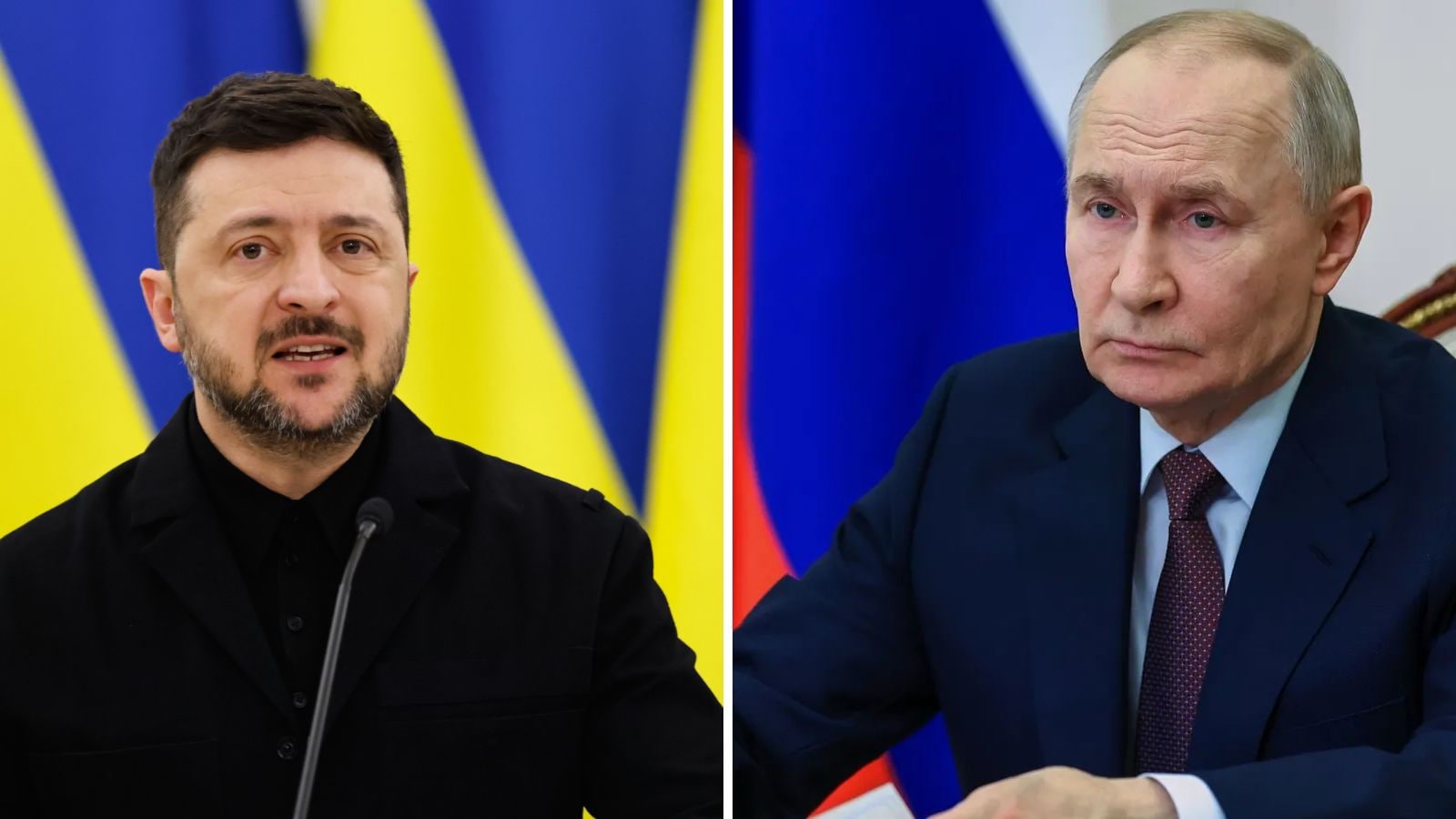
The headlines are predictable. They scream "breakthrough" and "humanitarian victory." They paint a picture of two exhausted leaders finally seeing reason. They are wrong. This "limited ceasefire" between Putin and Zelenskyy isn't a bridge to peace. It is a calculated, cold-blooded tactical reset.
Most analysts treat a ceasefire as a pause button on a video game. In reality, it is a high-stakes resource reallocation. If you think this is about saving lives or diplomatic goodwill, you haven't been paying attention to the last decade of Slavic geopolitics. Peace, in this specific context, is merely the continuation of war by other means. If you liked this article, you might want to look at: this related article.
The Logistics of the Lie
The "lazy consensus" suggests that ceasefires happen when both sides are too tired to fight. That is a fundamental misunderstanding of military attrition. A ceasefire happens when the cost of not pausing exceeds the cost of the status quo.
Russia isn't stopping because they’ve developed a sudden conscience. They are stopping because their logistics chains are shredded. Ukraine isn't signing because they’ve "won." They are signing because their western ammunition pipelines are clogged with political sludge. For another perspective on this development, see the recent coverage from NBC News.
Why the "Humanitarian Corridor" is a Strategic Trap
We see the footage of civilians fleeing and feel a sense of relief. But look closer at the map. By "allowing" a limited ceasefire in specific sectors, a belligerent achieves three things:
- Concentrated Intel: When you funnel people through specific routes, you monitor the flow. You see who is leaving and, more importantly, who is staying.
- Resource Drainage: Forcing the opponent to manage a massive influx of refugees and medical emergencies in the middle of a war zone is a logistical nightmare. It pulls soldiers away from the front to manage traffic and aid.
- Refortification: Under the cover of a "humanitarian pause," both sides move heavy equipment. It is the oldest trick in the book. You can't strike a moving convoy if you’ve promised the international community you won't fire for 48 hours.
The Zelenskyy Gamble
Zelenskyy isn't naive. He knows that every minute the guns are silent, the pressure from his Western allies to make "painful concessions" increases. The West is tired. They want their energy prices down and their inflation stabilized.
By agreeing to a limited ceasefire, Zelenskyy is actually buying time to prove that Russia cannot be trusted. He is waiting for the inevitable breach. In this game, the person who breaks the ceasefire second is the one who wins the PR war. It’s a cynical, necessary ploy to keep the Javelins and HIMARS flowing.
The Cost of Hesitation
I’ve spent years watching how these "frozen conflicts" evolve. From Transnistria to the Donbas pre-2022, a ceasefire is rarely the end. It is the marinade.
When you stop the kinetic movement of an army, you don't stop the war. You shift it to the shadows. While the tanks sit idle, the cyberattacks ramp up. The sabotage of electrical grids intensifies. The "limited ceasefire" is the loudest part of the war because the silence on the battlefield allows the political subversion to echo.
Putin’s Vertical of Power Needs This Breath
Vladimir Putin does not operate on a democratic timeline. He operates on a legacy timeline. To the Kremlin, this pause is a "refit and rearm" phase disguised as statesmanship.
The Russian military is currently a patchwork of conscripts, mercenaries, and remnants of elite units. They need to integrate new recruits. They need to fix the tanks that broke down in the mud. They need to move the goalposts. A ceasefire allows Putin to tell his domestic audience that he is the "peacemaker" while his generals prepare the next pincer movement.
The People Also Ask (and get the wrong answers)
Q: Does a ceasefire mean the war is ending?
No. It means the war is changing shape. Look at the Korean Peninsula. That "temporary" ceasefire has lasted 70 years. It didn't end the war; it just made it a permanent part of the global landscape.
Q: Why don't they just negotiate a full peace treaty?
Because a peace treaty requires a compromise on territory. Neither side can afford that politically. Putin cannot go back to Moscow empty-handed, and Zelenskyy cannot tell his people that the blood of the last few years was traded for a few square miles of scorched earth. A limited ceasefire is the coward’s way of avoiding the hard truths of the peace table.
The Dangerous Illusion of Progress
The most "robust" lie in international relations is that talking is always better than fighting. Sometimes, talking is just a way to sharpen the knife behind your back.
We are currently witnessing the "Sunk Cost Fallacy" on a global scale. Both sides have invested so much in total victory that any pause feels like a defeat. This makes the eventual resumption of violence even more brutal. When the "limited" part of the ceasefire expires, the kinetic energy released will be twice as high because of the built-up tension.
The Nuance Everyone Misses
The real target of this ceasefire isn't the soldiers in the trenches. It's the voters in the US and the EU. This is "Geopolitical Theater." It’s designed to soothe the nerves of the global markets. It gives politicians in Washington and Brussels a talking point to justify their continued—or decreased—support.
If you want to know when the war is actually over, don't look at the signatures on a ceasefire document. Look at the insurance rates for shipping in the Black Sea. Look at the long-term bond yields of the reconstruction firms. Until the money moves, the guns are just cooling down.
Stop Looking for "Peace"
Stop asking when they will find a "holistic" solution. There isn't one. There is only the management of violence.
The hard truth is that this ceasefire is a weapon. It is being used to manipulate public perception, restock depleted magazines, and prepare for a winter that will be more violent than the last. Both leaders know this. The only people who don't are the ones writing the glowing editorials about "the first steps toward a lasting peace."
The next time you see a headline about a "limited ceasefire," don't celebrate. Check the satellite imagery. Watch the rail lines. Follow the fuel trucks.
War doesn't stop because people are tired. It stops when one side is broken or when both sides find a more efficient way to kill each other. This ceasefire is just the intermission before the third act.
History doesn't repeat itself, but it does rhyme with the sound of reloading rifles during a "peaceful" pause.