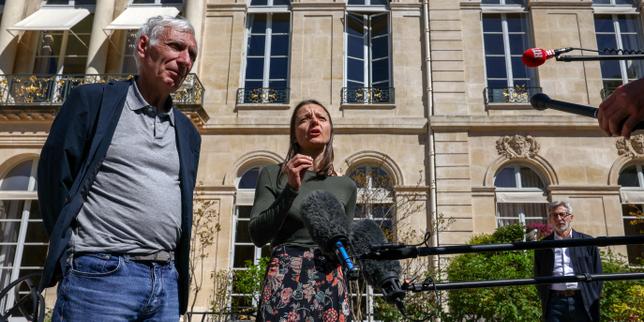
The nightmare is over. After more than 1,000 days of being held in an Iranian prison, French nationals Cécile Kohler and Jacques Paris have finally touched down on French soil. They landed at Villacoublay air base outside Paris on a cold Thursday evening, greeted by the quiet relief of their families and the solemnity of government officials. It's a moment many feared might never come.
They didn't look like the people who left France years ago. Cécile appeared thin, her face etched with the kind of exhaustion that sleep won't fix. Jacques walked with a slight hesitation, the weight of three years in the notorious Evin prison visible in every step. These aren't just names on a diplomatic list anymore. They're real people who've survived a geopolitical chess match they never asked to join. If you enjoyed this article, you should look at: this related article.
The grueling road to freedom in Tehran
France has long struggled with what it calls state-hostage taking by the Iranian regime. Cécile Kohler, a teacher, and her partner Jacques Paris were arrested in May 2022 while on a tourist trip. The Iranian authorities accused them of "espionage" and "conspiring against national security." They even broadcasted forced confessions on state television—a tactic the French government immediately denounced as a "sordid staging."
For nearly three years, their lives were reduced to four walls. Evin prison is famous for its harsh conditions, particularly for political prisoners. We're talking about limited sunlight, poor nutrition, and the psychological warfare of not knowing if or when you'll ever see your family again. While we were going about our lives, checking our phones and complaining about traffic, they were living in a literal black hole of information. For another perspective on this story, check out the recent coverage from Associated Press.
The negotiation process to get them out was a grueling marathon. It didn't happen overnight. It took months of back-channel diplomacy, pressure from human rights organizations, and a delicate dance between Paris and Tehran. French President Emmanuel Macron and Foreign Minister Jean-Noël Barrot kept the details under wraps for a long time to avoid sabotaging the deal. It's a reminder that in the world of high-stakes diplomacy, silence is often the most powerful tool.
What they said upon their return
The first words they spoke weren't for the cameras or the historians. They were for their families. There were no grand political speeches. Just the raw, shaky voices of people who had been silenced for too long. Cécile spoke briefly about the "immense joy" of breathing French air again. You could hear the tremble in her voice. It wasn't just happiness; it was shock.
Jacques remained mostly quiet, letting his presence speak for him. The two of them were quickly ushered away for medical checkups. This is standard procedure. When someone is held in those conditions for years, the body breaks down in ways you can't see from a distance. They need to be screened for everything from vitamin deficiencies to the long-term effects of chronic stress.
But the story doesn't end with a hug on a tarmac. Their return highlights a disturbing trend in international relations. Iran is still holding dozens of foreign and dual nationals. This "hostage diplomacy" is a tool used to squeeze concessions out of Western powers. By freeing Cécile and Jacques, the Iranian government likely expects something in return, though the French government hasn't disclosed the specifics of any "exchange."
Why this release matters for French foreign policy
France has been one of the most vocal critics of Iran's detention of European citizens. The release of Kohler and Paris is a massive win for the Quai d'Orsay, the French foreign ministry. It proves that persistent, quiet pressure can work, even with regimes that seem completely closed off to reason.
However, we shouldn't get too comfortable. This isn't a sign that Iran is suddenly playing nice. It's a calculated move. There are still other French citizens, like Olivier Vandecasteele (who was released earlier) or those still trapped, who remind us that the danger remains. The French government still advises against all travel to Iran. They aren't joking. If you go there, you're a potential bargaining chip. It's that simple.
The families of the remaining hostages are watching this homecoming with a mix of hope and agony. They're happy for Cécile and Jacques, but they're also asking, "When is it our turn?" It’s a gut-wrenching position to be in. The "Free Cécile" and "Free Jacques" committees have been tireless. Their social media campaigns and public rallies kept this issue on the front page when the government might have preferred to let it slide into the background.
The long recovery ahead
The physical return is just step one. The psychological trauma of being a state hostage is massive. Imagine being used as a pawn by a foreign government. Imagine every day being told you might be executed or never see your mother again. That doesn't just go away because you're back in a nice apartment in Paris.
Psychologists who work with former hostages often talk about "re-entry shock." The world has changed since 2022. The news cycles have moved on. Friends have moved or changed jobs. For Cécile and Jacques, the simple act of choosing what to eat or deciding what to wear can be overwhelming. They've lived in a world where every single choice was stripped away from them.
They'll likely need months of intensive therapy. The French state usually provides some level of support for this, but the road to "normalcy" is long and winding. They have to rebuild their identities. They're no longer "the prisoners in Tehran." They have to figure out who they are now.
Keeping the pressure on
If you want to help, don't just click "like" on a news story and move on. There are still people being held. Support organizations like Amnesty International or the specific committees for remaining hostages. These groups are the ones that keep the names of the disappeared in the public eye.
Governments respond to public pressure. If we stop talking about the people left behind, the political cost of leaving them there drops. We can't let that happen. The homecoming of Cécile Kohler and Jacques Paris is a victory, but the game is still being played.
Check the official travel advisories before you plan your next big trip. Seriously. Don't think your passport makes you invincible. In some parts of the world, your nationality is a target, not a shield. Stay informed and keep demanding accountability for those who use human lives as currency.