The afternoon was supposed to be unremarkable. In the suburbs, unremarkableness is a gift. It sounds like a lawnmower three houses down, the rhythmic thud of a basketball against a driveway, and the low hum of a refrigerator. It smells like drying grass and the faint, metallic scent of an oncoming rain shower.
But the sky has a way of breaking its promises.
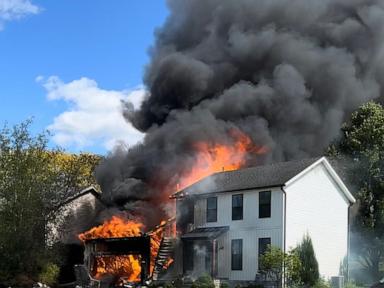
When a small plane falls from the blue, it doesn’t look like the movies. There is no long, cinematic whistle. There is often just a sudden, discordant roar—an engine screaming against its own failure—and then the world tears open. On a Tuesday that felt like every other Tuesday, two lives ended in the cockpit, and a home, the ultimate symbol of sanctuary, became a funeral pyre.
We talk about statistics when these things happen. We cite the FAA, we discuss engine maintenance logs, and we analyze the flight path on a digital map. We do this because the alternative is too frightening to acknowledge: the fact that our safety is a fragile agreement between us and the gravity we spend our lives defying.
The Weight of a Shadow
Imagine you are standing in your kitchen. Maybe you are reaching for a coffee mug, the one with the chipped handle you’ve meant to replace for three years. In that moment, your entire universe is bounded by four walls. You feel permanent. You feel heavy.
Then, 2,500 feet above your roof, a pilot is wrestling with a machine that has suddenly decided to become a stone.
Small aircraft, often referred to in technical circles as General Aviation, operate in a different reality than the massive commercial jets that ferry us across oceans. Those giants are redundancies layered upon redundancies. But in a small, single-engine craft, the margin for error is thin. It is a whisper-thin line between a scenic afternoon flight and a catastrophic descent. When that line snaps, the pilot isn't just a navigator anymore. They are a passenger to physics.
The impact in a residential neighborhood is a collision of two separate worlds. One world is built on the pursuit of flight, adventure, and the mastery of the air. The other is built on the quiet domesticity of the ground. When they meet, the results are almost always dictated by the fuel.
The Anatomy of the Aftermath
Witnesses described the sound as a "thud that shook the marrow." It wasn't just noise; it was a pressure wave.
When the plane struck the house, the structural integrity of the building was irrelevant. A house is designed to hold up its own roof and withstand the wind. It is not designed to absorb the kinetic energy of a thousand-pound projectile moving at over a hundred miles per hour.
The fire is the second tragedy. Aviation fuel is not like the gasoline in your car. It is designed to burn hot and fast. In a residential structure, where timber framing and drywall provide a feast of combustibles, the arrival of high-octane fuel turns a home into a furnace in seconds. The authorities who arrived on the scene didn't find a crash site; they found a neighborhood transformed into a combat zone.
Two people died in the plane. In an instant, their stories—their reasons for being in the air, their plans for dinner, their fears and their jokes—were erased. They became "the occupants." We use words like that to distance ourselves. It is easier to process the loss of an occupant than it is to process the loss of a person who perhaps loved jazz or struggled with their taxes.
The Invisible Stakes of the Suburbs
We live under a highway we cannot see.
At any given moment, thousands of small planes are crisscrossing the country. They fly over schools, over grocery stores, and over the bedrooms where children are napping. We have built our lives in the shadow of these flight paths, rarely looking up unless the engine sounds a bit too close, a bit too sputtered.
The tragedy of a plane hitting a home is the ultimate violation of the "inner sanctum." We buy houses to keep the world out. We lock doors and install alarm systems to protect ourselves from the threats we can see coming down the street. But there is no lock for the roof. There is no alarm for a stall-spin accident that begins two miles away.
Consider the homeowner who wasn't there. Or perhaps the one who was in the backyard and watched the unthinkable happen to their living room. The physical structure can be rebuilt. Insurance adjusters will come with their clipboards and their cold, hard math. They will calculate the cost of the lumber and the value of the scorched furniture.
But how do you calculate the cost of a ceiling you no longer trust?
The Mechanics of Silence
Investigations into these crashes take months. The NTSB will sift through the charred wreckage, looking for a single failed bolt, a clogged fuel line, or evidence of pilot incapacitation. They will look for the "why."
But for the people on the ground, the "why" matters less than the "what."
The "what" is a scar on the street. It is the charred remains of a fence. It is the silence that follows the sirens. In the days after the crash, the neighborhood will be quiet. People will look up more often. They will hear a Cessna in the distance and they will stop what they are doing, tracking the sound until it fades, waiting to see if the pitch of the engine changes.
We are a species that thrives on the illusion of control. We plan our weeks, we invest in our futures, and we assume the ground will stay beneath us and the sky will stay above us. We ignore the reality that we are living on a spinning rock, surrounded by machines and forces that we only partially understand.
The Fragility of the Ordinary
There is a specific kind of grief that comes from a freak accident. It is different from the grief of a long illness or the expected passing of the elderly. It is a sharp, jagged grief that comes with a side of existential dread.
The two people in that plane didn't wake up that morning expecting to become a headline. The family in that house didn't wake up expecting their life's work to be incinerated by a falling star made of aluminum and oil.
We are all living in a narrative that could be interrupted at any moment. This isn't a cynical thought; it is a grounding one. It is a reminder that the unremarkableness of a Tuesday is actually a miracle. The fact that the ceiling stays up, that the coffee mug doesn't break, and that the sky remains empty is the greatest luxury we have.
The investigators will eventually release a report. It will be printed on white paper, filled with technical jargon and coordinates. It will be filed away in a cabinet in a government building, a small piece of data in the grand history of aviation safety.
But the real story isn't in the report. The real story is in the way the neighbors now hold their breath when a shadow passes over their lawn. It’s in the way we realize, with a sudden and chilling clarity, that the only thing between us and the infinite is a few layers of shingles and a whole lot of luck.
The smoke clears. The sirens fade into the distance. The yellow tape is eventually rolled up and tossed into a bin. But the sky is still there. It is vast, it is beautiful, and it is heavy with the weight of everything that hasn't fallen yet.
The sun begins to set, casting long, golden shadows across the pavement where the fire once roared. A child somewhere nearby laughs. A dog barks at a squirrel. The suburb tries to return to its unremarkableness, desperate to forget the afternoon the sky fell down. But the charred earth remains, a dark eye looking upward, watching the clouds drift by in their silent, indifferent parade.