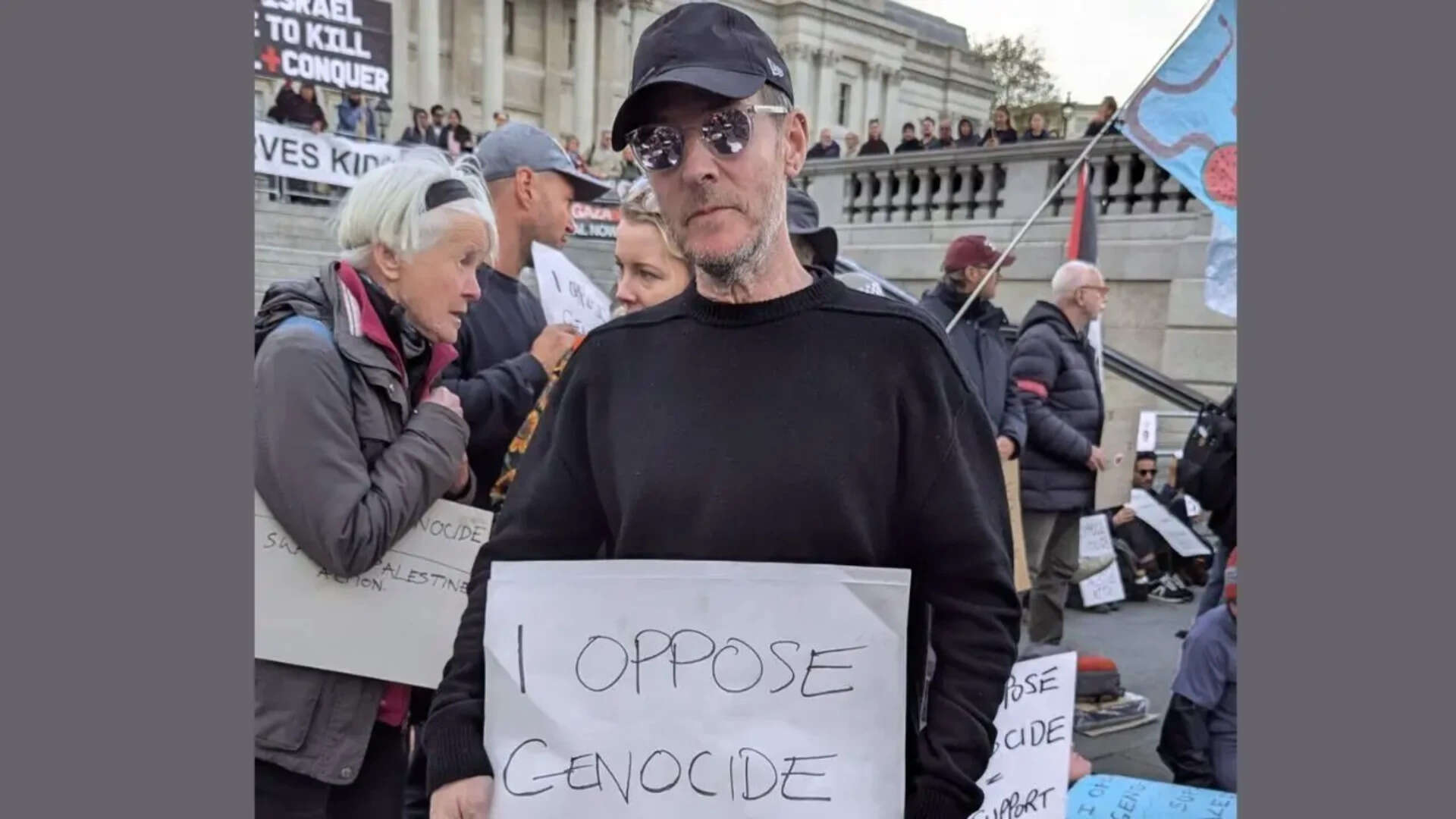
The mainstream media is addicted to a very specific, very lazy narrative: the "troubled artist" or the "principled musician" sacrificing their liberty for a cause. When Robert Del Naja—3D from Massive Attack—was hauled off by the Metropolitan Police alongside 200 others during a Palestine Action rally in London, the headlines wrote themselves. They focused on the handcuffs. They focused on the numbers. They focused on the celebrity.
They missed the point entirely.
This wasn't a failure of policing, nor was it a spontaneous eruption of activist zeal. It was a masterclass in asymmetrical branding. While the "lazy consensus" views these arrests as a crackdown on dissent, the reality is far more calculated. For groups like Palestine Action, a mass arrest involving a global cultural icon isn't a setback. It is the product.
The Myth of the Suppressed Voice
The standard liberal critique of the London arrests suggests that the state is "silencing" activists. This is demonstrably false. In the digital age, being arrested at a high-profile protest is the loudest a human being can possibly be.
If Del Naja had stayed in the studio and released a meticulously produced track about the arms trade, it would have garnered a few hundred thousand streams and a polite review in The Guardian. By getting processed at a police station, he secured a global media reach that money cannot buy. The state didn't silence him; they gave him a megaphone powered by their own handcuffs.
We see this cycle repeated ad nauseam. The protest isn't designed to stop the "business as usual" of the companies they target—at least not physically. It is designed to hijack the news cycle. When you see 200 people arrested, don't look at the police vans. Look at the SEO.
Weaponizing the Spectacle
Palestine Action understands a fundamental truth that most corporate PR firms are too terrified to admit: friction creates heat, and heat creates visibility.
I’ve watched movements try to "play nice" with local councils and permit-based marches for decades. Those movements die in the shadows. Palestine Action thrives because they force a physical confrontation that necessitates a visual response.
The strategy is simple:
- Target a high-value physical site (in this case, locations linked to the supply chain of defense contractors).
- Bring in a high-value cultural asset (Del Naja).
- Force the state to exercise its monopoly on violence (the arrest).
The moment the police touch a member of Massive Attack, the "Protest" ceases to be about the intricacies of the arms trade and becomes a "Story." The public doesn't care about supply chain logistics, but they do care about the guy who wrote Teardrop being shoved into a paddy wagon.
The Arrest as a Performance Metric
In high-stakes activism, the "Number of Arrests" is the only KPI (Key Performance Indicator) that matters.
Why 200? Because 20 is a local news blip. 200 is a "Mass Arrest." It signals scale. It signals a "crisis." The logic of the activists here isn't to avoid jail; it’s to saturate the system. They are running a Distributed Denial of Service (DDoS) attack on the legal system.
When you arrest 200 people at once, you clog the processing centers. You strain the legal aid budgets. You create a logistical nightmare for the Home Office. This isn't "getting caught." This is "operational clogging."
The Robert Del Naja Factor: Borrowed Credibility
Let’s be brutally honest about the celebrity involvement.
Del Naja isn't there because he’s a tactical genius in urban siege warfare. He is there as a "Human Shield of Credibility." His presence validates the fringe elements of the movement for a middle-class audience. When a bunch of kids in balaclavas throw red paint on a building, the public sees "vandals." When the guy who defined the Bristol Sound is standing with them, the public sees "a movement."
This is the "Halo Effect" applied to radical politics. It’s effective, but it’s also a double-edged sword. The movement becomes dependent on the celebrity’s brand. If Del Naja isn't there, does the BBC send a camera crew? No. The movement is essentially "renting" his fame to bypass the media’s gatekeepers.
Why the Police are Inadvertent Marketing Agencies
The Metropolitan Police are the most effective PR agents Palestine Action has ever had.
Every time a "robust" police response occurs, the activists get exactly what they want: imagery of "The Oppressor" vs. "The Individual."
Imagine a scenario where the police simply did... nothing. Imagine if 200 people sat in the street, Robert Del Naja included, and the police just diverted traffic and ignored them. The protest would have been a non-event. It would have been boring. Boredom is the only thing that can actually kill a movement.
By making mass arrests, the state confirms the activists' narrative that they are a "threat to the system." It validates their existence. It's a symbiotic relationship where both sides get to play their roles: the police look "tough on disorder" for the Home Secretary, and the activists look "brave" for their donors and followers.
The Counter-Intuitive Truth About "Direct Action"
The "direct" in direct action is usually a lie.
True direct action would be a surgical, quiet disruption of a supply chain that no one ever hears about because the goal is the result, not the optics. What we saw in London was "Indirect Action." The goal wasn't to physically stop a shipment; it was to create a cultural moment that pressures politicians through the proxy of public opinion.
It is a theatrical production where the set is the street and the script is the law.
If you want to understand the modern protest, stop reading the manifestos. Start looking at the camera angles. The activists know exactly where the press pack is standing. The police know exactly which laws they are citing for the microphones. It is a choreographed dance where the only losers are the taxpayers paying for the police overtime and the legal fees.
The Downside: The Devaluation of the Cause
There is a massive risk here that the "contrarians" in the movement ignore: The Boy Who Cried Mass Arrest.
When every protest ends in 200 arrests and a celebrity headline, the public becomes desensitized. We are reaching "Outrage Fatigue." The first time a Massive Attack member gets arrested, it’s a shock. The fifth time? It’s just a Saturday in London.
By leaning so heavily into the "arrest as a metric," Palestine Action risks turning their serious geopolitical grievances into a predictable subculture. They aren't changing policy; they are creating content.
Stop Asking if the Protest was "Effective"
People always ask: "Did the protest change anything?"
That is the wrong question. The right question is: "Did the protest increase the brand equity of the movement?"
By that metric, the London rally was a staggering success. They secured millions of dollars worth of earned media. They energized their base. They recruited new members who want to be part of something "dangerous" enough to get 200 people arrested.
They didn't stop a war. They didn't change a single export license. But they won the war for attention.
In the attention economy, an arrest record is just a very expensive business card.
Stop looking at the protest as a political event. Start looking at it as a high-stakes marketing campaign where the currency isn't money—it's martyrdom. If you want to stop these groups, stop arresting them. Ignore them. But the state is too addicted to the optics of "order" to ever let that happen.
The handcuffs stay on because both sides need them to stay relevant.