Twenty-one miles.
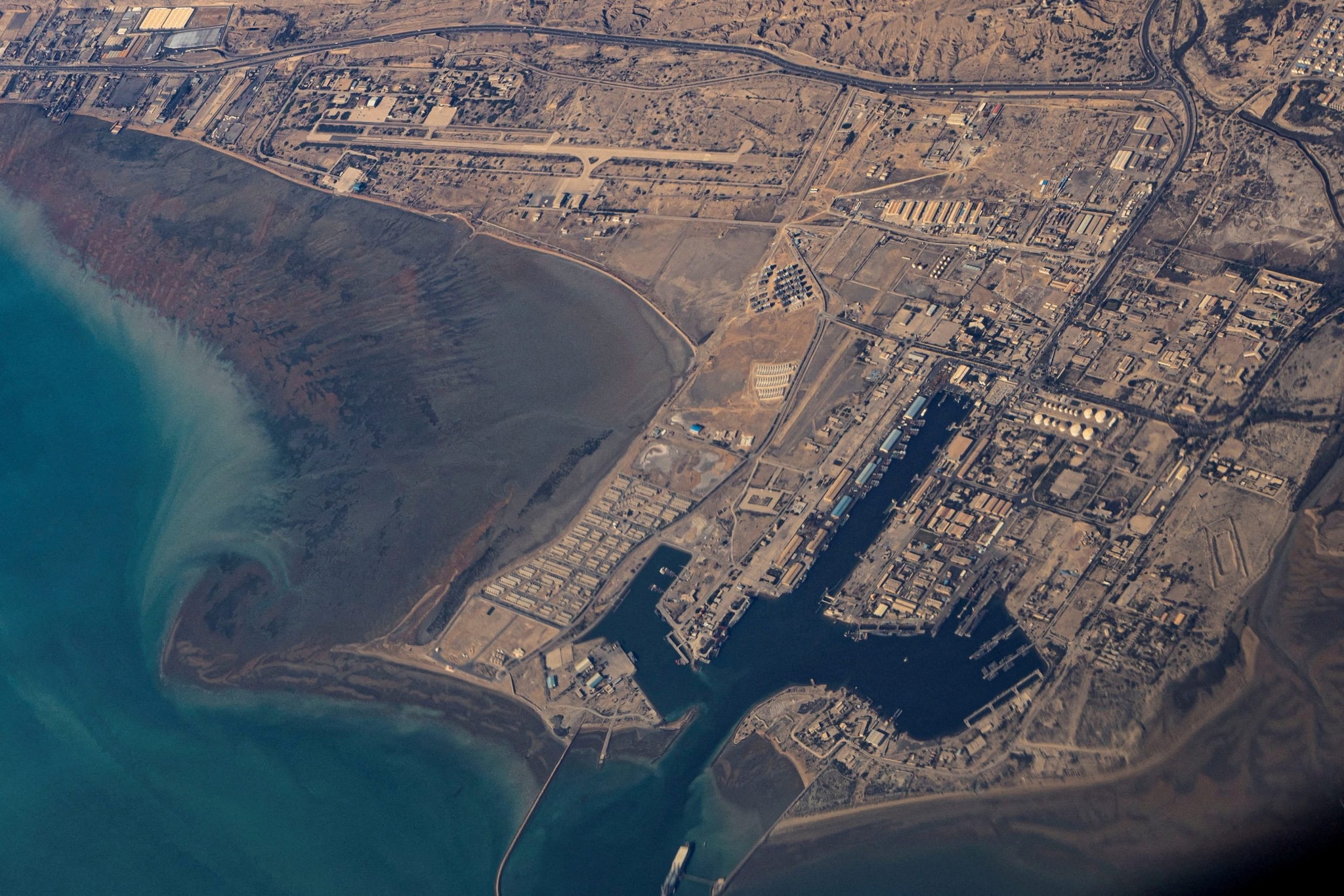
In the vast expanse of the world’s oceans, twenty-one miles is a rounding error. It is a distance a marathon runner could cover in a few hours, or a modern freighter could traverse in sixty minutes. But this specific stretch of water—the gap between the Iranian coast and the Musandam Peninsula of Oman—is the narrowest pulse point of the global economy. If it stops beating, everything else stops too.
The Strait of Hormuz is not just a geographic feature. It is a pressure cooker. As the fragile ceasefire in the region nears its expiration, the rhetoric coming from Tehran has shifted from cautious posturing to a rhythmic, heavy thrum of intent. They are doubling down on a threat that has haunted global markets for decades: the total closure of the world’s most vital energy artery.
Consider a merchant sailor, perhaps a man named Elias, standing on the bridge of a Very Large Crude Carrier (VLCC) as it enters the outbound lane of the Strait. Beneath his feet are two million barrels of oil. To his left, the jagged, arid mountains of the Iranian coastline loom like a row of broken teeth. He knows that beneath those cliffs lie siloes, fast-attack boats, and sophisticated mine-laying equipment. Elias isn’t thinking about geopolitics or the intricacies of the expiring truce. He is thinking about the stillness of the water. He knows that if the Strait closes, his ship becomes a floating target in a dead-end pond.
The Geometry of Survival
The mechanics of the Strait are deceptively simple. It is a funnel. Almost 30 percent of the world’s seaborne-traded oil passes through this passage. It is the exit door for the energy wealth of Saudi Arabia, Iraq, the UAE, Kuwait, and Qatar. It is also the primary route for the Liquefied Natural Gas (LNG) that heats homes in London and powers factories in Tokyo.
When Iran threatens to "close" the Strait, they aren't necessarily talking about a physical wall of ships. Modern naval warfare is more subtle and far more chaotic. It is about the cost of insurance. It is about the "war risk" premiums that skyrocket the moment a single mine is detected or a single drone makes a low pass over a tanker. Iran understands that they don't have to sink every ship to win; they only have to make it too expensive for the ships to sail.
The current escalation stems from a ticking clock. The ceasefire, which provided a momentary gasp of air for the region, is bleeding out. As the deadline approaches, the Iranian military has increased its presence in the islands of Abu Musa and the Greater and Lesser Tunbs. These aren't just rocks in the water. They are unsinkable aircraft carriers situated right at the throat of the shipping lanes.
The Invisible String
Most people living in suburban Chicago or rural France feel entirely disconnected from a naval standoff in the Persian Gulf. They shouldn't.
Our lives are tied to the Strait of Hormuz by an invisible, high-tension string. Imagine the morning routine: the flick of a light switch, the commute to work, the plastic packaging on a grocery store shelf. All of these are derivatives of the energy that must pass through those twenty-one miles. If the Strait closes, that string snaps.
Economists often speak in sterile terms about "supply chain disruptions" and "price volatility." Let’s use plainer language. We are talking about a shockwave. If the flow of oil through Hormuz stops, global prices wouldn't just rise; they would teleport. We would see a scramble for resources that could trigger immediate rationing in some parts of the world. The "just-in-time" manufacturing model that defines our modern era would shatter.
Iran knows this. This is their leverage. It is the ultimate "asymmetric" weapon. They might not possess a blue-water navy capable of challenging a superpower on the open ocean, but they don't need one. They just need to be able to lock the front door of their own neighborhood.
The Psychology of the Brink
Why now? Why double down when the world is already on edge?
To understand the Iranian strategy, you have to look at the internal pressures within the Islamic Republic. The government faces a complex web of domestic dissent and economic stagnation. In the grim logic of survival, external friction is often used to create internal cohesion. By threatening the Strait, the leadership projects strength to its base and forces the international community to treat them as a central, unavoidable protagonist.
But there is a danger in playing with the world's thermostat. The "expiration" of a ceasefire is often treated as a bureaucratic milestone, a date on a calendar that diplomats try to push back. In reality, it is a psychological threshold. Once it passes, the rules of engagement become fluid. Mistakes happen. A nervous radar operator or a misinterpreted maneuver by a patrol boat can ignite a conflagration that neither side truly intended.
The international response has been a mixture of naval reinforcement and frantic backchannel signaling. The "Tanker War" of the 1980s serves as a haunting precedent. Back then, hundreds of ships were attacked, and the superpowers were forced to re-flag tankers and provide armed escorts. Today, the stakes are higher because the global economy is more integrated, more fragile, and more dependent on the steady, rhythmic transit of those giant vessels.
The Cost of the Silent Sea
Imagine the silence if the ships stopped coming.
The ports of Jebel Ali and Ras Tanura would become ghost towns. The massive cranes would sit idle against the hazy sky. Thousands of miles away, the ripples would arrive in the form of closed factories and empty gas stations. It is a terrifying prospect, yet it remains the primary card in the deck for a nation that feels backed into a corner.
The logic of "closing" the Strait is the logic of the scorched earth. It is a move that hurts the perpetrator almost as much as the victim, as Iran itself relies on the sea for its own limited trade and imports. Yet, history is full of actors who chose to burn the bridge while they were still standing on it.
We are currently witnessing a high-stakes game of chicken played with three-hundred-meter-long steel giants. The Iranian leadership is betting that the world’s fear of an economic collapse is greater than its appetite for a prolonged conflict. They are leaning into the expiration of the truce, using the uncertainty as a cloak.
The sun sets over the Persian Gulf, turning the water into a sheet of hammered gold. For the sailors on the tankers, for the traders in New York, and for the families wondering why their heating bills are suddenly doubling, the view is the same. They are all looking toward those twenty-one miles. They are waiting to see if the throat of the world stays open, or if the pressure finally becomes too much to bear.
The ceasefire is a flickering candle in a wind tunnel. As it gutters out, the shadows on the Iranian coast grow longer, and the world holds its breath, hoping for a breeze that never comes.