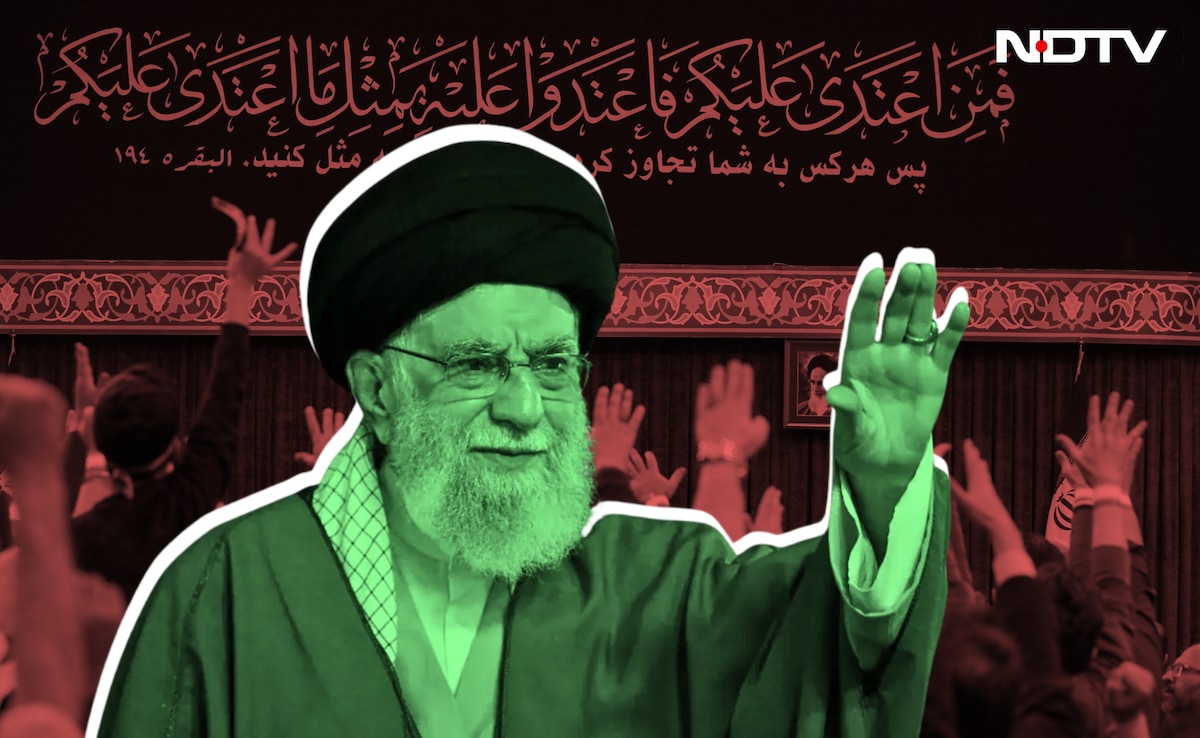
The air in Tehran usually carries the sharp, metallic tang of exhaust and the dry heat of the Alborz foothills. But today, the atmosphere has shifted. It is heavy with a different kind of pressure, the sort that precedes a tectonic shift. For decades, one name has been the North Star of the Islamic Republic, a constant in a world of variables. Now, the news of Ali Khamenei’s passing has turned that constant into a vacuum.
State media initially moved with the practiced precision of a military parade. Dates were set. Routes were mapped. Then, the machinery stalled.
The announcement that the funeral would be postponed wasn't just a logistical update. It was a confession. The sheer scale of the expected turnout has paralyzed the planners. They aren't just preparing for a crowd; they are preparing for a sea of humanity that threatens to overflow the very boundaries of the city.
The Calculus of Grief and Power
Logistics are rarely just about buses and barriers. In a moment this fragile, every square meter of pavement is a political statement. The authorities find themselves caught in a paradox of their own making. They need a massive turnout to demonstrate legitimacy to a watching world, yet they fear a crowd so dense it becomes uncontrollable.
Consider a shopkeeper in the Grand Bazaar. Let’s call him Reza. For forty years, Reza has watched the ebbs and flows of Persian history through the steam of his tea glass. To him, a postponed funeral isn't about "unprecedented numbers" in the abstract. It means the shutters stay down for another forty-eight hours. It means the bread lines grow longer. It means the quiet, frantic conversations in the back of his shop move from the price of saffron to the terrifying question of what happens when the mourning ends.
The government’s decision to delay reflects a desperate need to synchronize. They are flying in dignitaries, coordinating paramilitary Basij units from the provinces, and trying to ensure that the cameras see only a unified front. But the delay also allows the tension to simmer.
The Invisible Architecture of the Mourning Period
When a figure who has held absolute power for thirty-five years vanishes, the structure of the state doesn't just sit still. It vibrates. The postponement buys time for the Assembly of Experts, the body tasked with choosing a successor, to move behind the heavy velvet curtains of the leadership complex.
While the public waits for a burial, the elite are busy with a birth—the birth of a new era.
The stakes are invisible but absolute. If the funeral is too small, the regime looks weak. If it is too large and the security cordons fail, the grief could curdled into something else entirely. History in this part of the world is often written in the streets. The 1989 funeral for Ayatollah Khomeini was a scene of visceral, chaotic devotion where the coffin was nearly torn apart by the faithful.
The current leadership remembers. They are terrified of a repeat, yet they crave the optics of that same passion.
The Mechanics of a Megacity at a Standstill
Tehran is a city of nearly nine million people. When you add the millions expected to descend from Mashhad, Isfahan, and Tabriz, you aren't looking at a city anymore. You are looking at a human ecosystem under total stress.
The subway lines are being repurposed as veins to pump mourners into the heart of the city. Schools have become barracks. Hospitals are on high alert, not for the usual ailments, but for the crushing weight of a million bodies moving in unison.
The delay is a gamble.
By pushing the date back, the state risks losing the initial burst of organic emotion. However, they gain the ability to choreograph the mourning. They want a masterpiece of sorrow, a cinematic display of national unity that can be broadcast on loop to discourage any internal dissent or external interference.
A Silence That Speaks
Walking through the Valiasr Street today, the silence is what hits you. It is a jagged, uncomfortable quiet. The usual roar of motorbikes is gone, replaced by the low hum of generators and the distant chanting of practice prayers from loudspeakers.
This isn't just a funeral for a man. For many, it feels like the funeral for a specific version of their lives. Whether they loved the Leader or lived in the shadow of his decrees, his presence was the wallpaper of their existence. Now, the walls are bare.
The postponement is a recognition that you cannot simply bury a legacy of this magnitude in a single afternoon. It requires a staging ground that matches the weight of the history being closed.
The world watches the satellite feeds, looking for cracks in the pavement. The people of Tehran watch each other. They know that once the body is lowered into the earth, the period of waiting ends and the period of reckoning begins.
The mourning is the easy part. It is the morning after the mourning that keeps the city awake.
Beneath the official proclamations of "unprecedented turnout," there is a deeper, more human truth. A nation is holding its breath. Not out of simple grief, but out of a profound, collective uncertainty. They are standing on the edge of a map that has no more ink. The delay is just a way to stare at the edge for a few more hours before everyone is forced to take the first step into the blank space.
The street lamps flicker on, casting long shadows across the empty squares where millions will soon stand. The banners are hung. The black cloth is draped. The stage is set, but the actors are hesitant. In the end, no amount of logistical planning can account for the soul of a crowd. You can postpone the funeral, but you cannot postpone the future. It is already here, waiting in the silence.