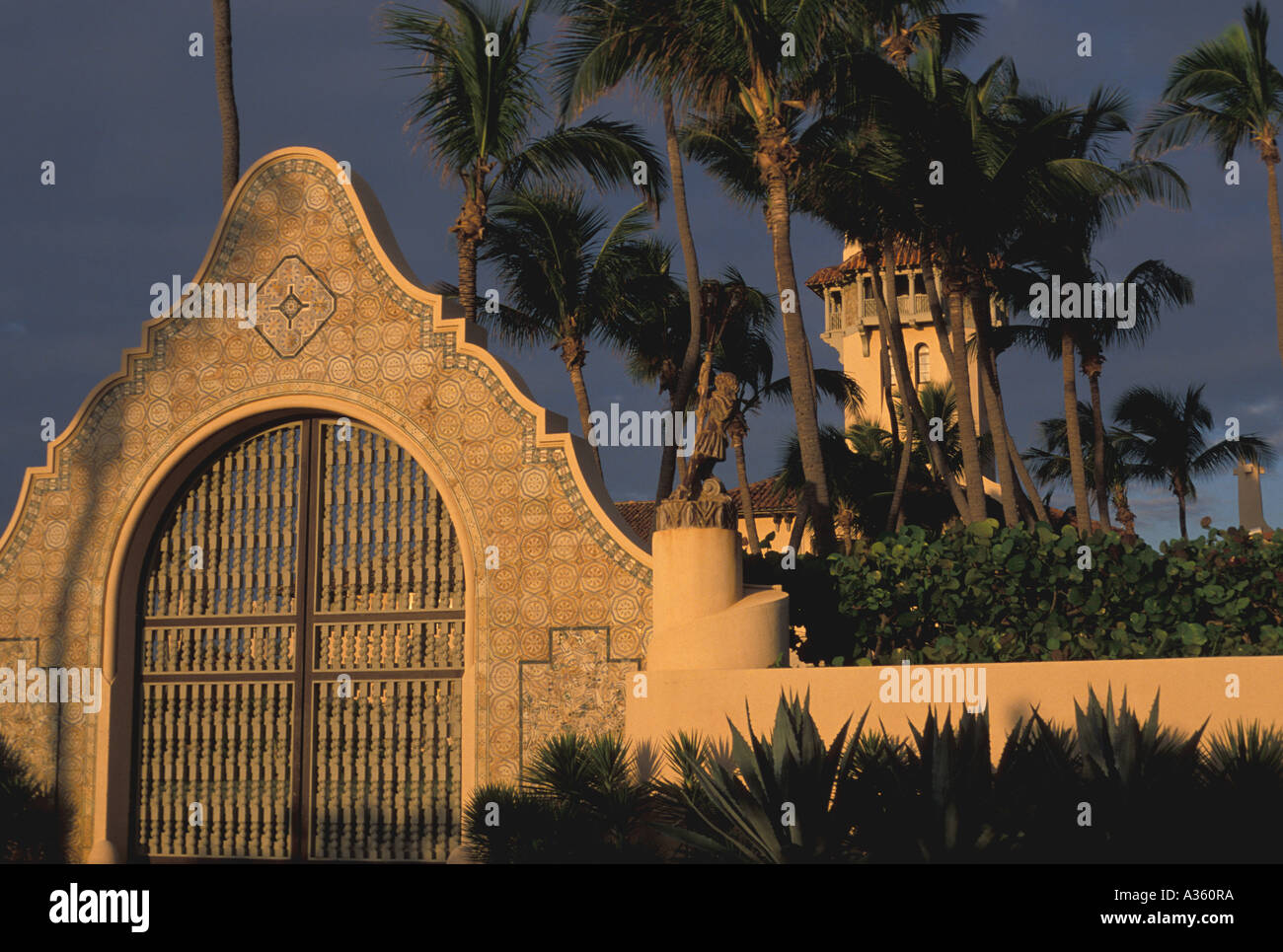
The air in Palm Beach during the spring possesses a heavy, suffocating warmth. It clings to the skin, a constant reminder of the friction that exists just beneath the surface of paradise. Inside the gilded, high-ceilinged rooms of Mar-a-Lago, the atmosphere recently grew even heavier. Donald Trump stood before a gathering of reporters, his posture rigid, his voice carrying the distinct, gravelly edge of a man whose most scarce commodity has finally run out.
Time.
"Iran is playing with fire," he said, the words hanging in the air like humidity. "And my patience is not just wearing thin. It’s gone."
To the casual observer, it was another standard volley in the long-running theater of global geopolitics. A line in a press release. A soundbite for the evening news cycle. But look closer. Peel back the layers of diplomatic script, and you find something far more volatile. This isn’t just about enrichment percentages, centrifuges, or frozen assets. It is a story about human ego, the desperate leverage of failing states, and the terrifying reality that the fate of millions of lives often hinges on the personal chemistry between a few men in heavily guarded rooms.
Behind Trump's public declaration of exhaustion lies a frantic, shadow-wrapped game of telephone that recently stretched all the way to Beijing. Trump had just gotten off the phone with Chinese President Xi Jinping. For hours, the two leaders parsed through a reality that neither particularly wants to face: the Middle East is tilting on an axis of pure chaos, and the strings are being pulled by an administration in Tehran that feels it has absolutely nothing left to lose.
Consider the view from Tehran. Imagine a mid-level bureaucrat sitting in a dimly lit office overlooking the smog of the Iranian capital. Let’s call him Javad. Javad isn’t a zealot; he’s a father, a civil servant who watches the price of bread skyrocket every Tuesday. He sees the ripple effects of American sanctions not as a policy abstract, but as the empty shelves in his neighborhood grocery store. For Javad’s superiors, the escalation of their nuclear program isn't a theological mission. It is survival. It is the only card they have left to play to force the West to look them in the eye.
But when you play your only card too many times, the man across the table stops playing the game.
Trump’s frustration with Iran isn't new, but the context has shifted entirely. By pulling Xi Jinping into the narrative, the American president signaled a profound shift in the mechanics of global pressure. China is Iran’s economic life support system. They buy the oil that keeps the lights on in Tehran. They provide the diplomatic cover at the UN Security Council. When Trump tells Xi that American patience has expired, he isn't just threatening Iran; he is giving China an ultimatum.
Fix this, or we will fix it in a way that breaks your supply chains.
The stakes are invisible until they are suddenly, catastrophically visible. It is easy to look at global conflict as a spreadsheet of military capabilities. We talk about ballistic trajectories, defense shields, and economic embargoes. We treat nations like monolithic entities moving across a chessboard. But nations are just collections of frightened, ambitious, flawed human beings.
When a president loses patience, the machinery of war begins to warm up.
In the Pentagon, analysts begin updating target lists that have been sitting in secure servers for a decade. On the Persian Gulf, a twenty-year-old sailor from Ohio stands watch on the deck of a destroyer, squinting into the dark horizon, knowing that a single miscalculated drone launch could turn his ship into a inferno. In the cafes of Isfahan, young students scroll through their phones, watching the headlines with a cold dread, wondering if the sky will hold fire before the year is out.
This is the terrifying asymmetry of modern power. A few sentences spoken in a Florida resort can alter the heartbeat of an entire region thousands of miles away.
The core of the problem is a fundamental misreading of intent. Washington views Tehran as an aggressive, ideological empire bent on regional dominance. Tehran views Washington as an existential bully determined to engineer their collapse. Both sides are trapped in a psychological feedback loop where every defensive action is interpreted by the other as an offensive provocation.
Where does China fit into this fragile calculus? Xi Jinping operates on a timeline that laughs at American election cycles. Beijing's strategy is rooted in stability, predictability, and the slow, relentless expansion of economic influence. A war in the Middle East is the nightmare scenario for China. It spikes oil prices, disrupts the Maritime Silk Road, and forces them to choose between their anti-Western alliances and their economic reliance on global consumers.
Trump knows this. His appeal to Xi is a leverage point, a calculation that the road to stopping Iran runs directly through the bank accounts of Beijing.
But leverage is a double-edged sword. If China tries to squeeze Iran too hard, the regime in Tehran might decide that total escalation is better than a slow, suffocating death. If China refuses to act, Trump is backed into a corner where his own rhetoric demands a kinetic response. When a leader publicly declares their patience is gone, they paint themselves into a corner. They must either act or admit weakness. And Donald Trump does not admit weakness.
The world feels smaller now than it ever has. The distance between a phone call in Palm Beach, an oil refinery in Kharg Island, and a boardroom in Beijing has shrunk to nothing. We live in the spaces between these decisions, hoping that the men holding the levers understand the sheer weight of the machinery they control.
As the sun set over the Atlantic, casting long, bloody shadows across the lawns of Mar-a-Lago, the reporters packed up their cameras. The headlines were written, the tweets were sent, and the world moved on to the next crisis. But the clock is still ticking. In the quiet offices of Washington, Tehran, and Beijing, the data points remain unchanged, waiting for the spark that turns a standard press briefing into history.