In a small flat on the outskirts of Bratislava, an elderly man named Jozef checks the blue flame on his stove. It is a quiet, rhythmic hiss. To Jozef, that sound is not geopolitics. It is not a violation of international norms or a strategic vulnerability discussed in Brussels. It is the warmth in his radiator and the ability to boil water for tea without spending half his pension.
Thousands of miles away, in the gleaming corridors of the European Union’s headquarters, that same blue flame is viewed as a noose.
The story of Europe’s attempt to divorce itself from Russian energy is often told through spreadsheets and pipeline diameters. We talk about cubic meters and price caps. But the real story is a messy, human drama of survival, stubbornness, and the terrifying realization that one man’s security is another man’s betrayal. While much of the continent has spent the last two years franticly building liquefied natural gas (LNG) terminals and signing contracts with Norway or Qatar, two nations—Hungary and Slovakia—have decided to keep the old fire burning.
They aren't just resisting a trend. They are clinging to a lifeline that the rest of the neighborhood is trying to cut.
The Geography of Dependence
Brussels operates on a vision of a unified energy market, a seamless web where gas flows from West to East to ensure no one is ever left in the dark. It is a noble, logical goal. But logic often dies at the border of geography.
Consider the landlocked reality of Central Europe.
If you are Germany or France, you have a coastline. You can build a port. You can welcome massive tankers from the Gulf of Mexico or the Middle East. You can pivot. But if you are Hungary, you are surrounded by neighbors. You are at the end of a very long, very old straw that starts in the Siberian permafrost.
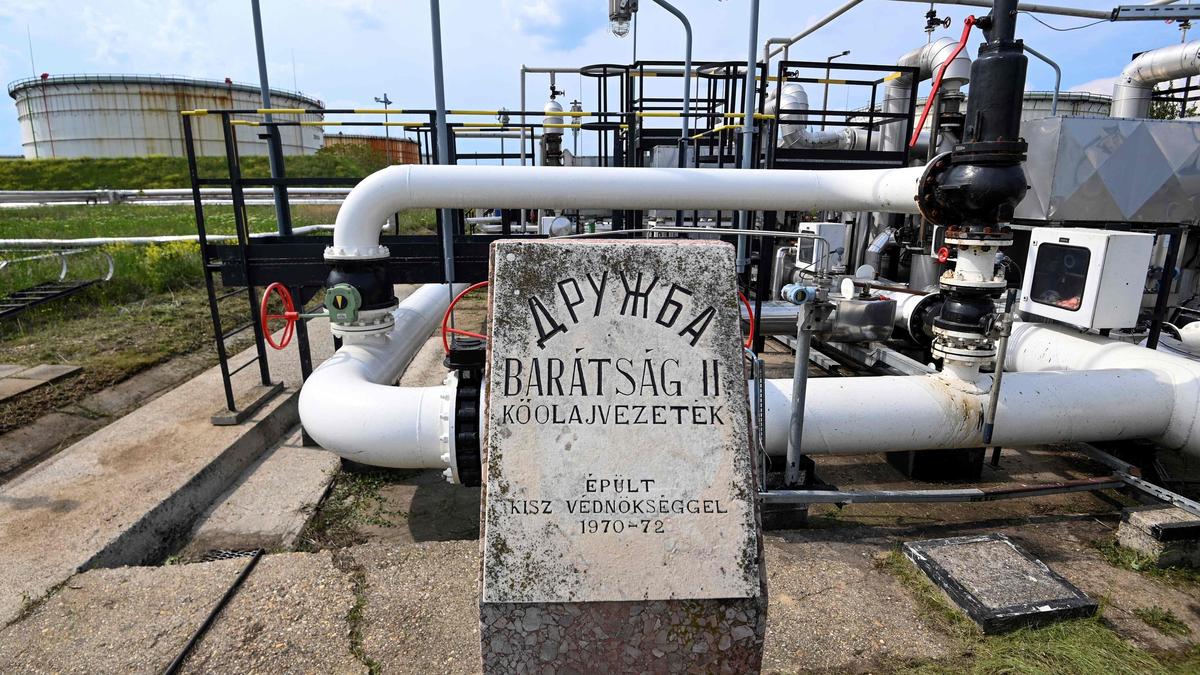
The Druzhba pipeline—literally "Friendship"—was laid during the Soviet era. It wasn't just infrastructure; it was an umbilical cord. For decades, the refineries in Bratislava and Százhalombatta were built specifically to process the "sour" Russian crude that flows through those pipes. You cannot simply flip a switch and feed them light Brent crude from the North Sea. It would be like trying to run a diesel engine on vegetable oil; the machine might cough for a moment, but eventually, it will seize and die.
For Viktor Orbán in Budapest and Robert Fico in Bratislava, the math is brutally simple. Moving away from Russia means billions in refinery retrofitting costs. It means higher utility bills for people like Jozef. In a world of populist politics, a cold radiator is a lost election.
The Shadow of the Pipeline
The conflict in Ukraine changed the moral calculus of energy, but it didn't change the physics of it. The EU has successfully slashed its overall reliance on Russian gas from 40% to less than 10%. It is a staggering achievement of engineering and political will. Yet, the remaining 10% is concentrated in a few specific spots, creating a strange, fractured reality.
In 2024, the transit agreement between Russia and Ukraine is set to expire. This is the moment the "Energy Divorce" becomes final. Or so the theory goes.
Ukraine, understandably, has little desire to continue facilitating the sale of the very resources funding the missiles falling on its cities. But here is the friction: Slovakia and Hungary have spent months lobbying for exemptions. They have sought side-deals. They have looked for "backdoor" ways to keep the molecules moving, perhaps by rebranding the gas at the border or using TurkStream, a pipeline that dives under the Black Sea to bypass the Ukrainian battlefield entirely.
The tension in the room during EU summits is palpable. Diplomats from the Baltics or Poland—nations that have purged Russian energy with a religious fervor—look at their southern colleagues with a mix of pity and fury. To Warsaw, every Euro sent to Gazprom is a bullet. To Budapest, every Euro saved on a heating bill is a shield against domestic unrest.
The Cost of the Pivot
We often hear that "renewables are the answer." It’s a clean, comforting thought.
Wind. Solar. Hydrogen.
But the transition is a marathon, and Central Europe is currently gasping for air in a sprint. The infrastructure to bring gas from Croatia’s LNG terminals up into Hungary exists, but the capacity is limited. The transit fees charged by neighboring countries—specifically a controversial levy introduced by Germany and later pressured by the EU to be removed—made non-Russian gas even more expensive.
Imagine you are a factory owner in eastern Slovakia. You employ three hundred people. Your margins are razor-thin. If your energy costs jump 30% because your government switched to "ethical" gas, your factory closes. The three hundred people go home.
This is the invisible stake. It isn't just about "supporting Russia." It is about the terror of deindustrialization. The fear that in the rush to do the right thing, these nations will be left behind in a cold, quiet corner of the continent while the coastal powers flourish with their new, expensive toys.
A House Divided
The rift is deeper than money. It is a fundamental disagreement on the definition of sovereignty.
To the EU leadership, sovereignty means independence from coercive regimes. It means being able to say "no" to Moscow without fearing a blackout. To the leadership in Hungary and Slovakia, sovereignty means the right to choose their own suppliers based on their own national interest, regardless of what the consensus in Brussels dictates.
They see themselves as pragmatists in a room full of ideologues. Brussels sees them as laggards—or worse, as Trojan horses.
The pressure is mounting. The EU has tools to squeeze: withholding funds, legal challenges, and the slow, grinding machinery of regulation. But you cannot regulate a pipeline into existence where there is none. You cannot legislate a landlocked country closer to the sea.
The Breaking Point
As winter cycles turn, the deadline for the Ukrainian transit deal looms like a guillotine.
There is a frantic, quiet scramble happening behind the scenes. Engineers are looking at "reverse flow" scenarios, where gas purchased by Western Europe is pumped backward into the East. Traders are looking at complicated swaps where Russian gas is sold to an intermediary, losing its "nationality" before it enters the European grid. It is a shell game played with the heat of millions of homes.
The morality is gray. The economics are red. The politics are blue and cold.
Jozef still watches his stove. He doesn't know about the TurkStream capacity or the refinery specifications in Százhalombatta. He only knows that for now, the flame is still there. He knows that his leaders are fighting to keep it there, even if it makes them pariahs in the eyes of their neighbors.
We like to believe that in the modern world, we have moved past the era where geography is destiny. We think technology and trade have leveled the earth. But as the wind howls across the Carpathian Mountains and the pressure in the old Soviet pipes begins to fluctuate, the truth becomes unavoidable.
The map still wins.
The pipe is old, the gas is tainted with the blood of a neighbor, and the politics are toxic. But as long as the alternative is a cold hearth and a shuttered factory, the "Friendship" will continue to flow, a stubborn, invisible tether to a past that Europe is desperate to bury, but these two nations cannot afford to leave behind.
The flame flickers, but it does not go out. Not yet.
Would you like me to research the current status of the TurkStream pipeline expansion projects or the latest EU legislation regarding energy transit levies?