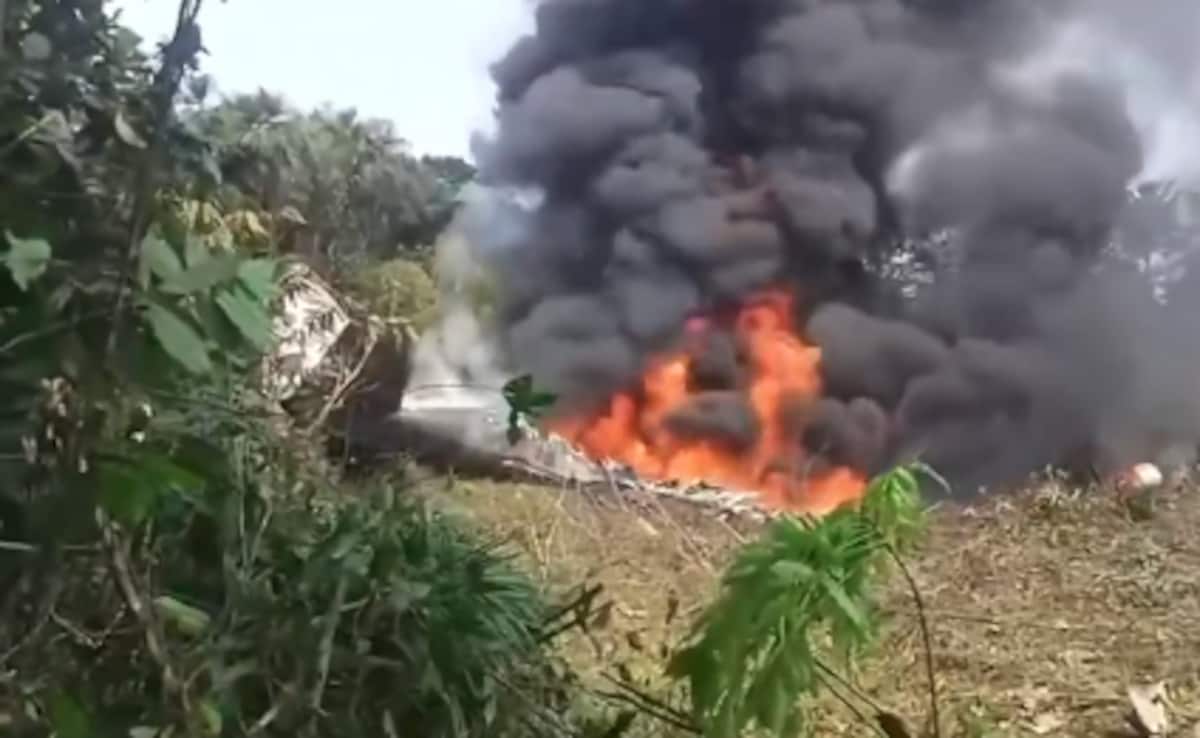
Stop looking at the wreckage. Stop refreshing the feed for a body count or a mechanical "smoking gun." When a Colombian military transport carrying 80 souls goes down shortly after takeoff, the media cycles through a predictable, exhausted script: "Engine failure," "aging fleet," or "pilot error."
They are missing the point. They are looking at the what instead of the why.
The obsession with finding a singular mechanical culprit in aviation disasters is a comfort blanket for a public that can't handle the truth about complex systems. We want a bolt to have snapped. We want a bird to have been sucked into a turbine. If it’s a hardware problem, we can "fix" it. We can ground the fleet, swap the part, and go back to our lives feeling safe.
But the reality of modern military aviation—especially in the high-altitude, low-margin environment of the Colombian Andes—is that planes don't just "crash." They are steered into the ground by a series of invisible, systemic failures that start years before the engines even spool up.
The High Altitude Myth and the Density Altitude Reality
Most people hear "takeoff" and think of a simple climb. In Bogotá or the surrounding cordilleras, takeoff is a high-stakes physics gamble. The "lazy consensus" says that if a plane has two engines and one fails, it should still fly.
Wrong.
In high-altitude environments, the air is thin. Thin air means less lift for the wings and less oxygen for the engines. It also means "Density Altitude," a term most armchair experts ignore. If the temperature rises even a few degrees above standard, the plane thinks it’s at an even higher altitude than it actually is.
When you cram 80 troops into a transport—likely pushed to the absolute limit of its Maximum Takeoff Weight (MTOW)—your safety margins don't just shrink. They evaporate. I’ve seen logistics officers "fudge" the weight of gear or personnel to meet mission deadlines. It happens in every military on earth. You add ten pounds per soldier for "extra" kit, multiply by 80, and suddenly you’re 800 pounds over a limit that was already calculated for sea level, not a 8,000-foot runway in the tropics.
The tragedy isn't that a part broke. The tragedy is that we continue to operate heavy lift assets in environments where the physics of the planet are actively trying to kill the airframe.
Why "Pilot Error" is a Cowardly Label
Expect the official report to eventually blame the crew. It’s the easiest way to close a file. "Spatial disorientation" or "failure to follow emergency checklists."
This is a lie.
I’ve spent years analyzing flight data and cockpit culture. What we call "pilot error" is usually the inevitable result of Systemic Tight Coupling. In a tightly coupled system, there is no "slack." If an engine stutters at 200 feet AGL (Above Ground Level) while heavy and hot, the pilot has roughly 1.5 to 3 seconds to execute a perfect recovery.
Imagine a scenario where you are driving a bus on a tightrope. If a gust of wind hits you, and you fall, did "driver error" kill the passengers? Or was it the person who decided to put a bus on a tightrope?
The Colombian Air Force (FAC) and Army aviation branches are world-class. They fly in terrain that would make a commercial pilot retire on the spot. But they are operating in a culture of "Mission First," which creates a silent pressure to ignore the red flags on a pre-flight check. When the "Check Engine" light is ignored because the troops need to be moved now, that isn't a pilot error. That is a command failure.
The Maintenance Paradox
The armchair generals will point to the age of the aircraft. "These planes are forty years old!" they cry.
This is another distraction. An airplane is a collection of parts with different life cycles. A 1980s airframe with 2024 engines and 2025 avionics is effectively a new machine. The problem isn't age; it's the Maintenance Trap.
In my experience, the more "advanced" we make these platforms, the more brittle they become. We’ve replaced mechanical linkages with "fly-by-wire" systems and complex sensors. In a pristine hangar in South Carolina, that’s great. In a humid, dusty, high-vibration environment like rural Colombia, those sensors fail.
And here is the contrarian truth: Too much maintenance can be as dangerous as too little. "Infant mortality" of parts is a real phenomenon. When you constantly tear down engines to "ensure safety," you increase the statistical probability of a technician leaving a rag in an intake or improperly torquing a fuel line. We are over-maintaining ourselves into a state of perpetual instability.
Stop Asking "Is it Safe?"
The question "Is it safe to fly 80 troops in a single-engine-out-capable transport?" is the wrong question. Of course it isn't "safe." Combat aviation is an exercise in managed catastrophe.
The question we should be asking is: "Why are we still using massive, centralized targets to move personnel?" We are obsessed with the "Big Wing" philosophy. We want one giant plane to do everything. It’s "efficient." But efficiency is the enemy of resiliency. If you move those 80 troops in four smaller, more agile platforms, a single mechanical failure kills zero people—or at most, twenty.
We choose the 80-person disaster because it looks better on a spreadsheet. We trade human lives for fuel economy and "streamlined logistics."
The Data We Ignore
The flight data recorder (FDR) will show the RPMs dropped. The Cockpit Voice Recorder (CVR) will capture the frantic shouts of the crew. But the data that actually matters isn't on the "black box."
It’s in the procurement office. It’s in the budget meetings where "spare parts" were traded for "new toys." It’s in the weather reports that were "good enough" for a mission that could have waited four hours for the air to cool down.
If you want to understand why 80 soldiers are now a statistic, stop looking at the crash site. Look at the culture that views a 2% risk of total hull loss as an "acceptable cost of doing business."
The industry will tell you this was an "unforeseen tragedy."
I’m telling you it was a mathematical certainty.
We don't need better planes. We don't even need better pilots. We need to stop lying to ourselves about the limits of physics and the cost of "efficiency." Until we stop packing human beings into metal tubes and asking them to defy the laws of thermodynamics in the thin Andean air, these headlines will keep repeating.
The next time you see a crash report, look past the "engine fire." Look for the weight. Look for the temperature. Look for the hubris.
Everything else is just noise.
Burn the flight manual. Change the mission parameters.