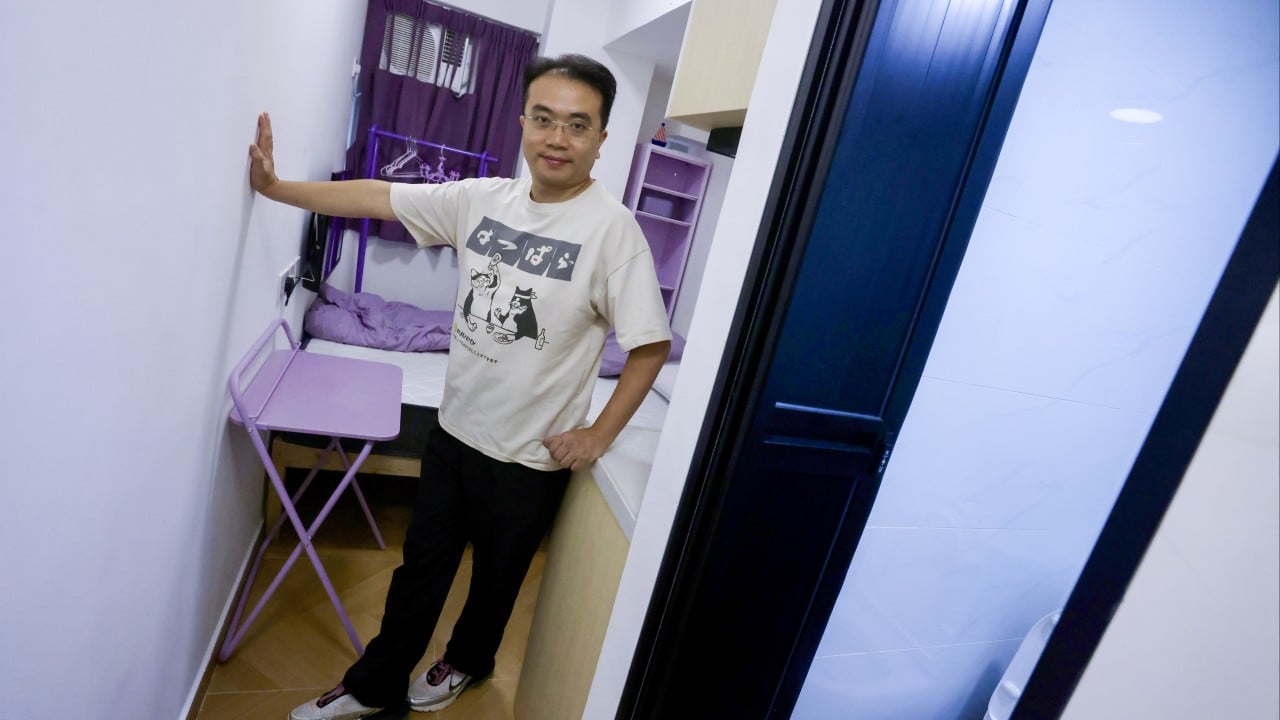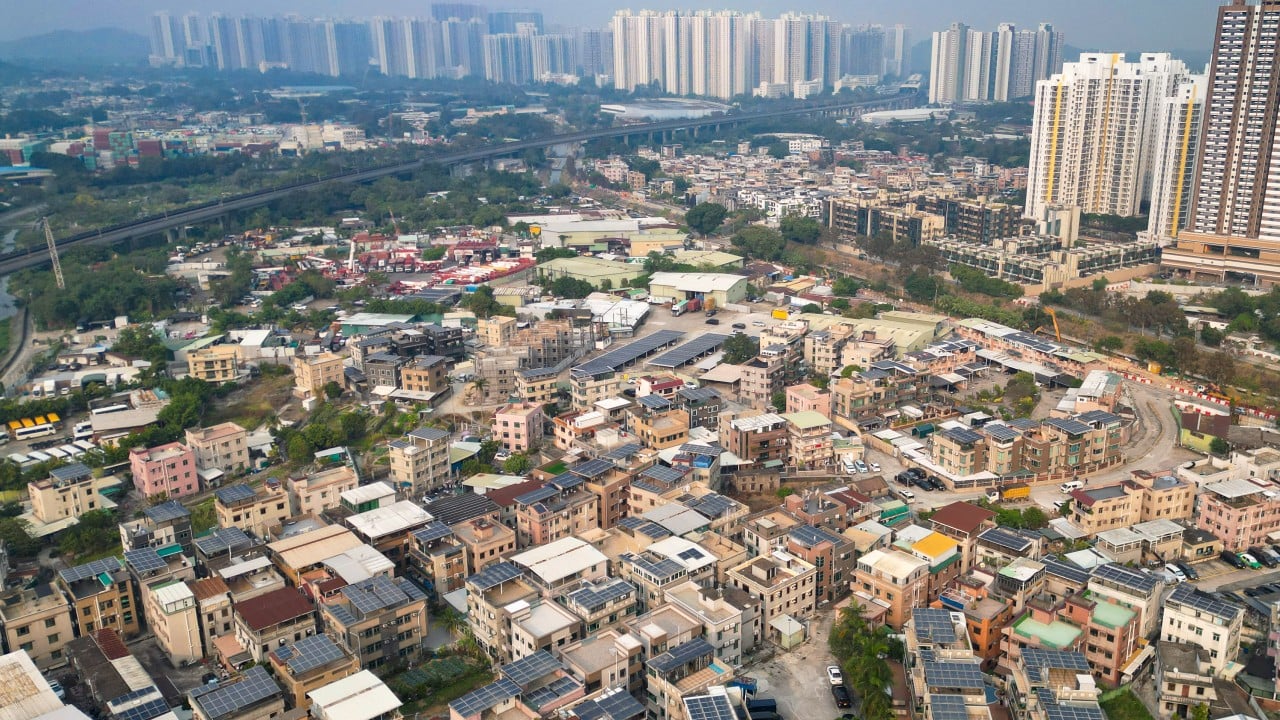
The air in a Sham Shui Po subdivided flat doesn't move. It stagnates, heavy with the scent of reheated rice and the damp ghost of a rainy season that never quite leaves the walls. For Mr. Lam, a seventy-year-old retired porter, the horizon is exactly three feet away. It is a grey, streaked concrete wall of the neighboring tenement. He measures his life in inches and waitlists. He is one of the thousands of invisible threads pulled tight by the city’s relentless geography.
When the government announces its Land Sale Programme for the 2026-27 financial year, it sounds like a ledger. It sounds like a spreadsheet. Nine residential sites. Two commercial plots. One industrial space. To a developer, these are yield calculations and risk premiums. To the city’s treasury, they are the lifeblood of a fluctuating budget.
But to Mr. Lam, and to the young couple deferring their wedding because they cannot find forty square feet to call their own, these nine sites are something else entirely. They are a gamble on the future of human dignity.
The Nine Scars on the Map
The Secretary for Development stands at a podium, the fluorescent lights of the press room reflecting off the charts. The numbers are precise. The nine residential sites are expected to provide roughly 6,000 flats. If you include private redevelopment projects and the steady hum of the MTR Corporation’s own ventures, the total potential supply creeps toward 13,000 units.
On paper, this meets the annual target. It looks like a victory.
However, a city is not built on paper. It is built on the confidence of men with deep pockets and the desperation of families with shallow ones. The geography of this year's plan is a telling map of Hong Kong's current psyche. We see clusters in the New Territories, stretching out toward the "Northern Metropolis" vision, and precious, high-stakes slivers in Kai Tak.
Consider the site at Kai Tak. A decade ago, this was the promised land—a shimmering vision of a second Central, a waterfront utopia. Today, it is a graveyard of shifting priorities. To buy land there now is to bet that the monorail dreams and the high-end retail hubs will eventually manifest, despite the cooling winds of the global economy. A developer looks at a plot in Kai Tak and sees a puzzle. How many "micro-flats" can you fit before the market revolts? How much luxury can you promise when the view is obscured by the scaffolding of a dozen other half-finished dreams?
The Silent Auction of Hope
The mechanism of the land sale is a cold, silent affair. It is a "sealed bid" world. Developers submit their offers, and the government compares them against a "reserve price." This reserve is the ghost in the machine. It is a secret number, calculated by professional surveyors to ensure the public isn't "selling the family silver" too cheaply.
But what happens when the market and the government's ghost don't agree?
We have seen this play out in the previous cycles. Sites withdrawn. No bids reaching the floor. When a site is "passed over," the news reports talk about "market sentiment" and "interest rate pressures."
They rarely talk about the ripple effect. Each failed land sale is a delayed crane. Each delayed crane is a delayed apartment. Each delayed apartment is another year Mr. Lam spends looking at a grey wall three feet from his nose. The stakes are not just fiscal; they are temporal. We are trading the time of our citizens for the price of our soil.
The 2026-27 plan carries a heavier weight than those of the early 2020s. We are navigating the wake of the "Art 23" era and a global shift in how capital flows. The developers—the household names that have built the skyline—are cautious now. Their balance sheets are bruised by high borrowing costs. They are no longer bidding with the reckless abandon of the 2010s. They are surgical. They are looking for "value," which is often a polite word for "safety."
The Industrial Pivot
Deep within the announcement lies a single industrial site. It lacks the glamour of a residential tower with a "sky club," but it is arguably more vital to the city’s pulse. Hong Kong is trying to reinvent its soul. We are no longer just a port or a bank; we are desperately trying to become a hub of "Innovation and Technology."
This industrial plot is a placeholder for that ambition. It represents the hope that we can move beyond being a city that merely "holds" money to being a city that "makes" things—even if those things are data strings and biotech sequences. If the residential sites are about where we sleep, the industrial and commercial sites are about why we stay.
If there are no jobs for the graduates of our universities, the most luxurious flat in Kai Tak is just a very expensive cage.
The Mathematics of the Sky
Let’s look at the "Northern Metropolis." It is a phrase that has been repeated so often it has lost its luster, yet it remains the only viable escape hatch for the city's density. The sites offered here are not just plots; they are the first bricks in a new gravity.
For a developer, the New Territories represent a different kind of math. The margins are thinner. The infrastructure is often a promise rather than a reality. You are not just building a building; you are hoping the government builds the road, the school, and the drainage system to support it.
The 2026-27 plan leans heavily on this northern tilt. It is an admission that the old urban core is full, bled dry of easy opportunities. We are pushing outward, into the green, into the hills, chasing the border.
But there is a tension here. Hong Kongers are a people of the MTR. We live and breathe by the proximity to the "Blue Line" or the "Red Line." To move a family to the far reaches of the New Territories is to ask them to change their relationship with time. It is a two-hour daily tax on their lives. The success of these land sales depends entirely on whether the "Metropolis" feels like a city or just a far-flung dormitory.
The Ghost of the Reserve Price
The real drama of the coming year won't be in the speeches. It will be in the quiet moments when the bids are opened.
The government is in a corner. They need the revenue. Land sales have historically accounted for a massive chunk of the city's income. When the sales fail, the deficit grows. When the deficit grows, public services—the very hospitals and schools Mr. Lam relies on—come under the microscope.
There is a delicate, almost agonizing dance between the Lands Department and the boardrooms of the big developers. If the government sets the reserve price too high, the land sits empty, and the housing crisis worsens. If they set it too low, they are accused of "collusion" or "selling out" to the tycoons.
It is a game of chicken where the pedestrians are the ones who get hurt.
The 2026-27 cycle is a test of who will blink first. Will the government lower its expectations to ensure the supply of 6,000 homes? Or will the developers find a new appetite for risk, betting that the bottom of the property market has finally been reached?
The Human Cost of the "Wait and See"
While the analysts argue over "basis points" and "square-foot valuations," the human element remains stagnant.
Imagine a couple in their late twenties. Let’s call them Sarah and Ivan. They represent the "sandwich class." They earn too much for public housing but not enough to compete for the private mid-market. They watch the land sale announcements like gamblers watching a roulette wheel.
To them, a "residential site in Tsuen Wan" isn't a business opportunity. It is the possibility that in four years, there might be a "one-bedroom" they can afford. It is the possibility that they can stop living in their respective parents' homes, meeting in shopping malls like teenagers.
When a land sale is cancelled or a site receives no bids, for Sarah and Ivan, it feels like a door slamming. It’s not just a market correction; it’s a biological one. It’s another year they won’t have a child. It’s another year of "temporary" living.
The 2026-27 plan is essentially a collection of nine doors. The question is how many will actually open.
The Weight of the Concrete
The city is a living thing. It breathes through its construction sites. The rhythmic thump-thump of the pile-drivers is the heartbeat of Hong Kong. When that sound stops, the city feels ill.
We are currently in a period of labored breathing.
The 6,000 units promised by these nine sites are a drop in a very large, very thirsty bucket. Even if every site is sold, and even if every developer builds at maximum speed, the lead time for a residential tower is years. We are selling land in 2026 for people who need homes today.
This lag is the most cruel aspect of the property game. We are always solving the problems of five years ago.
The 2026-27 plan is a gamble that the world will be a more stable, more prosperous place by the time these foundations are poured. It is a bet on the long-term viability of the "One Country, Two Systems" framework and the continued relevance of this rocky outcrop on the edge of the South China Sea.
The Horizon at Three Feet
Back in Sham Shui Po, Mr. Lam doesn't read the financial pages. He doesn't know about the nine sites. He doesn't know about the reserve price or the "Northern Metropolis" vision.
He only knows that the wall outside his window hasn't moved.
He represents the true metric of success for any land sale plan. Success isn't a "healthy" price per square foot. Success isn't a balanced government budget. Success is the moment the cranes start moving in a way that eventually reaches the Lams, the Sarahs, and the Ivans of this city.
The 2026-27 Land Sale Programme is a list of nine opportunities to prove that Hong Kong can still build a future for its people, not just a portfolio for its elite. It is a series of coordinates on a map that will either become vibrant communities or remain fenced-off patches of weeds and broken dreams.
The developers will make their calculations. The government will hold its press conferences. The market will fluctuate. But the real story is written in the silence of the flats where the air doesn't move, waiting for a breeze that can only come from a city that finally decides to grow again.
There is a specific kind of light that hits the Hong Kong skyline just before dusk. It turns the glass and concrete into something that looks like gold. It is a beautiful, fleeting illusion that masks the struggle underneath. As the 2026-27 land sales begin, the city is looking for more than just gold. It is looking for a way to breathe.
The nine sites are waiting. The hammers are poised. The city holds its breath, hoping that this time, the gamble pays off for the people who have nowhere else to go.