The light in Los Angeles is a liar. It hits the 110 freeway at four in the afternoon, a thick, golden honey that suggests every palm tree is a monument and every idling Honda is a vessel for a future star. It is the kind of light that convinces you that the city is a single, cohesive story. But talk to anyone who has lived here long enough to see the paint peel off the Hollywood sign, and they will tell you the truth: Los Angeles isn't a city. It is a collection of memories held together by a shared commute.
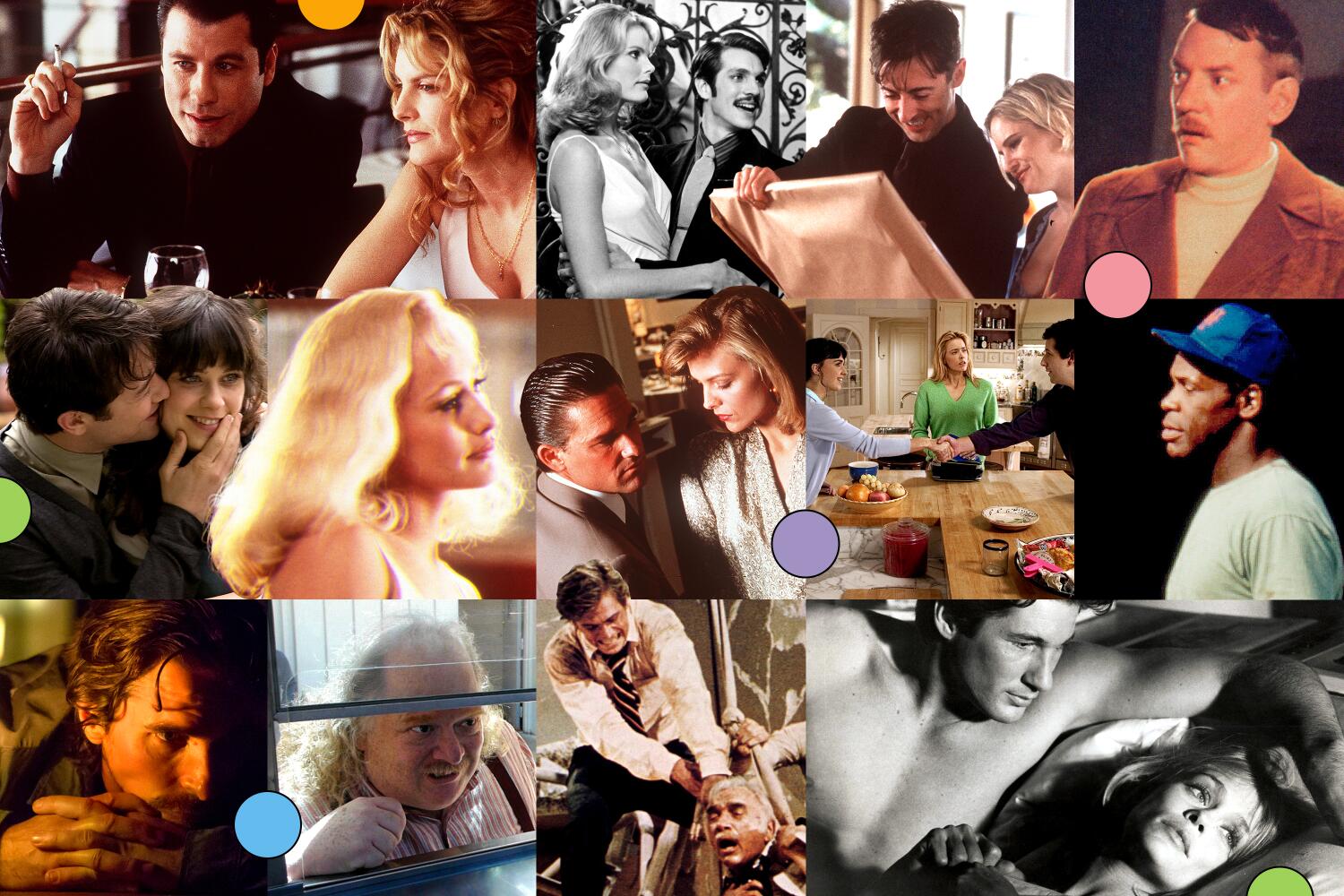
Recently, a massive list of the 101 best L.A. movies made the rounds. It featured the usual suspects—the high-gloss noir of Chinatown, the neon drift of Blade Runner, the sun-drenched anxiety of Mulholland Drive. These films are the city’s official portraits. They are beautiful, haunting, and undeniably important. Yet, as the list circulated, a quiet murmur rose from the neighborhoods that rarely see a red carpet. The people who actually navigate the gridlock and the taco truck lines began to point toward the gaps in the frame.
They were looking for the movies that don't just show the city, but feel like it.
The Ache of the Unseen
Consider a woman named Elena. She lives in Echo Park, in a house her grandfather bought when the hills were still mostly dirt. To Elena, Los Angeles isn't a backdrop for a detective to solve a murder; it’s the place where she waited two hours for a bus that never came, watching the purple jacaranda blossoms rot on the sidewalk. When she looks for her city on screen, she doesn't find it in the polished frames of La La Land. She finds it in Starlet.
Sean Baker’s 2012 film didn't make the "official" cut, but for those who know the San Fernando Valley, it is an essential text. It captures the specific, dusty heat of a Valley afternoon—the kind that makes your skin feel tight and your spirit feel small. It’s a story about a young woman and an elderly widow, bound by a secret stashed in a yard sale thermos. There are no car chases. No one discovers they are the chosen one. Instead, it captures the radical empathy required to survive a place this vast and indifferent.
This is the "Second City"—the one that exists beneath the celluloid dream. It is a place of strip malls that house the best sushi on the planet and apartment complexes with names like "The Versailles" that haven't seen a renovation since 1978.
The Rhythm of the Pavement
Most cinematic depictions of L.A. rely on the bird's-eye view. They want you to see the sprawl, the flickering lights, the sheer scale of the ambition. But the real L.A. movie is often shot from the hip.
Take Training Day. While it received acclaim, its omission from many "definitive" historical lists feels like a slight to the very streets it patrolled. It isn't just a cop thriller; it’s a geography lesson. It understands the invisible borders that define the basin. When Denzel Washington’s Alonzo Harris drives through the Jungle or sits in a booth at a neighborhood diner, the tension doesn't come from the script alone. It comes from the heavy, historical weight of the locations.
The city is a map of trauma and triumph, and certain movies act as the ink.
Boyz n the Hood is often cited, but many Angelenos point to Baby Boy as the film that captures the specific, claustrophobic domesticity of South Central. It’s in the way the sunlight hits a screen door. It’s the sound of a distant helicopter punctuating a kitchen argument. These films aren't trying to sell you a dream; they are trying to document a reality that the tourism board would rather ignore. They represent the "Invisible Stakes"—the daily struggle to maintain dignity in a city designed to make you feel anonymous.
The Supernatural Mundane
There is a specific kind of madness that comes with living in a place where the weather never changes. It’s a slow-motion hysteria. You start to see things. You start to believe that the palm trees are watching you.
Repo Man captures this better than almost any film in the canon. It is a punk-rock fever dream of the 1980s East Side, a world of generic white-label groceries and glowing Cadillacs. It’s hilarious, it’s bizarre, and it is 100% accurate. If you’ve ever walked down Sunset Boulevard at 3:00 AM and seen a man talking to a trash can, you understand the frequency Repo Man is vibrating on.
Then there is Miracle Mile.
Imagine a man meets the woman of his dreams at the La Brea Tar Pits. They make a date. Then, he accidentally intercepts a phone call at a booth outside a 24-hour diner. The voice on the other end says the nuclear missiles are coming in fifty minutes.
The rest of the film is a frantic, real-time scramble across a few city blocks. It uses the geography of Wilshire Boulevard as a ticking clock. As the sun begins to rise over the Art Deco towers, the city feels both fragile and eternal. It captures that quintessential L.A. feeling: the nagging suspicion that the world might end while you're looking for a parking spot.
The Immigrant’s Map
For millions, Los Angeles is not the end of the road, but the beginning of a new one. The "Official 101" lists often skew toward the English-speaking experience, but the city’s soul is polyglot.
Better Luck Tomorrow broke ground by showing a side of the suburbs—specifically the Asian-American enclaves of Orange County and the edges of L.A.—that cinema had ignored for decades. It wasn't about the struggle of assimilation; it was about the boredom of success and the dangerous edges of the American Dream. It reclaimed the cul-de-sac.
Similarly, Quinceañera treats Echo Park not as a gentrifying playground, but as a battlefield of tradition and change. It’s a movie that smells like roasting corn and diesel fumes. It reminds us that for every person moving to L.A. to become an actor, there are ten people moving there to ensure their children don't have to be.
Why the Gaps Matter
When we talk about the "Best" of anything, we are usually talking about what has been curated for us. We are talking about the movies that had the biggest marketing budgets or the most prestigious directors. But movies are also a form of architecture. They build our mental image of a place.
If the only L.A. we see is the L.A. of Heat and The Big Lebowski, we start to believe that the city only belongs to the weary professional and the lovable stoner. We lose the L.A. of the night shift. We lose the L.A. of the San Gabriel Valley, where the air is thick with the scent of Szechuan peppercorns and the neon signs are in Mandarin.
Ignoring films like To Sleep with Anger—a masterpiece of Black middle-class life infused with folklore—means we are only seeing half the sky. Danny Glover’s performance in that film is a reminder that the city is haunted by the ghosts of the Great Migration, carrying the superstitions of the South into the bungalows of South Central.
The Unfinished Screenplay
Every Angelino has a movie playing in their head.
It’s the one where they finally get the meeting at the studio. It’s the one where they finally save enough for a down payment in Eagle Rock. It’s the one where the traffic on the 405 parts like the Red Sea.
The films that didn't make the list are often the ones that mirror these private cinema reels. They are the "messy" movies. The ones that don't quite fit into a genre. They are like The Long Goodbye, where Elliott Gould wanders through a hazy, drug-addled 1970s L.A. looking for his cat. It’s a movie about being lost in a place you’re supposed to know by heart.
Is The Long Goodbye a better movie than Chinatown? Maybe not by the standards of a film school textbook. But if you’ve ever felt like a stranger in your own neighborhood, it’s the only movie that matters.
The 101 list is a map of the landmarks. But the movies we’ve discussed—the ones the people of the city shouted for—are the shortcuts. They are the side streets we take to avoid the gridlock. They are the flickering neon of a liquor store sign that tells us we’re finally home.
The next time you’re driving toward the horizon, watching the sky turn that bruised shade of purple and orange that only happens in a basin filled with smog and dreams, remember that the city isn't just what’s on the screen. It’s the space between the frames. It’s the person in the car next to you, staring at the same sunset, living a movie that no one has had the courage to film yet.
The credits never really roll here. The light just changes, and we keep driving.