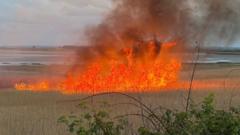
Smoke still hangs over the blackened reeds of our most vital wetlands. It’s a gut-wrenching sight. When a fire hits a protected nesting site, the headlines usually focus on the acreage lost or the number of fire engines deployed. They rarely talk about the hidden tragedy: the complete erasure of a generation of birds. This isn't just about burnt grass. It's about the collapse of a specific, fragile window of time where life is at its most vulnerable. If you think a "controlled" environment means these animals are safe, you're wrong.
Most people assume "protected" status means there’s a literal shield around these areas. It doesn't. In reality, these sites are often tinderboxes waiting for a single spark, whether from a discarded cigarette, a lightning strike, or an arsonist's match. When flames sweep through a nesting ground during the spring or summer, the timing couldn't be worse. Eggs don't have legs. Nestlings can't fly. They just sit there.
Why Fire Hits Nesting Populations Harder Than Other Wildlife
When a forest fire breaks out, larger mammals can often flee. Deer run. Coyotes scatter. Even some rodents burrow deep enough to survive the heat. But birds at a protected nesting site are trapped by their own biology.
Ground-nesting species like the Curlew, Lapwing, or various terns depend on the specific cover of local vegetation. They choose these spots because they offer camouflage from predators. That same thick, dry vegetation becomes a high-speed highway for fire. Once the blaze starts, it moves faster than a human can run, fueled by the very reeds and grasses that were supposed to keep the birds hidden.
You have to understand the math of extinction here. A single fire doesn't just kill the birds present today. It destroys the "recruitment" for the entire year. If a colony loses every chick in a single afternoon, that population takes a hit that can take a decade to recover from—if it recovers at all. Many of these species are already on the brink. They don't have a "buffer year" to spare.
The Myth of Total Recovery in Protected Areas
I've heard people say that fire is natural. They argue that ecosystems need a "reset" every now and then to clear out old growth. While that’s true for some pine forests or grasslands in the long term, it’s a dangerous oversimplification for modern, fragmented protected sites.
In a massive, connected wilderness, birds could just move to the next marsh over. But we’ve boxed nature into tiny islands. If the "protected" island burns, there is nowhere else for the survivors to go. The surrounding land is usually a parking lot, a housing development, or a monoculture farm.
- Soil Sterilization: High-intensity fires don't just burn the surface. They bake the soil. This kills the microorganisms and invertebrates that birds rely on for food once they return.
- Invasive Takeover: After a fire, the first plants to grow back are often invasive weeds. These don't provide the right structure for nesting, making the site useless for years.
- Loss of Specialized Habitat: Some birds need old-growth reeds or specific mosses that take years to develop. A twenty-minute fire wipes out twenty years of growth.
The reality is that we're failing these sites by managing them as static museum pieces rather than dynamic, high-risk zones.
Human Negligence is the Primary Spark
We like to blame nature, but let's be honest. Most fires in protected nesting sites are human-caused. Whether it's a "controlled" burn that got out of hand or a hiker who thought the "no smoking" sign didn't apply to them, the fingerprints are usually ours.
There's a specific kind of arrogance in how we treat these areas. We designate them as "protected" and then forget about the active management required to actually keep them safe. Fire breaks are often overgrown. Rangers are underfunded. Public access is often unrestricted even during peak drought conditions.
I’ve seen sites where the fire department couldn't even get their trucks to the water's edge because the access paths were blocked by "conservation" fences. It’s a bitter irony. We build walls to keep people out, and those same walls keep the help out when the world starts burning.
The Economic and Ecological Ripple Effect
It's not just about the birds. It’s about the services these wetlands provide. Wetlands act as natural carbon sinks and water filters. When they burn, they release massive amounts of stored carbon back into the atmosphere. The charred remains wash into the water system, causing nitrogen spikes that can lead to fish kills downstream.
You also lose the local "green economy." Birdwatchers, photographers, and nature tourists spend millions of dollars every year. When a site like this goes up in flames, the local coffee shops, hotels, and guides lose their primary draw.
How We Stop the Next Blaze
If we want to stop writing these "devastating fire" headlines, we have to change how we fund conservation. It isn't enough to just buy a piece of land and put a sign on it.
- Mandatory Fire Breaks: Every protected site needs maintained, clear zones that can stop a ground fire in its tracks. This isn't "ruining the nature"—it's saving it.
- Strict Seasonal Closures: If the fire risk is high and it’s nesting season, people shouldn't be there. Period. The risk of one stray spark is too high when thousands of lives are at stake.
- Real-Time Monitoring: We have the technology. Drone patrols and heat-sensing cameras can detect a fire while it’s still small enough to be put out with a shovel. Most sites don't use them because of "budget constraints."
- Community Accountability: We need to stop treating accidental fires as "oops" moments. If a fire starts because of negligence, there should be massive fines that go directly into restoring the habitat.
Moving Beyond the Ashes
What happens next depends on the immediate response. Restoration isn't just letting the grass grow back. It requires active intervention. This means re-planting native species, managing the water levels to prevent further drying, and perhaps most importantly, ensuring that predators don't pick off the few survivors who have no cover left to hide in.
Check the local status of your nearest nature reserve. Don't wait for a fire to start asking about their fire management plan. Ask if they have the equipment they need. Volunteer for a scrub-clearing day. Donate to organizations that actually do the dirty work of habitat maintenance.
We can't keep acting surprised when dry grass catches fire. We know it’s coming. We know the birds are there. It’s time we started acting like their lives actually depend on us—because they do.