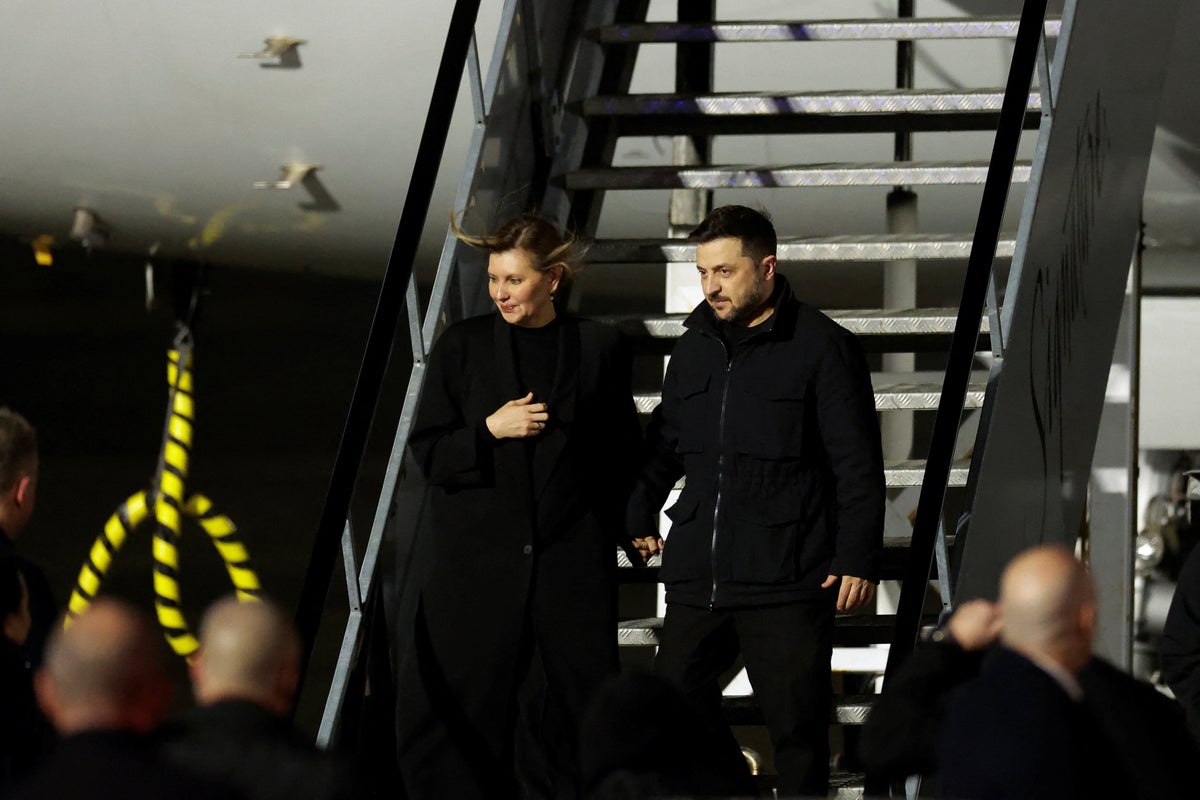
Winning a war is a full-time job that doesn't leave room for bedtime stories or soccer practice. Volodymyr Zelenskyy knows this better than anyone on the planet right now. When he says "I'm not the best father," it isn't some rehearsed political soundbite designed to garner sympathy. It’s a blunt, painful admission of the trade-off he makes every single morning he wakes up in a bunker instead of his own home. He’s leading a nation through a literal existential crisis, and the price of that leadership is being paid in the currency of his children’s childhood.
Most world leaders try to project an image of having it all. They want you to believe they can manage a nuclear standoff and a perfect family brunch in the same breath. Zelenskyy isn't interested in that lie anymore. The Russian invasion has stripped away the polish, leaving a man who’s remarkably honest about how much he has missed. His kids—Aleksandra and Kiril—are growing up in a world where their father is a face on a television screen or a voice on an encrypted line.
The Brutal Reality of Being a Wartime Parent
You can’t pause a front-line offensive because your son has a question about his homework. That’s the reality. Zelenskyy has been open about the fact that his children are living through the same terror as every other Ukrainian child, but with the added weight of their father’s face being the primary target for Russian hit squads.
His daughter is now a young woman, and his son is a young boy who understands far more about drones and artillery than any child should. Zelenskyy’s regret isn’t about a lack of love. It’s about a lack of presence. In any other context, a father who isn’t there for years would be judged harshly. In this context, he’s a hero to the world but feels like a stranger to his own living room.
It’s a specific kind of internal conflict. How do you tell your kids you love them when you’re choosing the survival of 40 million people over a movie night? You don't. You just keep going and hope they understand when the smoke clears.
What the Media Misses About the Personal Toll
Most news outlets focus on the geopolitical strategy or the next shipment of F-16s. They treat the human element as a "human interest" sidebar. That’s a mistake. The mental state of a commander-in-chief is directly tied to his personal stability.
Zelenskyy has mentioned in various interviews—most notably with outlets like the BBC and CNN—that his wife, Olena Zelenska, is the one holding the actual fabric of their family together. She’s the one dealing with the nightmares, the schooling, and the daily fear. When Zelenskyy says he isn't the best father, he’s effectively deferring the "parenting" crown to her because she's the one actually doing the work in the trenches of their home life.
The Psychology of Deprivation
- Physical Absence: He lives separately from them for security reasons. Constant proximity is a luxury he doesn't have.
- Emotional Bandwidth: When you spend 18 hours a day deciding where to send troops, you don't have much left for "how was your day?"
- The Hero Paradox: His children see him as a symbol, which makes it harder for them to see him as just "Dad."
Why This Honesty Matters for Ukraine
If Zelenskyy pretended everything was fine, he’d lose the trust of his people. Every father in the Ukrainian Armed Forces is feeling exactly what he feels. There are hundreds of thousands of men in muddy trenches right now who haven't seen their kids in months. They feel like "bad fathers" too.
By admitting his own failings, Zelenskyy creates a bridge. He isn't a king on a throne; he’s a grieving parent who happens to be in charge. This isn't just about his own family—it's about the collective trauma of a nation where the family unit has been blasted apart by geography and violence.
He’s basically saying, "I am failing at the thing I love most, so that you might have a country to raise your kids in." It’s a powerful, if depressing, trade. If you’re a father in Kharkiv or Lviv, you’re not alone. You’re in the same boat as the man you’re following.
The Long-Term Impact on Aleksandra and Kiril
We should talk about the children. They aren’t just kids anymore; they’re symbols themselves. Aleksandra and Kiril are growing up under a microscope. They’ve seen their father change from a comedian who made people laugh to a commander who looks like he hasn’t slept since February 2022.
Zelenskyy has shared how his son, Kiril, is already talking about the war and the equipment. This is a child who should be playing video games or sports, and instead, he’s discussing Patriot missile systems. It’s heart-wrenching. Zelenskyy knows he can’t give back those lost years of innocence. That’s the real root of his "not the best father" comment. It’s not about how much he loves them—it’s about how much he’s been forced to take from them.
The security situation means they can’t just go to the park. They can’t just walk to a friend’s house. Their life is an endless series of guarded movements and secret locations. That kind of pressure on a family is almost impossible to imagine for someone sitting in a peaceful suburb in the West.
Realities of Leading Through Loss
When you’re in a position of power, your personal life is the first thing to go. History is full of great leaders who were mediocre parents. Winston Churchill wasn't exactly winning Father of the Year during the Blitz. The same goes for Roosevelt or Lincoln.
Greatness requires a total, almost psychotic, focus on the mission at hand. Zelenskyy’s admission is a sign of his self-awareness. He knows he’s sacrificing his relationship with his kids for the sake of the country. He’s choosing the many over the few.
What's fascinating is that he doesn't try to make it sound noble. He makes it sound like a failure. That's why people connect with him. He isn't selling a glossy version of heroism; he’s selling the grit and the regret that comes with it.
Why the Public Loves the Honesty
- Relatability: Everyone feels like they aren't doing enough for their family sometimes.
- Vulnerability: It’s refreshing to hear a world leader admit they aren't perfect.
- Trust: If he's honest about his family, we tend to believe him about the war.
What This Means for Future Leaders
We’re seeing a new kind of leadership in the digital age. You can’t hide your family anymore. Zelenskyy’s struggle is played out in front of the entire world. It’s a case study in how to maintain authority while being completely human.
The lesson here isn't that being a world leader makes you a bad father. It’s that some jobs require you to give up everything—even your identity as a parent. Zelenskyy has made that choice, and he’s living with the consequences. He’s telling us that it’s okay to be flawed. He’s telling us that victory has a price that isn't just measured in soldiers or money. It’s measured in the moments you’ll never get back.
If you want to support what’s happening in Ukraine, start by recognizing the human sacrifice. It's not just about weapons and territory. It’s about the millions of fathers and mothers who are making the same brutal choice Zelenskyy is making every single day. Read the reports from organizations like UNICEF on the psychological impact of war on Ukrainian children to get the full picture of what this generation is losing. Support initiatives that provide mental health resources to displaced families. That’s the most direct way to help.
Understand the weight of the man’s words. When he says he isn't the best father, he isn't asking for a hug. He’s telling you the truth about what it takes to save a country. Respect that truth.


