Oil market pricing currently functions as a real-time ledger of geopolitical uncertainty, where the delta between physical supply-demand balance and the futures price represents a "Geopolitical Risk Premium." The recent surge in crude prices, triggered by conflicting reports regarding US-Iran peace talks, demonstrates a classic breakdown in information symmetry. Market participants are not pricing the reality of a deal, but rather the hedging costs associated with the failure of diplomacy. To understand this price action, one must dissect the structural drivers of Iranian supply and the specific mechanisms through which diplomatic "mixed signals" translate into brent and WTI volatility.
The Triad of Iranian Oil Supply Variables
The impact of US-Iran relations on global energy markets rests on three distinct pillars. Each pillar contributes differently to the marginal barrel of oil and, by extension, the global price floor.
- The Sanctions Delta: This is the volume of oil currently "off-book" or sold at steep discounts to circumvent US secondary sanctions. Estimates suggest Iran’s current exports fluctuate between 1.2 and 1.5 million barrels per day (mb/d). A formal peace agreement or a return to the Joint Comprehensive Plan of Action (JCPOA) could theoretically reintegrate another 1 million barrels per day into the formal market within six to nine months.
- Floating Storage Dissipation: Iran maintains a significant volume of crude and condensate on tankers in the Persian Gulf. This is "ready-to-market" supply. The moment a diplomatic breakthrough is perceived as credible, this inventory acts as an immediate psychological weight on the front-month contract, regardless of when physical delivery occurs.
- Infrastructure Degradation and Reinvestment Lag: Analysts often overestimate how quickly Iranian production can hit pre-sanction levels. Years of underinvestment in upstream technology and reservoir management create a "friction coefficient" in supply recovery. This lag ensures that even with a total removal of sanctions, the price impact is staggered rather than instantaneous.
Deconstructing the Mixed Signal Feedback Loop
The "mixed signals" cited in recent reports are not merely noise; they are tactical instruments of negotiation. In game theory terms, both Washington and Tehran are engaging in "signaling" to test the other's reservation price—the point at which a deal becomes better than the status quo of sanctions and proxy friction.
When a report suggests progress, the risk premium shrinks as shorts anticipate a supply glut. Conversely, when hardliners in either capital issue a rebuttal, the premium expands. This volatility is exacerbated by algorithmic trading. Commodity Trading Advisors (CTAs) utilize Natural Language Processing (NLP) to scan headlines. When "US-Iran" is paired with "deadlock" or "stalemate," buy orders are triggered automatically, creating a self-fulfilling price surge that may or may not reflect a change in physical fundamentals.
The current price surge is specifically tied to the realization that the "easy" concessions have been exhausted. Remaining sticking points—such as the verification of enrichment levels or the scope of regional influence—carry a higher probability of failure. The market is pricing this high-probability failure as a supply-side constraint.
The Logistics of the Shadow Fleet
A critical factor ignored by surface-level analysis is the role of the "Shadow Fleet"—the network of aging tankers used to transport sanctioned oil. The pricing of Brent is fundamentally linked to the efficiency of this fleet.
- Discounting Mechanisms: Iranian crude currently trades at a significant discount to benchmarks like ICE Brent to compensate for the insurance and seizure risks involved in its transport.
- The Re-entry Paradox: If peace talks succeed, this shadow fleet must transition back into the regulated, insured, and transparent global maritime system. This transition creates a temporary logistical bottleneck.
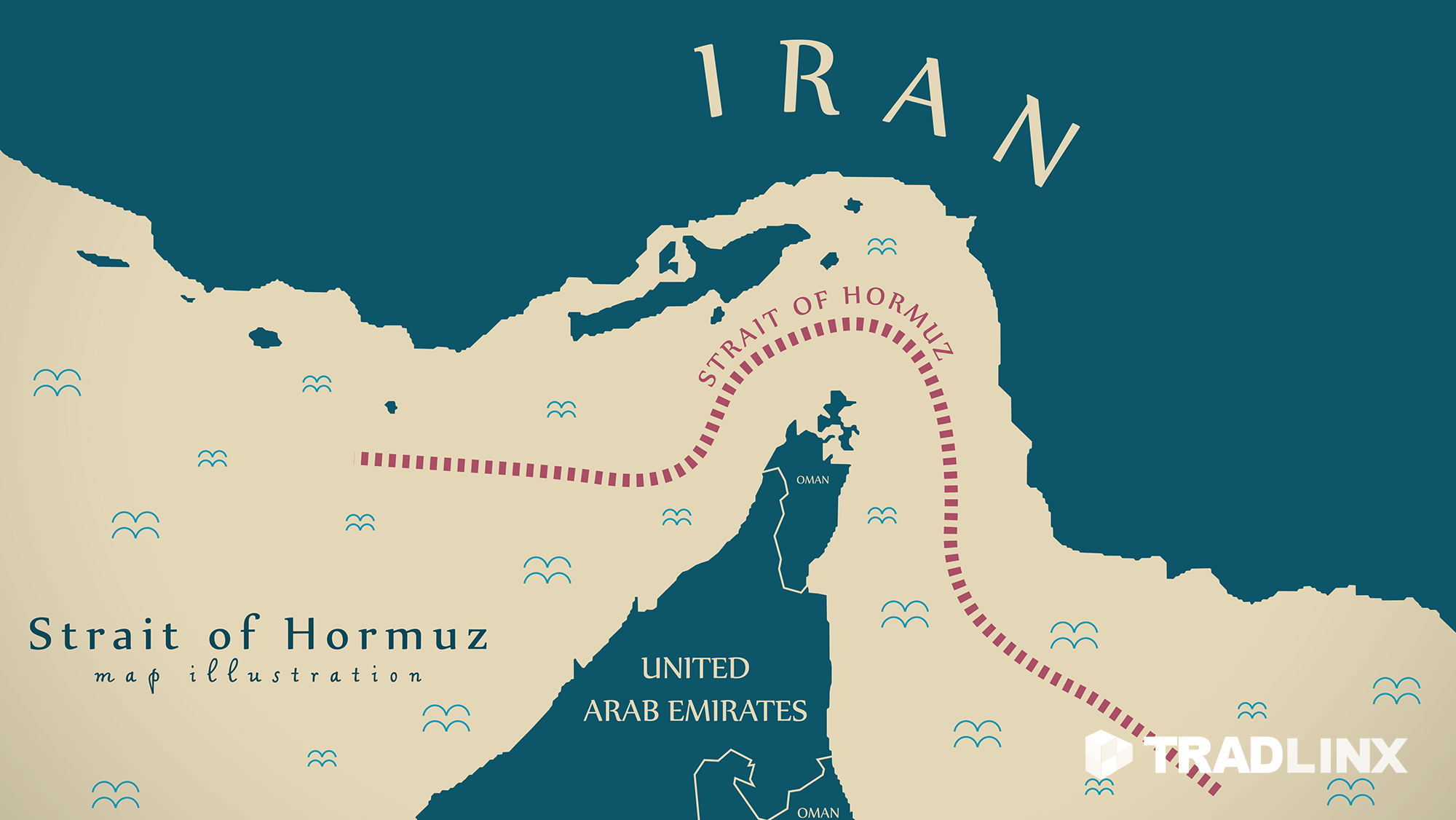
- Insurance Costs: A collapse in peace talks usually correlates with increased maritime security threats in the Strait of Hormuz. Because approximately 20% of global petroleum liquids pass through this choke point, the "Hormuz Risk Adder" is applied to every barrel, even those not originating from the Gulf.
Quantifying the Geopolitical Risk Premium (GRP)
The GRP is not a static number but a dynamic calculation. It can be modeled as:
$$GRP = (P_{actual} - P_{marginal_cost}) - \alpha$$
Where:
- $P_{actual}$ is the current market price.
- $P_{marginal_cost}$ is the cost of the last barrel required to balance the market (typically US shale or deepwater offshore).
- $\alpha$ represents the cyclical demand-supply balance.
In a neutral environment, $GRP$ should approach zero. During the current US-Iran friction, the $GRP$ is estimated to be between $5 and $10 per barrel. When "mixed signals" emerge, the market re-evaluates the probability of a supply shock ($P_s$). If the probability of a total breakdown in talks increases from 30% to 60%, the $GRP$ adjusts upward almost instantly. This explains why prices can surge $3-$4 on a single headline despite no change in the number of tankers currently loading at Kharg Island.
US Domestic Policy Constraints and Oil Prices
The US position in peace talks is not purely a matter of foreign policy; it is a function of domestic energy economics and the consumer price index (CPI). The administration faces a "Policy Trilemma":
- Objective A: Lower domestic gasoline prices (requires more Iranian oil).
- Objective B: Maintain pressure on Iranian nuclear ambitions (requires maintaining sanctions).
- Objective C: Avoid alienating regional allies who view Iranian reintegration as a security threat.
The inability to solve this trilemma results in the "mixed signals" that drive market volatility. The market perceives that the US cannot afford to let talks fail completely (due to Objective A) but cannot afford to let them succeed too quickly (due to Objective B). This creates a "bounded volatility" range where oil prices are unlikely to crash but are hypersensitive to any upward pressure.
Strategic Realignment of OPEC+
OPEC+ monitors these diplomatic shifts with high granularity. The group’s production quotas are calculated based on the assumption of Iranian absence. Any significant progress toward a US-Iran deal forces an immediate recalibration within the Riyadh-Moscow axis.
If Iran returns to the market, Saudi Arabia and its allies may be forced to choose between ceding market share or initiating a price war to maintain fiscal revenues. The market is currently hedging against the possibility that OPEC+ will preemptively cut production to "make room" for Iranian barrels, which ironically keeps prices higher in the short term. The "mixed signals" from Washington and Tehran therefore act as a leading indicator for the next OPEC+ ministerial meeting's tone.
The Role of SPR Depletion in Price Sensitivity
The Strategic Petroleum Reserve (SPR) in the United States has historically acted as a buffer against geopolitical supply shocks. However, after significant releases in recent years, the buffer is thinner. This reduction in "inventory elasticity" means the market has less protection against a sudden escalation in the Persian Gulf.
The diminished SPR levels have fundamentally changed the market’s "Reaction Function." Previously, a breakdown in Iran talks might cause a $2 price jump. Today, that same news event causes a $5 jump because traders know the US has less capacity to flood the market with emergency supply to suppress prices. This lack of a domestic safety valve places the full weight of price discovery on diplomatic outcomes.
Technical Resistance and the Momentum Trade
From a quantitative perspective, the surge in oil prices is also a result of technical "Short Squeezing." Many macro hedge funds had positioned themselves for a "lower for longer" scenario, betting that a slowing global economy would dampen demand. The headline-driven spikes in the Iran peace talks force these funds to cover their short positions, creating an upward spiral that is decoupled from actual consumption data.
The "mixed signals" act as the catalyst for these technical breakouts. Once the price clears key moving averages (such as the 200-day SMA), momentum traders enter the fray, extending the rally further than the news justifies. This creates a "V-shaped" volatility profile that is difficult for long-term physical buyers to navigate, leading to increased hedging activity and further price support.
Evaluating the Probability of a "Grand Bargain"
Professional strategy requires looking past the rhetoric to the underlying incentives. The current stalemate is a result of an "Incentive Mismatch."
- The Iranian Perspective: Tehran requires permanent sanctions relief and guarantees that a future US administration will not exit the deal. The US legal system makes such a guarantee nearly impossible to provide without a formal treaty, which lacks Senate support.
- The US Perspective: Washington requires a "longer and stronger" deal that includes ballistic missile constraints, which Iran views as a non-starter for national sovereignty.
This fundamental mismatch suggests that "mixed signals" will remain the baseline state of the market for the foreseeable future. A definitive peace deal is a low-probability event (estimated <20%), while a total collapse into conflict is also relatively low-probability (estimated <15%). The most likely outcome is "Managed Friction"—a state of perpetual negotiation where sanctions are partially enforced and oil continues to leak into the market through back channels.
Tactical Asset Allocation in a Managed Friction Environment
For energy sector participants and macro investors, the strategy should not be to "guess" the outcome of the next round of talks, but to trade the volatility resulting from the Managed Friction state.
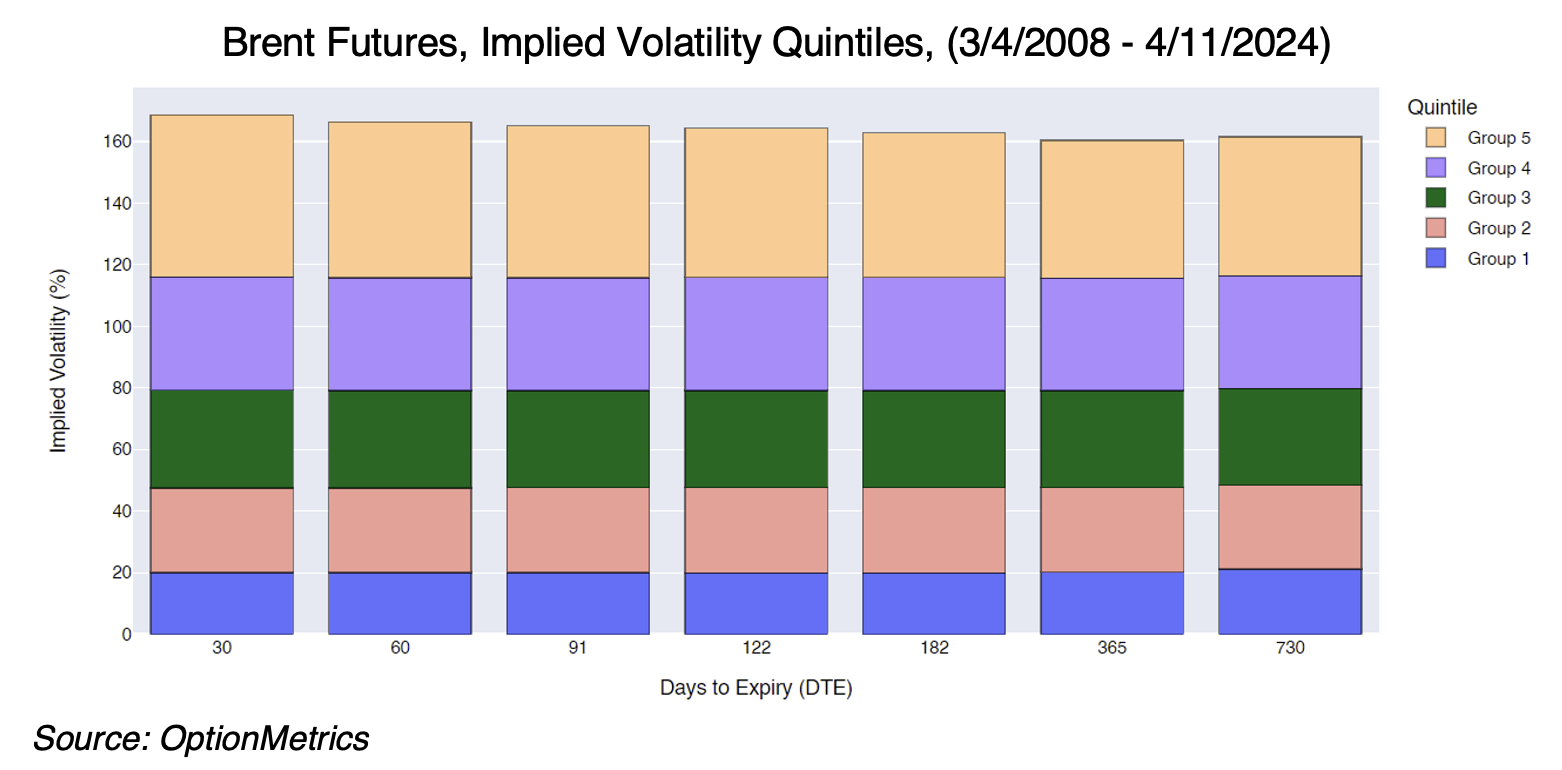
- Volatility Arbitrage: Use the delta between implied volatility in oil options and the realized volatility of headlines. When the market overreacts to a "peace is near" headline, it often presents a buying opportunity for long-dated calls.
- Focus on Choke Point Risks: Prioritize investments in midstream assets and companies with diversified supply chains that do not rely on the Strait of Hormuz.
- Inventory as a Hedge: Industrial consumers should move away from "Just-in-Time" procurement toward "Just-in-Case" inventory building. The cost of carrying extra crude is currently lower than the risk-adjusted cost of a $20/barrel spike caused by a diplomatic breakdown.
The current "surge" is a symptom of a market that has lost its anchor in physical reality and is instead drifting on the tides of geopolitical theater. Success in this environment requires a clinical focus on supply-side variables and an absolute rejection of the narrative noise provided by political actors. The price of oil is no longer a measure of energy demand; it is a measure of the global trust deficit.
The strategic play is to position for "The Long Stalemate." This involves shorting the volatility immediately following a major headline (mean reversion) while maintaining long exposure to the Geopolitical Risk Premium, which is structurally higher than it was five years ago. Until the US or Iran significantly alters their reservation price, the "mixed signals" will continue to provide a floor for crude prices, regardless of global economic cooling.