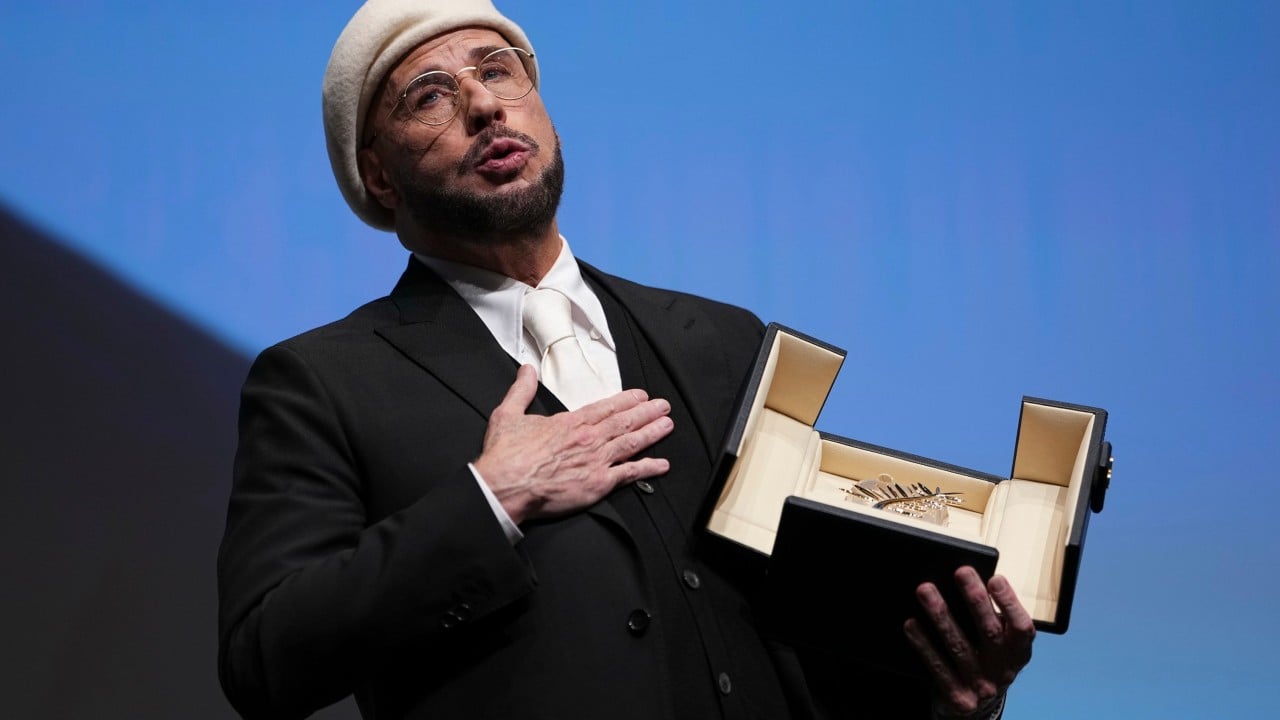
When David Orobosa Omoregie, known to the world simply as Dave, stood before a capacity crowd in London, the air didn't just vibrate with bass. It felt heavy with the weight of a generational shift. For years, the British music industry tried to box rappers into a specific corner of the market, treating them as local phenomena with a glass ceiling. Dave didn't just crack that glass. He dismantled the entire building. This was not a "rapper" performing a hometown show. This was a cultural architect delivering a state-of-the-union address to a nation that increasingly sees itself reflected in his lyrics more than in its own political institutions.
He has moved beyond the constraints of genre. While the term "rapper" is technically accurate, it has become an insufficient descriptor for an artist who commands the stage with the poise of a classical composer and the biting social commentary of a veteran investigative journalist. To understand how he reached this peak, we have to look past the chart-topping singles and examine the structural changes he has forced upon the entertainment business.
The Strategy of Silence and Substance
Most modern stars are trapped in a cycle of constant digital noise. They post, they tweet, and they livestream their lives to stay relevant in a distracted economy. Dave does the opposite. He retreats. He disappears for months, sometimes years, only to emerge with projects that possess the density of a novel. This scarcity is a deliberate power move. By refusing to play the social media game, he has increased his value. When he speaks, people stop what they are doing because they know the content will have actual weight.
This isn't just about being mysterious. It is a calculated refusal to be a commodity. In an era where music is often treated as background noise for TikTok clips, Dave creates "event" music. His 2019 debut album, Psychodrama, wasn't just a collection of songs; it was a conceptual exploration of generational trauma and Black British identity. By the time he hit his most recent hometown shows, that foundation allowed him to perform ten-minute tracks like "Lesley" to a silent, captivated audience. Very few artists in history, regardless of genre, can hold 20,000 people in total silence while telling a story about domestic abuse.
Redefining the Live Experience
The traditional rap show used to be a mess of hype men, backing tracks, and chaotic energy. Dave has moved the needle toward a high-production, theater-style experience. At his recent performances, the visual storytelling is as vital as the audio. We saw fire, we saw intricate lighting rigs, but most importantly, we saw a man at a piano.
The piano is the ultimate symbol of his defiance against stereotypes. When he sits down to play, he is bridging the gap between the street-level grit of his early EPs and the sophisticated artistry of a global icon. It forces the audience to acknowledge his technical proficiency. He is a musician first. The "rapper" label often carries a subtle, derogatory undertone in certain media circles, implying a lack of formal craft. Dave uses his live shows to make that argument impossible to sustain.
The Business of Authenticity
Behind the scenes, the rise of Dave represents a shift in how power is held in the UK music scene. He isn't a puppet of a major label machine. Along with his long-time collaborator Fraser T. Smith and his management team, he has maintained a level of creative control that is rare for someone of his commercial stature. This independence allows him to take risks. He can release a seven-minute political manifesto like "Black" and know that his core audience will not only listen but will turn it into an anthem.
The industry used to fear that being "too British" or "too specific" would hurt international appeal. Dave proved the inverse is true. By leaning into the hyper-local—mentioning specific South London streets, referencing the intricacies of the UK school system, and tackling the Windrush scandal—he achieved a level of authenticity that resonates globally. Humans everywhere recognize truth when they hear it, even if the slang is different.
The Overlooked Factor of Musicality
Critics often focus on his lyrics, which are undeniably some of the best in the world right now. However, his ear for production is what actually carries those lyrics into the mainstream. He understands the "frequency" of a hit. Whether it's the Afrobeat-influenced rhythms of "System" or the dark, stripped-back minimalism of his harder tracks, there is a consistent level of musical sophistication.
He isn't just rapping over beats. He is composing songs. This distinction is why he is winning Ivor Novello awards alongside Brit Awards and Mercurys. He has managed to satisfy the purists who want intricate wordplay while also providing the melodic hooks that the broader public craves. It is a delicate balancing act that usually results in an artist compromising one side for the other. Dave has refused to compromise.
A Mirror to a Fractured Nation
The true reason Dave has transcended his status is his role as a chronicler of modern Britain. We live in a country that is deeply divided, struggling with its identity, and grappling with systemic inequality. Politicians often speak in platitudes that feel disconnected from the reality on the ground. Dave fills that vacuum.
When he performs "Heart Attack," he isn't just telling his story. He is articulating the anxieties of millions of young people who feel ignored by the establishment. He talks about the cost of living, the failures of the social safety net, and the mental health crisis with a clarity that no op-ed can match. He has become a primary source for the history of this era.
Counter-Arguments to the Hype
Is there a risk of over-sanctifying him? Perhaps. The danger for any artist who becomes a "voice of a generation" is the pressure to always be profound. There is a segment of the audience that misses the raw, unpolished energy of his Six Paths era. As the production values go up and the venues get larger, some fear the intimacy and the "danger" of his early work might be smoothed over.
Furthermore, the industry's obsession with Dave can sometimes overshadow other talented artists who are doing similar work but lack his specific polish or backing. The "one-king" narrative in British rap is a tired trope that needs to be retired. While Dave is exceptional, he is part of a wider ecosystem of talent that deserves similar scrutiny and praise.
The Shift in the Power Dynamic
The hometown gig wasn't just a victory lap. It was a demonstration of a new power dynamic. In the past, a rapper would need the validation of a mainstream TV host or a legacy radio DJ to be considered a "star." Today, Dave is the one granting the validation. When he brings guests on stage, he is kingmaking. He has built his own platform, his own language, and his own economy.
The "British star" label is almost too small now. We are looking at an artist who is positioning himself alongside the greats of global music history. He has the lyrical depth of Nas, the musical curiosity of Kanye West, and the cultural resonance of Bob Marley. These are big names to invoke, but Dave has the receipts to justify the comparison.
The old guard of the music industry is still trying to figure out how he did it. They look for a formula, but the formula is simply excellence combined with an unwavering commitment to the truth. You can't manufacture the moment when an entire stadium screams the lyrics to a song about the struggles of an immigrant mother. That connection is earned through years of being honest when it would have been easier to be commercial.
Dave has redefined what success looks like for a Black artist in the UK. It is no longer about "making it out" or fitting into a pre-defined mold. It is about staying exactly where you are and forcing the world to come to you. He didn't change for the industry; he waited for the industry to realize it had to change for him.
Watch the way he moves in the next twenty-four months. He isn't just making music; he is building a legacy that will be studied long after the current charts are forgotten. The question isn't whether he is a star. The question is how far he intends to take this new model of stardom, and who he decides to bring with him.