The sound of a door splintering at four in the morning is a sound that never truly leaves the ears. It is a sharp, percussive crack that signals the end of a world. For thousands of families caught in the gears of the American immigration system, that sound wasn't just a law enforcement action. It was a psychological amputation.
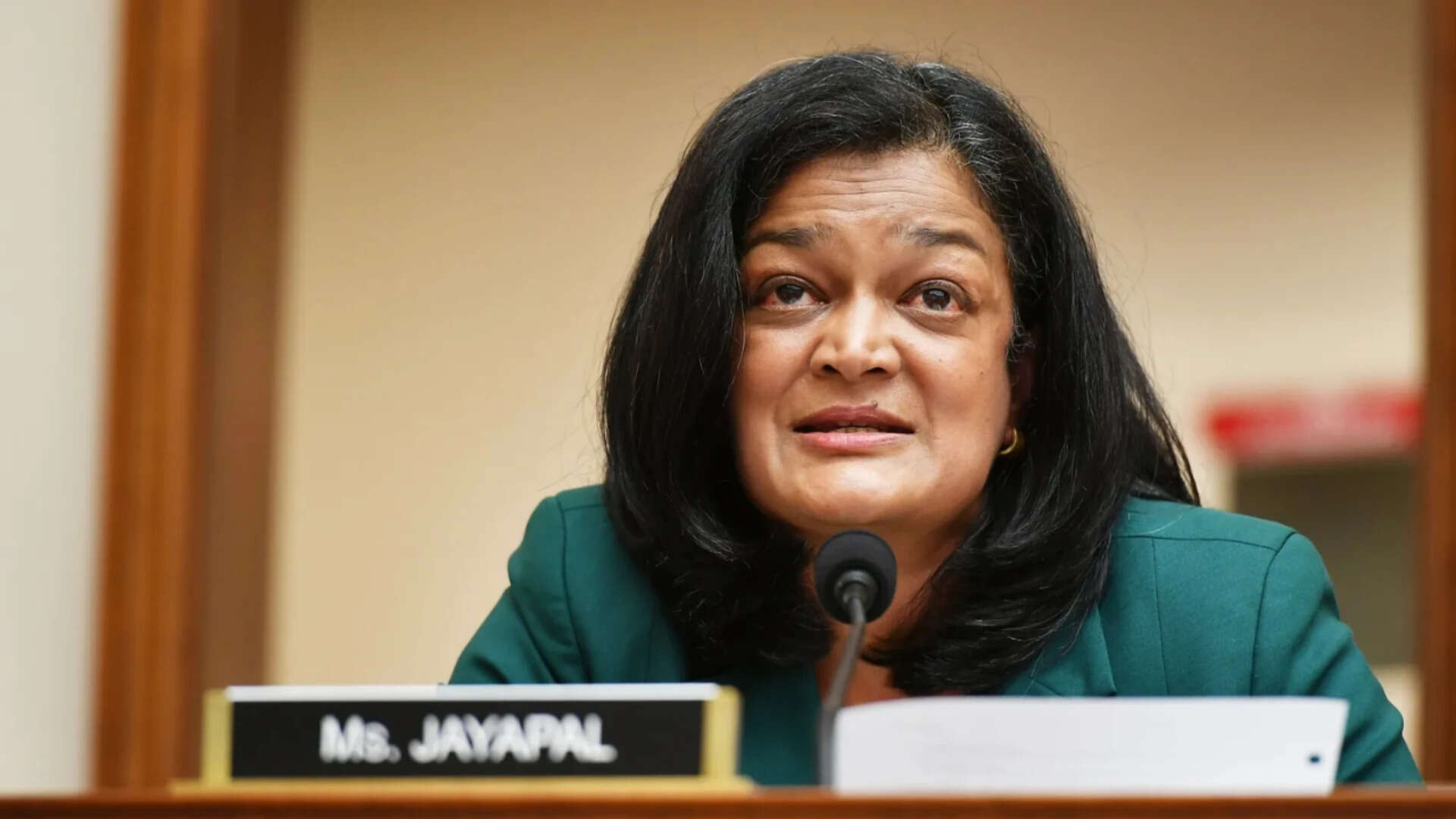
Pramila Jayapal, an Indian-born congresswoman who has spent years navigating the sterile corridors of the U.S. Capitol, knows that the law is often a blunt instrument. Recently, she has begun pushing for something that feels radical in its simplicity: compensation. Not just for lost wages or legal fees, but for the invisible, jagged scars left behind by the aggressive tactics of Immigration and Customs Enforcement (ICE). You might also find this similar story interesting: Strategic Asymmetry and the Kinetic Deconstruction of Iranian Integrated Air Defense.
She is talking about the trauma. The kind that sits in the back of a child’s throat for a decade.
The Anatomy of a Midnight Raid
Imagine a kitchen. It smells of stale coffee and the lingering scent of last night’s corn tortillas. A family is asleep. There is no warning. There is only the sudden, violent intrusion of boots and flashlights. In the cold calculus of a "crackdown," this is considered a success. But look closer at the faces in the hallway. As highlighted in latest reports by The Washington Post, the effects are worth noting.
There is a boy—let’s call him Mateo, a composite of the thousands of children impacted by these surges. He is seven years old. He watches his father, the man who taught him how to ride a bike and how to tie his shoes, being pressed against a wall. His father is in his underwear. He is being handcuffed in front of the person who views him as a hero.
The law says this is procedure. Psychology says this is a catastrophe.
When we talk about "migrants," we often speak in the abstract. We discuss border flows, visa quotas, and enforcement budgets. We treat people like data points on a spreadsheet. But when Jayapal calls for compensation, she is trying to put a price on the moment Mateo’s sense of safety evaporated. She is arguing that the government, when it acts with systemic cruelty, incurs a debt.
The Invisible Ledger
Trauma is a thief. It steals the ability to sleep. It steals the ability to trust. For the families targeted during the most aggressive periods of ICE enforcement—particularly the "zero tolerance" eras that saw parents and children ripped apart—the damage didn't end when the handcuffs clicked shut.
Consider the biological reality of what happens to a human being under this kind of stress. When a child is separated from a caregiver in a violent or high-stress environment, their brain enters a state of hyper-arousal. The amygdala, the brain's alarm system, stays "on." For weeks, months, or years, the body produces a steady drip of cortisol.
This isn't a metaphor. It is clinical fact. Toxic stress literally reshapes the architecture of a developing brain. It lowers the immune system. It makes the heart work harder than it should.
Jayapal’s argument is that the United States government intentionally utilized this fear as a tool of deterrence. If the cruelty was the point, then the government is responsible for the medical and psychological fallout of that choice. We are not just talking about a check in the mail. We are talking about the long-term cost of therapy, the specialized education needed for children who can no longer focus in school, and the healthcare required for bodies broken by the weight of constant, vibrating anxiety.
The Persistence of Memory
The argument against such compensation usually boils down to a single, cold line: "They shouldn't have been here."
It is a powerful rhetorical shield. It allows us to look away from the shivering child or the sobbing mother. It suggests that if a rule is broken, any level of retribution is justified. But a society is measured by how it treats the people it has the power to crush.
When a bridge collapses because of government negligence, we pay the victims. When a medical trial goes wrong, we pay the participants. When the state uses its overwhelming power to inflict lasting psychological damage on children—regardless of their legal status—does it not owe a debt to the humanity it discarded?
I remember speaking with a woman who had been detained during a workplace raid. She wasn't a criminal. She was a seamstress. She spent three days in a "hielera"—the "ice box" holding cells known for their bone-chilling temperatures. She told me that for years afterward, she couldn't walk past a police car without her hands shaking. She couldn't sleep without a light on. Her daughter, who was at school when the raid happened, stopped eating for a week because she thought her mother had simply vanished from the earth.
How do you calculate the value of that terror?
The Mechanics of Redress
Jayapal isn't just shouting into the wind. She is pointing toward a specific framework of accountability. Her proposal mirrors the way we treat other victims of systemic failure. It suggests that the Department of Homeland Security should be held to a standard of "duty of care."
Critics argue this would open the floodgates. They fear a "litigation nightmare" where every enforcement action leads to a lawsuit. But there is a canyon-sized difference between a routine traffic stop and a policy that involves the deliberate, state-sanctioned separation of nursing infants from their mothers.
The stakes aren't just about money. They are about the soul of the country. If we accept that the government can traumatize people with impunity, we accept a version of power that is divorced from morality. We accept that some people are "less than," and therefore their pain doesn't require a line item in the budget.
Jayapal, having navigated the immigrant experience herself, understands that the "American Dream" is often sold as a neat, linear path. Work hard, follow the rules, and you belong. But for those caught in the ICE net, the path is a labyrinth of shadows. Even if they eventually win their legal cases, even if they gain the right to stay, they are changed. They are jumpy. They are quiet.
The Cost of Doing Nothing
If we ignore the call for compensation, the cost doesn't disappear. It just shifts.
It shifts to the public schools that have to support children with severe PTSD. It shifts to the emergency rooms where people go when their stress-induced hypertension turns into a stroke. It shifts to the neighborhoods where trust in authority has been scorched to the ground, making everyone less safe because no one is willing to talk to a person in a uniform.
We are already paying. We are paying in the loss of human potential. We are paying in the creation of a permanent underclass defined by state-inflicted trauma.
The logic of the crackdown was that fear would keep people away. It was a gamble made with other people's lives. Now, the bill is coming due. It is a bill written in the language of therapy sessions, night terrors, and the slow, painful work of stitching a family back together.
Jayapal’s move is an attempt to force a mirror in front of the nation. She is asking us to look at the splintered wood of the door and the wide, dark eyes of the child in the hallway. She is asking if we are comfortable with the fact that our safety was bought with their sanity.
The debt exists whether we acknowledge it or not. You can see it in the way a man flinches when he hears a loud knock. You can see it in the way a young woman meticulously carries her papers everywhere she goes, as if they are a shield against the wind. You can see it in the silence that falls over a room when the word "immigration" is spoken.
We have spent billions of dollars on the machinery of removal. Perhaps it is time we spent something on the machinery of repair.
The boy in the hallway is an adult now. He still wakes up at four in the morning, listening for the sound of wood breaking, even though he lives in a house with a solid steel door. He is still waiting for someone to admit that what happened to him wasn't just law enforcement. It was a theft of his peace, and the person who took it was wearing a badge. He isn't looking for a handout. He is looking for a confession. He is waiting for the state to realize that when you break a person, you are responsible for the pieces.