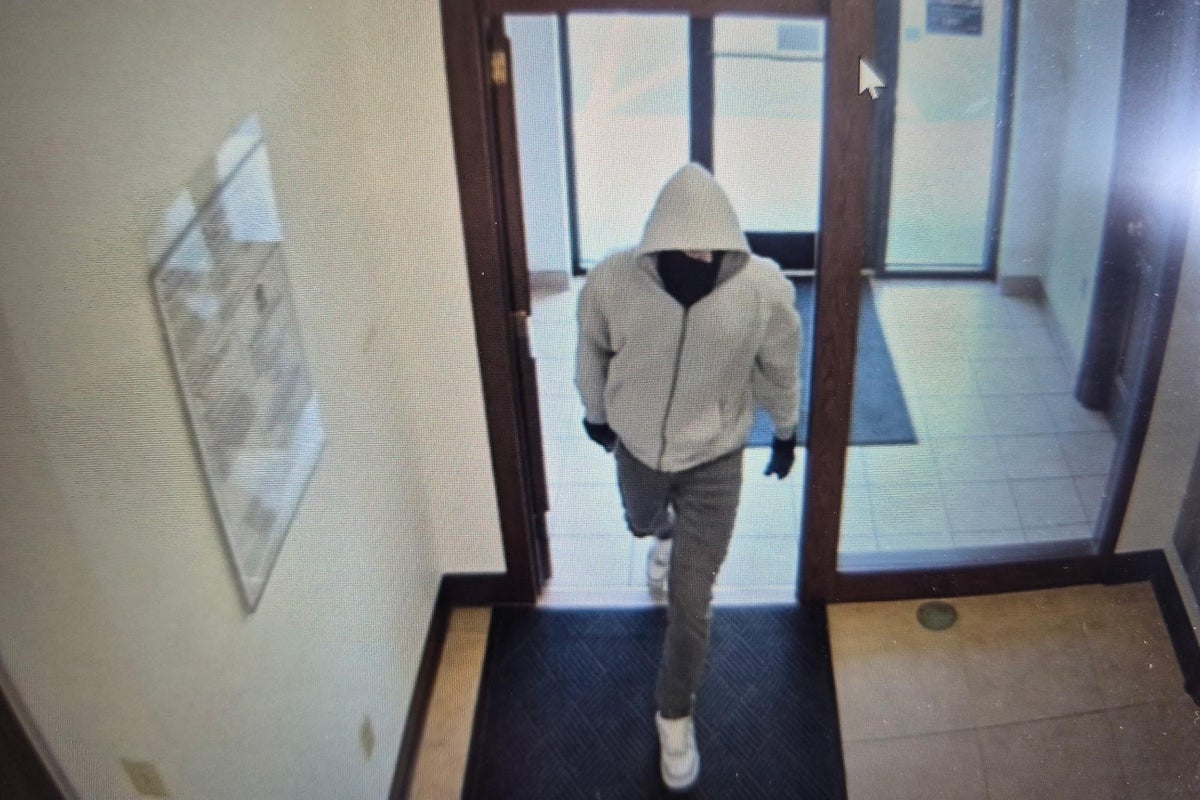
The media loves a story about a "stupid criminal." They salivate over the irony of a man committing a double homicide during a bank robbery only to hand the police his location on a digital silver platter via Facebook. They frame it as a victory for modern forensics. They call it justice by algorithm.
They are wrong.
This isn't a story about clever police work or the inevitability of the law. It is a post-mortem on the total erosion of operational security (OPSEC) in a society addicted to self-documentation. We have reached a point where the human urge to be "seen" has officially overridden the primal instinct for self-preservation. When a high-stakes criminal can’t resist the dopamine hit of a "Like" after a capital offense, we aren't looking at a fluke. We are looking at a fundamental shift in human psychology that has turned the entire world into a panopticon—and we built the walls ourselves.
The Myth of the Digital Breadcrumb
Standard reporting on these cases suggests that police "track down" suspects through tireless digital investigation. Let's be real: they didn't track him. He shouted.
In the old world of professional crime, anonymity was the primary asset. You lived in the shadows because the shadows were your armor. Today, the shadows are gone because everyone carries a high-definition beacon in their pocket. The competitor's narrative suggests that social media is a tool for law enforcement. That is a lazy consensus. Social media is actually a psychological trap that turns everyone—criminals and civilians alike—into voluntary informants.
Consider the mechanics. To post on a platform like Facebook after a crime, a person must:
- Maintain an active account tied to their real identity or a traceable device.
- Access a network that logs their IP address and GPS coordinates.
- Express a desire for external validation that outweighs the 20-year-to-life sentence hanging over their head.
This isn't a failure of intelligence; it’s a failure of ego. I have watched high-level corporate security audits fail for the exact same reason. It’s never the sophisticated hack that brings down the system. It’s the employee who takes a selfie with their badge visible or the executive who tweets their location from a private terminal. The bank robber isn't an outlier. He is the extreme logical conclusion of our current "look at me" economy.
Privacy is No Longer a Default State
We talk about privacy as if it’s a right we still possess. It isn't. In 2026, privacy is an active, exhausting labor. If you are not actively working to be invisible, you are broadcasted.
The police didn't need a warrant to find this suspect’s public posts. They didn't need "cutting-edge" surveillance. They just needed an internet connection and a lack of competition for the suspect's attention. The "status quo" tells us to be careful what we post. The contrarian truth is that the mere act of maintaining a digital presence is a surrender.
We’ve seen this play out in white-collar crime and street crime alike. The vanity of the perpetrator is the most reliable tool in the detective’s kit. When someone kills two people for a bag of cash, they are seeking power. But in the modern era, power that isn't witnessed feels like it doesn't exist. This is the "Influencer Criminal" paradox: If you didn't post about the heist, did you even rob the bank?
The Incompetence Loophole
The public finds comfort in these stories because it makes criminals look like idiots. It creates a false sense of security. "I'm not that stupid," the average citizen thinks, "so I'm safe."
This is a dangerous delusion.
The focus on the "Facebook Fail" ignores the terrifying reality of the crime itself. Two people are dead. The "system" didn't prevent those deaths. It didn't intercept the threat. It simply waited for the killer to trip over his own ego. Relying on the stupidity of bad actors is not a security strategy; it’s a hope.
In cybersecurity, we call this "security through obscurity," and it’s a death sentence. In the physical world, relying on a criminal's social media addiction to solve a double murder is a reactionary, bottom-tier victory. It shouldn't be celebrated. It should be mourned as a sign that our social structures have failed so completely that our only remaining defense is the hope that the killer wants to go viral.
Why the "Common Sense" Advice Fails
When these stories break, "experts" come out of the woodwork to tell people to check their privacy settings. That’s like telling someone in a sinking ship to make sure their windows are closed.
If you think a "Private" setting on Facebook protects you from a federal or state investigation, you are fundamentally illiterate regarding how data works. Metadata is the real killer. Every photo taken contains EXIF data—time, date, coordinates. Every login is a heartbeat on a server. The robber's mistake wasn't just posting; it was existing in the digital ecosystem while trying to operate outside the social contract.
You cannot be a part-time ghost. You cannot live in the grid and expect to be invisible when it’s convenient. The "nuance" the media misses is that the law didn't win this round—the platform did. The platform is designed to harvest identity. It doesn't care if that identity belongs to a saint or a murderer. It just wants the data.
The Professionalization of Visibility
We have reached the end of the "professional" criminal era because the tools required to be a person in 2026 are the exact tools used to convict you. Your car logs your speed. Your phone logs your gait. Your social media logs your soul.
The competitor's article treats this as a "dumb criminal" anecdote. I'm telling you it’s a harbinger. This suspect wasn't uniquely stupid. He was just more honest about his addiction to the digital mirror than the rest of us. He killed for money but stayed for the comments section.
If you want to understand the modern world, stop looking at the crime and start looking at the compulsion. We are living in an age where the need to be "relevant" has successfully hunted down and killed the instinct for survival.
Throw away the idea that "better policing" is what solved this. The suspect walked into the station and handed them the keys because he couldn't stand the thought of being a ghost. In a world that demands constant visibility, being a ghost is the only way to be free—and almost no one is strong enough to handle the silence.
Stop looking for the "logic" in his posts. There is no logic. There is only the noise of a society that has forgotten how to shut up, even when speaking is a suicide note.