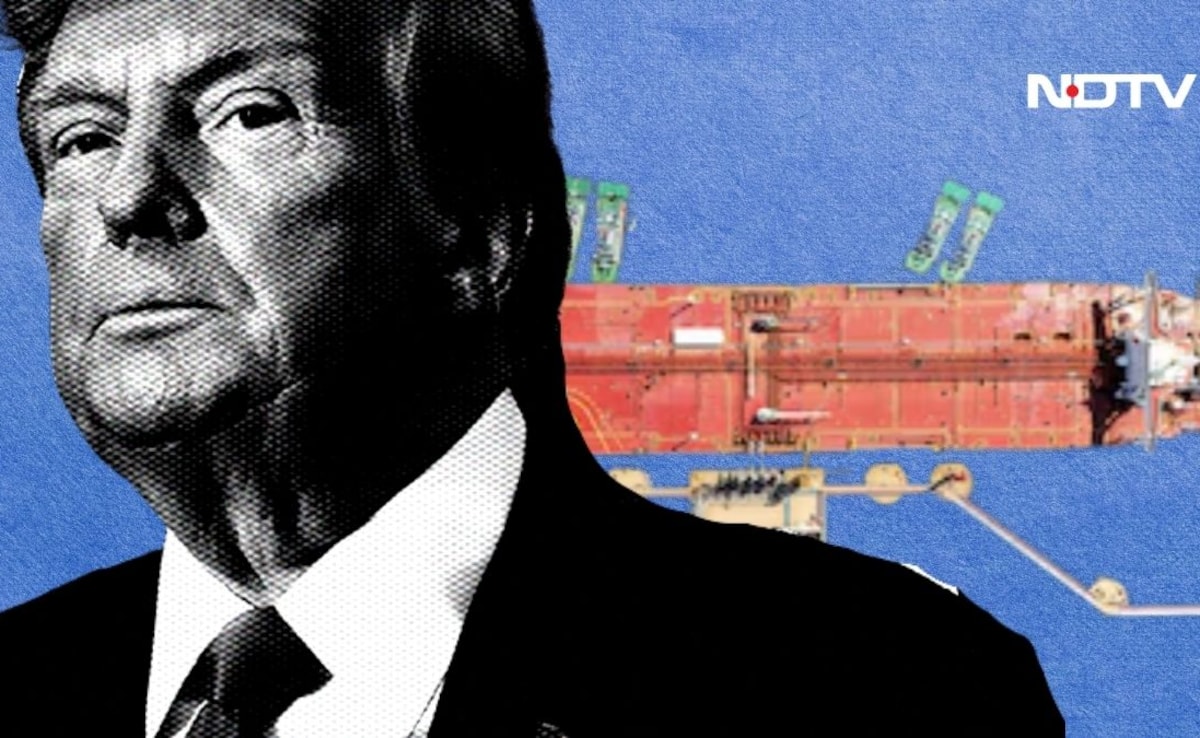
The screen glows blue in the dim light of a Tehran office. Javad Zarif, a man whose career has been defined by the careful, often agonizing architecture of diplomacy, stares at a feed of scrolling text. Across the world, a thumb taps a screen in Washington. A post goes live. In an instant, the fragile equilibrium of global oil markets and the literal safety of sailors in the Persian Gulf are thrown into the tumbler of social media discourse.
This is the new theater of war. It isn't fought with lead or steel, at least not at first. It is fought with characters, hashtags, and the rapid-fire bravado of a digital age that moves far faster than the ships navigating the world's most dangerous chokepoint.
The Strait of Hormuz is a narrow ribbon of water. At its tightest point, the shipping lanes are only two miles wide. Through this needle’s eye passes a fifth of the world’s petroleum. If you have ever pumped gas into a car or watched a plastic toy being manufactured, you are tethered to this specific geography. When the Iranian Foreign Minister takes to the internet to lambaste an American President, he isn't just arguing; he is signaling to the markets that the valve of global energy is under his hand.
The Weight of a Tweet
Donald Trump’s approach to foreign policy often felt like a series of lightning strikes. Sudden. Disruptive. Loud. For the Iranian leadership, specifically Zarif, these digital volleys were more than just insults. They were perceived as a strategic attempt to bypass the centuries-old protocols of statecraft.
Zarif’s critique was sharp. He suggested that the U.S. President "talks a lot" and "tweets a lot," but lacks a fundamental understanding of the history he is trying to rewrite. Imagine a chess player trying to explain the rules to someone who is busy throwing the pieces at the wall. That was the palpable frustration emanating from the Iranian Ministry.
The Iranian perspective is rooted in a sense of territorial ownership that dates back millennia. To them, the Persian Gulf is not an international lake; it is their backyard. When Trump threatened to block Iranian oil exports entirely, the response was a reminder of geography. If Iran cannot export through the Strait, the implication was clear: perhaps no one will.
The Invisible Sailors
While the politicians trade barbs on platforms owned by billionaires, there are men and women on the water. Consider a hypothetical tanker captain—let’s call him Elias. Elias is responsible for a vessel the size of three football fields, carrying millions of gallons of crude oil.
For Elias, a tweet from the White House or a retort from Tehran isn't just "content." It is a change in the atmospheric pressure of his daily life. When tensions spike, insurance premiums for his ship skyrocket. Security details on board check their weapons more frequently. Every small Iranian patrol boat that buzzes past his hull is no longer just a routine sight; it becomes a potential spark for a global conflagration.
The "Hormuz Blockade" is a phrase that keeps economists awake at night. It is a ghost that haunts the global economy. The reality of such a blockade would be catastrophic. We aren't talking about a slight increase in the price of a latte. We are talking about the potential for a global recession triggered by the sudden disappearance of 21 million barrels of oil per day.
Diplomacy in the Age of Noise
The tragedy of the modern era is the erosion of the quiet room. Historically, the most dangerous moments between nations were resolved in wood-paneled offices where words were weighed like gold. There was a deliberate slowness to it. That slowness provided a buffer against ego and impulse.
Zarif’s public dismissal of Trump’s rhetoric as mere "noise" was an attempt to reclaim that gravitas. He was signaling to the European powers and the remaining signatories of the nuclear deal that Iran still believed in the old ways—even as they practiced their own form of brinkmanship.
But the "talk" that Zarif complained about has a power of its own. It creates a reality where nuance is discarded. When a President tweets that Iran will be held responsible for any "friction" in the Gulf, it leaves no room for the accidental. In a crowded waterway where ships from dozens of nations mingle, accidents are inevitable. The danger of digital diplomacy is that it removes the "off-ramp." If every move is broadcast to millions of followers in real-time, backing down looks like weakness, and de-escalation looks like defeat.
The Geography of Power
We often think of the internet as something that has "flattened" the world. We believe that physical borders matter less because we can communicate across them instantly. The standoff over the Strait of Hormuz proves the opposite.
The water is still there. The rocks are still there. The narrowness of the channel is an unyielding physical fact that no amount of digital posturing can change. Iran knows this. They use the geography as a lever. Every time a high-ranking official mentions the Strait, they are reminding the West of a physical vulnerability that cannot be patched with software or countered with a viral post.
There is a profound irony in a diplomat using a Western social media platform to tell a Western leader to stop using that same platform. It is a hall of mirrors. Zarif, educated in the United States and fluent in the rhythms of Western media, is perhaps the only person in the Iranian cabinet who truly understood the weapon he was trying to deflect.
The Cost of the Game
Beneath the headlines about "slams" and "blasts," the human element remains the most vulnerable. It isn't just the sailors like Elias. It is the family in a developing nation whose heating costs will double if the Strait is closed. It is the factory worker whose job depends on the steady flow of energy.
The rhetoric is a luxury of the powerful. For the rest of the world, the "talk" and the "tweets" represent a gamble taken with someone else’s chips.
The standoff in the Hormuz is a reminder that we live in a hybrid world. We are caught between the ancient imperatives of territory and the frantic, shallow cycles of digital attention. One belongs to the earth and the sea; the other belongs to the server farm and the screen. When they collide, the friction is felt by everyone, from the high offices of Tehran to the gas stations of the Midwest.
As the sun sets over the Persian Gulf, the patrol boats continue their rounds. The tankers continue their slow, heavy trek through the narrow lanes. And somewhere, a notification pings on a phone, starting the cycle all over again. The water remains dark, deep, and indifferent to the noise.
One misplaced word can sink a ship. One misplaced tweet can start a war. In the end, the silence of the sea is far more honest than the clamor of the feed.