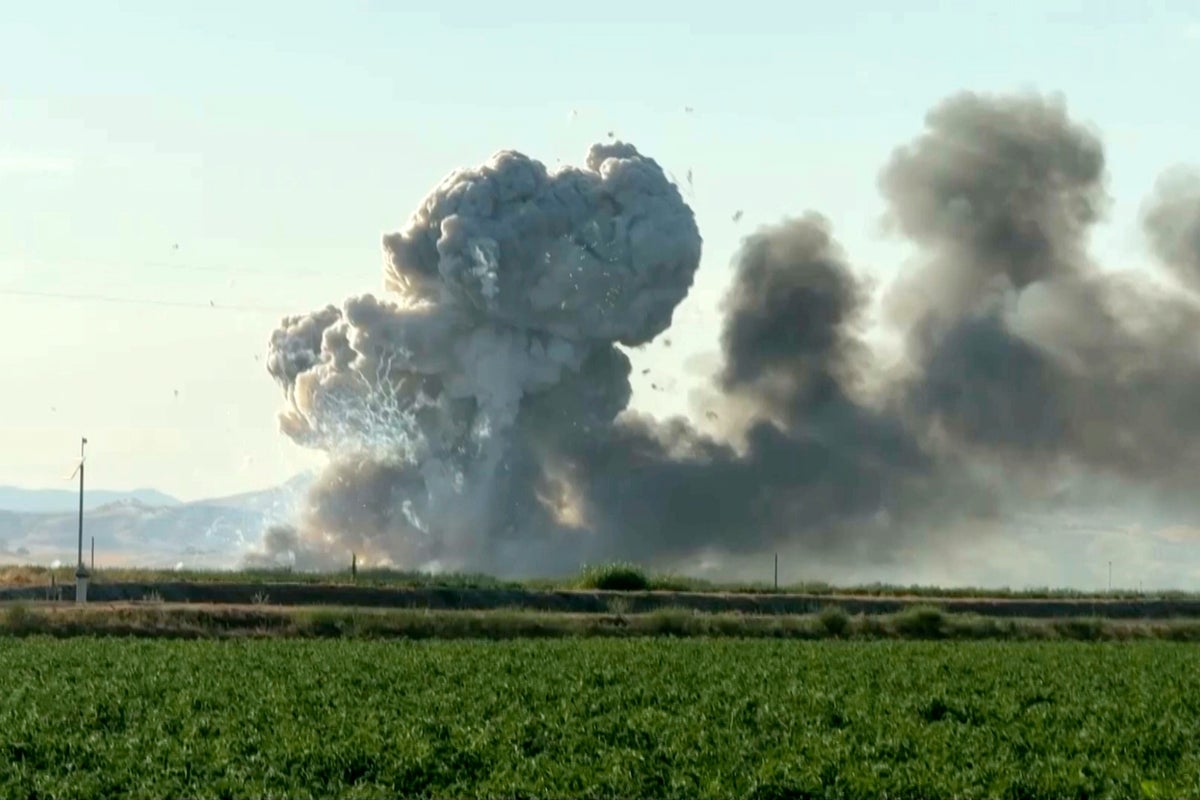
Public outrage is cheap. It’s the easiest currency to mint when a headline combines the "Happiest Place on Earth" with a cold-blooded murder charge. The media has spent the last 48 hours salivating over the arrest of a fireworks company owner at a Disney World resort, framing it as a cinematic capture of a fugitive villain. They want you to see a man hiding from justice among Mickey Mouse ears.
They are wrong.
The arrest of a business owner for a workplace catastrophe—specifically the February 2023 explosion at a Magic in the Sky facility—is not a victory for justice. It is a dangerous expansion of criminal liability that should terrify every executive, site manager, and entrepreneur in America. We are witnessing the "criminalization of corporate failure," where the nuance of industrial chemistry is being traded for the optics of a handcuffs-at-the-monorail photo op.
The Illusion of "Knowing Better"
The prosecution’s logic is seductive: an explosion happened, people died, therefore the person at the top is a murderer. This is a fundamental misunderstanding of high-hazard industrial environments.
In the fireworks industry, you aren't managing spreadsheets; you are managing volatile chemical reactions. When a "deadly explosion" occurs, the knee-jerk reaction is to claim the owner "knew" the facility was unsafe. This ignores the reality of High Reliability Organizations (HROs). In these environments, risk is never zero. You mitigate, you create redundancies, and you follow ATF protocols, but you are still dancing with gunpowder.
To charge an owner with second-degree murder suggests a "depraved mind" or an intentional disregard for life. Yet, in my decades observing industrial litigation, the reality is almost always Systemic Complexity. Accidents in the pyrotechnics world are rarely the result of one man’s malice. They are the result of "normalization of deviance"—a term coined by sociologist Diane Vaughan during the Challenger investigation. Small, incremental shifts in procedure that seem harmless until they reach a tipping point.
Turning a systemic failure into a murder charge is a lazy shortcut for prosecutors who don't want to do the hard work of proving specific OSHA violations or technical negligence. It's easier to tell a jury that a guy was "on vacation while his workers died" than to explain the failure of a static electricity grounding system.
The Disney World PR Trap
Let’s talk about the location. The media is obsessed with the fact that the arrest happened at Disney. Why? Because it creates a contrast of "innocence vs. evil."
If this man had been arrested at a gas station in rural Missouri, the story wouldn't have made the national cycle. By arresting him at a high-profile resort months after the incident, law enforcement is performing theater. They waited for a moment that would maximize the "shame factor."
This is a tactic, not a triumph. It’s designed to poison the jury pool before a single piece of evidence regarding the explosion’s cause is even presented. We’ve seen this before. In high-stakes industrial cases, the "perp walk" is the prosecution's strongest weapon because it bypasses the need for technical proof.
When Negligence Becomes a Felony
The legal threshold for murder involves intent or extreme indifference. If a fireworks facility has a fire, that is a tragedy. If it has a fire because an owner skipped a specific safety check, that is usually civil negligence or, at worst, manslaughter.
But murder?
By pushing for murder charges, the state is setting a precedent where every industrial accident is a potential capital crime. Imagine a world where:
- A software glitch in an autonomous vehicle leads to a murder charge for the CEO.
- A structural failure in a bridge leads to a murder charge for the engineering firm’s partner.
- A chemical leak at a plant results in the arrest of the board of directors.
This isn't "accountability." It’s a race to the bottom that will ensure no sane person ever enters a high-risk, high-reward industry again. The fireworks industry is already dying under the weight of insurance premiums and hyper-regulation. This case is the final nail.
Dismantling the "Greedy Owner" Narrative
The competitor articles love to paint a picture of an owner cutting corners to save a buck. I’ve been in these facilities. I’ve seen the margins. You don't get rich in the fireworks business by blowing up your own inventory and killing your trained staff.
Training a pyrotechnician takes years. Losing staff is a financial and operational catastrophe. The "greedy owner" trope falls apart when you realize that an explosion is the single most expensive thing that can happen to a company. It is the literal destruction of the business's capital.
If there were safety lapses, they should be litigated in civil court or through heavy regulatory fines. But labeling it murder suggests the owner wanted this outcome or was so indifferent that he might as well have pulled the trigger himself. That is a reach that defies the logic of self-preservation.
The Real Question Nobody is Asking
Instead of asking "Why was he at Disney?", we should be asking "Why did the investigation take this long to reach a murder conclusion?"
The explosion happened in February 2023. The arrest happened in late 2024. If the evidence for murder was so overwhelming, why the delay? Usually, a gap this large means the prosecution struggled to find a "smoking gun" and settled on a strategy of emotional appeal. They couldn't prove the technical cause of the blast with 100% certainty, so they are leaning on the "optics of indifference."
The Cost of This Precedent
If this conviction sticks, the fireworks industry—and by extension, the entire live entertainment sector—changes forever.
- Insurance will vanish. No carrier will underwrite a policy for a CEO who could face a life sentence for a floor-level mechanical failure.
- Talent will flee. The best safety officers and engineers will move to "low-risk" sectors like fintech or consumer goods, leaving the high-hazard industries to the less competent.
- Innovation stops. Why try a new, safer chemical compound if any unforeseen reaction could land you in a jumpsuit?
We are traded-off for a "tough on crime" headline. We are sacrificing the future of American manufacturing and specialized entertainment at the altar of a viral news story.
Stop cheering for the arrest at the Magic Kingdom. You are cheering for the end of the line for industrial risk-taking. You are cheering for a legal system that values a "gotcha" moment over the complex, ugly reality of how the world is actually built.
Industrial accidents are a failure of systems, not always a failure of a soul. If we can't tell the difference, we’ve already lost.
Get used to the silence. Because when the people who know how to handle explosives are all in prison for "murder by accident," there won't be any fireworks left to watch.