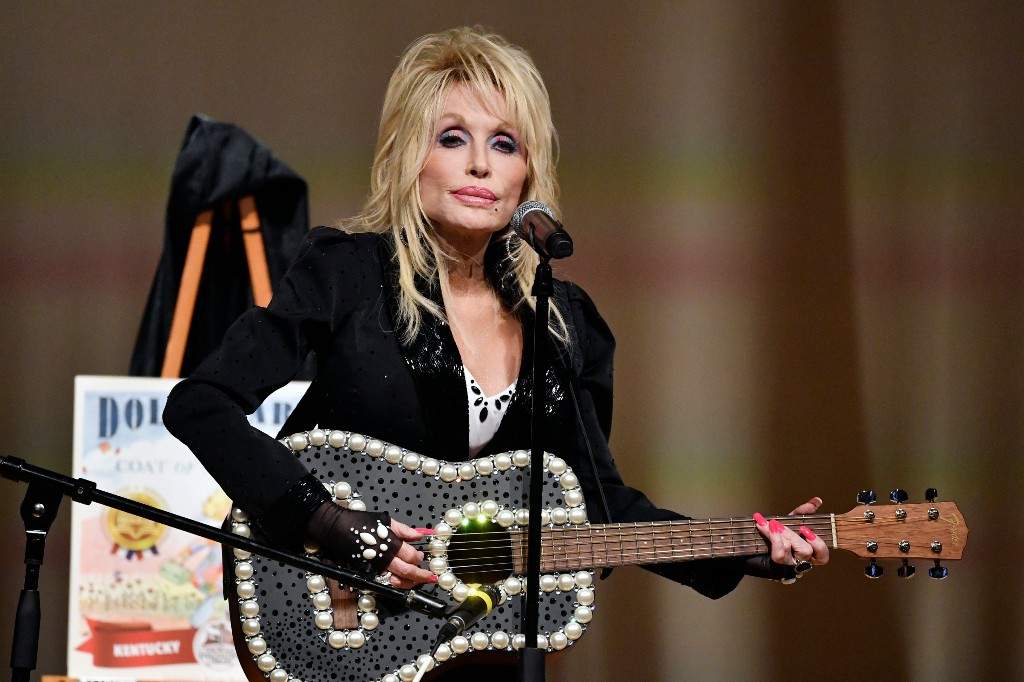
Dolly Parton is currently facing the most significant physical reckoning of her sixty-year career, a period she describes as needing a "100,000-mile check-up." While the 80-year-old icon remains the master of the optimistic pivot, her recent decision to cancel—not just postpone—her highly anticipated Las Vegas residency reveals a starker truth about the toll of a life lived at full throttle. The "healing" she speaks of isn't just about recovering from a single procedure; it is an overhaul of an immune and digestive system pushed to the brink by years of relentless work and the crushing weight of personal grief.
This isn't the standard celebrity "exhaustion" narrative. It is a documented physiological struggle involving kidney stones, medication-induced vertigo, and the lingering aftereffects of the loss of her husband, Carl Dean, in 2025. For a woman whose brand is built on indestructible cheer, the admission that she is too "swimmy-headed" to balance on five-inch heels marks a rare moment where the human being behind the rhinestone curtain has had to override the legend.
The Physical Cost of Being a Living Monument
The demands of being Dolly Parton are structurally different than those of almost any other performer. Most artists her age have transitioned into sit-down acoustic sets or retired to the golf course. Parton, conversely, spent the last two years doubling down, releasing a massive rock-and-roll album and managing a sprawling business empire.
Her recent update clarifies that the "bad news" isn't a single catastrophic diagnosis, but a complex intersection of internal medicine and the physical requirements of her persona. She noted that her immune and digestive systems got "all out of whack" over the last three years. This timeline correlates directly with the intense stress of caring for a terminally ill spouse while maintaining the momentum of a multi-billion-dollar brand.
The vertigo she describes—feeling "swimmy-headed" from medications—presents a literal safety hazard. To perform as Dolly, she must navigate stages while carrying heavy instruments like banjos and guitars, all while elevated on her signature footwear. In investigative terms, the "why" behind the residency cancellation is simple. The risk of a fall or a visible lapse in performance quality was deemed higher than the financial or reputational cost of a total withdrawal from the Vegas stage.
Grief as a Physiological Catalyst
We often treat grief as a purely emotional state, but for a performer entering her ninth decade, it is a metabolic drain. Parton admitted she got "worn down and worn out" following Carl Dean’s passing. Chronic stress and prolonged grieving are known to suppress the immune system and cause significant gastrointestinal distress—the very issues Parton is now treating at Vanderbilt University Medical Center.
Behind the scenes, the Parton machine has been trying to manage the narrative. When her sister, Freida, went public with a plea for prayers in late 2025, it sparked a panic that forced Dolly to record a "not dead yet" video. That tension between the family’s private worry and the business’s need for stability highlights the difficulty of being a solo titan of industry. If Dolly stops, the machine stalls.
The Nashville Workaround
While the stage is currently off-limits, Parton is not bedridden. She is executing a strategic retreat to Nashville, where she can control her environment. This allows her to:
- Continue recording and filming videos where she can sit down or take breaks.
- Oversee the development of DOLLY: A True Original Musical, set for a Broadway debut.
- Manage the opening of her new hotel and museum in Nashville.
This pivot suggests that while her days of high-impact touring may be over, her "working retirement" is merely shifting from the physical to the executive. She is trading the stage for the boardroom, a move that preserves her health without sacrificing her influence.
The Vanderbilt Protocols
Parton’s proximity to Vanderbilt University Medical Center is a strategic choice. She isn't just seeing a family doctor; she is undergoing "procedures" and "treatments" that require close monitoring. Her mention of kidney stones—noting that they "dig more stones out of me a year than the rock quarry in Rockwood"—hints at chronic issues that require regular intervention.
The transparency in her latest update serves a dual purpose. It satisfies the fans’ need for a reason, but it also sets a boundary. By detailing the dizziness and the internal medicine challenges, she is effectively telling the industry that she is no longer available for the grueling rehearsal schedules required for a residency.
The Myth of Indestructibility
There is a specific kind of pressure reserved for icons who have become synonymous with resilience. Parton has spent decades telling us she "doesn't have time to get old." However, the body eventually presents a bill that cannot be ignored, even by a woman who owns her own theme park. The "healing" she is pursuing now is an attempt to settle that bill so she can enjoy the legacy she has built.
The Vegas cancellation is a definitive marker. It signalizes that the era of Dolly Parton as a touring powerhouse has likely concluded, replaced by a more stationary, curated version of the icon. It is a necessary evolution. To remain the "True Original" she claims to be, she has to survive the very persona that made her famous.
She remains in control of the narrative, using her trademark humor to soften the blow of a difficult reality. She isn't quitting; she is recalibrating. But for the first time, the woman who has always been everyone's rock is finally admitting that she needs to tend to her own foundation.
The rhinestone armor is being set aside for a hospital gown, at least for now.