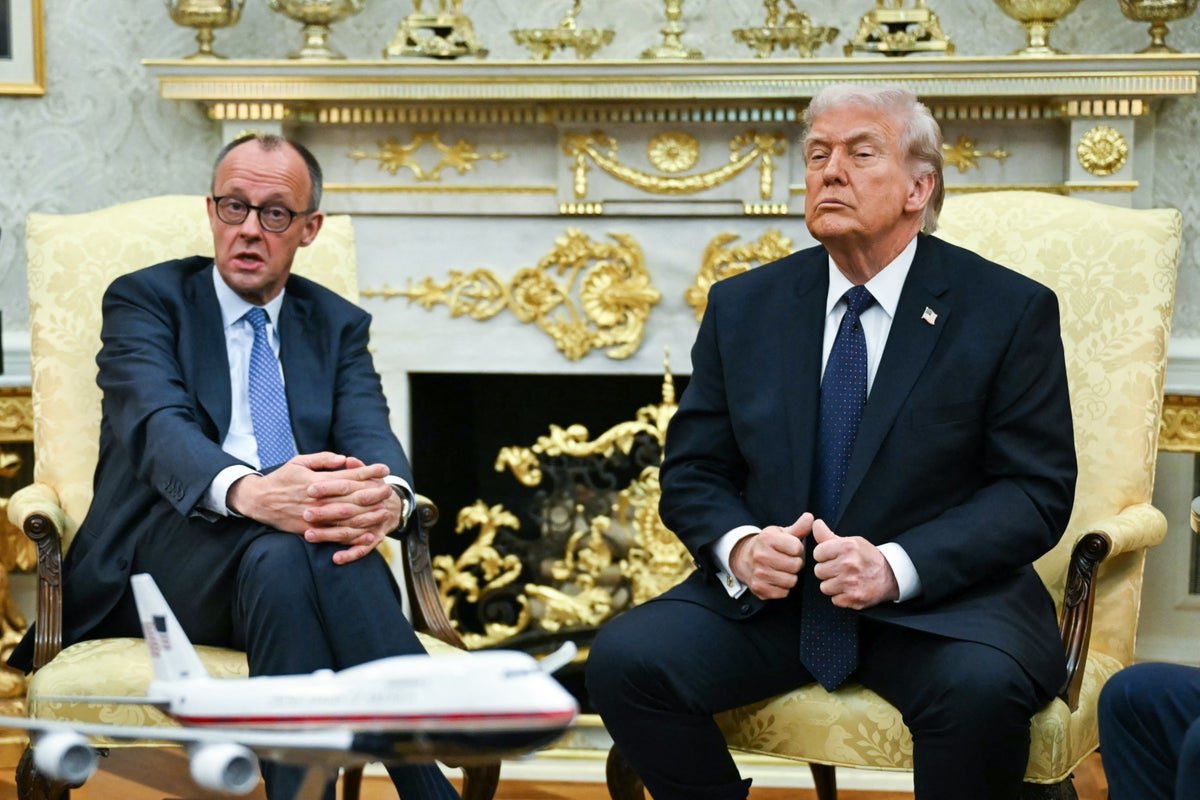
Donald Trump doesn't do subtle diplomacy. He never has. But his recent blowup with Germany over the "US humiliation" comment isn't just another angry social media post or a passing headline. It’s a fundamental shift in how the world’s most powerful alliance functions. When German officials suggested that the era of relying blindly on Washington is over—calling the current state of affairs a "humiliation" for European sovereignty—Trump didn't just disagree. He went for the jugular.
This isn't about one man's ego, though that’s certainly part of the theater. It's about a deep, growing rift between the United States and its wealthiest European ally. For years, the tension simmered. Now, it’s a full-blown fire. You've got a Germany that feels it needs to lead Europe away from American influence, and a Trump platform that views German economic success as a direct result of "ripping off" the American taxpayer.
If you think this is just politics as usual, you're missing the bigger picture. We’re watching the slow-motion car crash of the post-WWII international order.
Why the Humiliation Jibe Hit Such a Nerve
Trump hates the idea of anyone suggesting the US is weak or that its allies are "done" with American leadership. When German leadership used the word "humiliation" to describe their dependence on US military hardware and policy, they weren't just talking about money. They were talking about pride. Trump’s response was predictable but no less damaging. He lashed out, reminding Berlin that without the US, they’d be speaking a different language—or at least paying a lot more for their own defense.
It's a classic power struggle. Germany is tired of being the junior partner in a relationship where they provide the industrial might but the US provides the security. On the flip side, Trump sees a country with a massive trade surplus that refuses to hit the 2% NATO spending target consistently. He views that as a betrayal.
The "humiliation" comment was a signal to the German public that it’s time to move on. Trump’s reaction was a signal to his base that he won't let allies "disrespect" the flag. Both sides are playing to their home crowds, and the alliance is the collateral damage.
The Defense Spending Ghost That Won't Go Away
Let’s talk numbers because that’s where Trump always starts. For decades, the US has shouldered the lion's share of NATO costs. According to data from the Stockholm International Peace Research Institute (SIPRI), the US spends roughly 3.4% of its GDP on defense. Germany has historically struggled to even hit 1.5%.
Trump's argument is simple. Why should a factory worker in Ohio pay for the defense of a wealthy German engineer? It’s a point that resonates. Even if you don't like his tone, the math is hard to argue with. Germany has enjoyed a "peace dividend" for thirty years, using the money they didn't spend on tanks to build better trains and social safety nets.
The European Defense Fund and the Breakup
Germany’s response to Trump’s pressure hasn't been to just pay up. They’re trying to build their own thing. Efforts like the European Defense Fund (EDF) are designed to make Europe "strategically autonomous." That’s a fancy way of saying they want to buy European jets instead of American ones.
Trump sees this as a direct attack on American industry. He wants Germany to buy F-35s. Germany wants to build the FCAS (Future Combat Air System) with France. This isn't just about security. It's a trade war disguised as a military alliance. When Trump lashes out at Germany, he’s protecting Boeing and Lockheed Martin as much as he’s talking about NATO.
Why This Feud is Different This Time
In his first term, Trump’s threats to leave NATO were seen by many as a bluff. A way to get people to pay their bills. Now, the rhetoric has shifted. There’s a sense in Berlin that even if Trump isn't in office, the "America First" sentiment is here to stay. The trust is gone.
I’ve seen how these diplomatic spats play out in the long run. They don't just disappear with a new administration. They bake into the policy of the country. Germany is now actively looking for ways to decouple its energy and security needs from US whims. They learned the hard way with Russian gas that relying on one partner is dangerous. Now they view the US as an unreliable partner too.
That’s a massive problem for global stability. If the two biggest economies in the West can't stop bickering over who pays for the security of the North Atlantic, it opens the door for other powers to move in.
The Trade Imbalance That Fuels the Fire
Trump doesn't just look at NATO. He looks at car dealerships. He has famously complained about the number of Mercedes-Benz and BMW vehicles on the streets of New York compared to the number of Chevrolets in Berlin. To him, the "humiliation" isn't Germany's dependence on the US; it's the US getting "hustled" on trade.
Germany’s export-driven model depends on open markets and a stable US dollar. When Trump threatens tariffs on German autos, he’s hitting them where it hurts most. This economic tension is the fuel for the political fire. Every time a German politician talks about US "bullying," Trump points to the trade deficit. It's a feedback loop of resentment.
What You Should Actually Be Watching
Don't get distracted by the mean tweets or the shouting matches. Those are just the symptoms. The real thing to watch is the movement of troops and the signing of procurement contracts.
If Germany starts pulling back from joint exercises or doubles down on "EU-only" military tech, the divorce is real. If Trump starts pulling troops out of Ramstein Air Base—which is a massive logistical hub for the US—then the relationship is effectively over.
- Watch the 2% target. If Germany hits it and Trump still isn't happy, it was never about the money.
- Follow the F-35 deals. If Berlin cancels or reduces its order of American jets, that’s a clear sign of a shift toward France and the EU.
- Listen to the rhetoric about "Strategic Autonomy." This is the code word for "We don't need the US."
The reality is that Germany and the US need each other. Germany provides the base for US operations in the Middle East and Africa. The US provides the nuclear umbrella that keeps Germany safe. But logic doesn't always win in politics. Pride does. And right now, both sides have plenty of it.
Stop waiting for things to go back to "normal." This is the new normal. The "US humiliation" jibe was just the spark that lit a very old, very dry pile of wood. If you're a business owner or an investor with ties to Europe, you need to start hedging for a world where the US and Germany are competitors rather than partners.
Get used to the noise. It’s going to get much louder before it gets quiet. Keep an eye on the German federal budget and the upcoming US election cycles. Those are the only two things that will actually determine if this alliance survives the decade. The rest is just theater.