The headlines are carbon copies of each other. "Trump lashes out." "Kimmel fires back." "The feud intensifies."
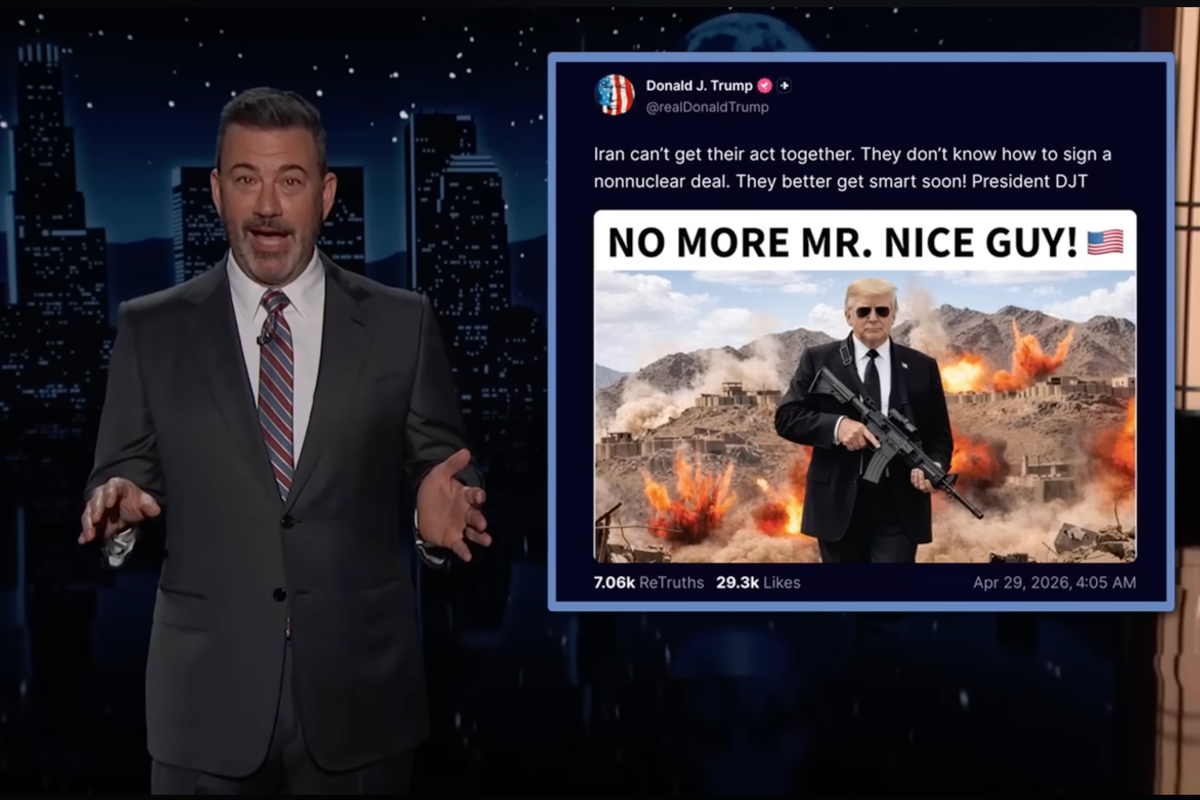
If you are reading the standard coverage of Donald Trump demanding ABC fire Jimmy Kimmel over a monologue joke, you are being fed a narrative designed for 2016. You are watching a theatrical production while believing it is a news event. The mainstream media treats this as a clash of ideologies or a battle for the soul of late-night television. It is neither.
This is a symbiotic marketing loop. It is a high-stakes trade of cultural relevance between two men who need each other to survive the current attention economy.
The Myth of the Thin-Skinned Autocrat
The "lazy consensus" dictates that Trump’s demand for Kimmel’s termination is a sign of a fragile ego or a direct threat to the First Amendment. This perspective misses the mechanical utility of the outrage. Trump does not actually want Kimmel fired. If Kimmel disappeared tomorrow, Trump would lose one of his most reliable foils.
In professional wrestling, this is known as "kayfabe." The heel needs the babyface to look indignant so the crowd stays engaged. When Trump calls for a firing, he isn't speaking to the Disney board of directors. He is speaking to a base that views late-night hosts as the smug avatars of an insulated coastal elite. Every time Kimmel responds with a "savage" monologue, he validates that exact perception.
I have watched political consultants burn through millions trying to manufacture this kind of organic engagement. You cannot buy the authenticity of a genuine feud, which is why both parties work so hard to keep the pilot light burning. Trump’s "outrage" is a targeted strike on the legacy media's predictability. He knows exactly which buttons to press to ensure he dominates the monologue the following night.
Jimmy Kimmel’s Survival Strategy
Let’s look at the numbers. Late-night television is in a terminal decline. Linear TV ratings are cratering. Younger audiences do not sit through commercials to watch a desk-bound man interview an actress about her latest Marvel project. They watch clips on social media.
Kimmel knows this. Without the "Trump bump," late-night hosts struggle to maintain a digital footprint that justifies their massive contracts. By leaning into the Melania jokes and the subsequent "feud," Kimmel isn't just "speaking truth to power"—he is optimizing for the YouTube algorithm.
The premise that Kimmel is a "brave" comedian taking a stand is flawed. Bravery implies risk. There is zero risk for Kimmel in mocking Trump. His audience expects it. His bosses at ABC/Disney enjoy the viral traffic. The conflict is the product.
The Counter-Intuitive Truth About Political Comedy
We are told that satire is a tool for political change. History suggests otherwise. Satire often acts as a safety valve, allowing an audience to feel they have "fought back" by laughing, which actually reduces the drive for tangible political action.
When Kimmel delivers a monologue about Trump’s legal woes or his family, it creates a "preaching to the choir" echo chamber. It doesn't flip voters. It solidifies silos. Trump understands this better than the writers in the ABC green room. He uses these jokes as proof of the "witch hunt," turning Kimmel’s punchlines into campaign fuel.
Imagine a scenario where a late-night host simply stopped talking about Trump. The vacuum of attention would do more damage to Trump’s brand than a thousand "savage" jokes ever could. But that will never happen. Silence doesn't get clicks. Silence doesn't get renewed for another season.
The Death of the Joke and the Birth of the Clout-War
Comedy used to rely on subverting expectations. Now, late-night comedy relies on confirming them. The "Melania joke" in question isn't even the point. The joke is a placeholder. It could be about her clothes, her accent, or her absence. The content is irrelevant; only the reaction matters.
We are witnessing the total financialization of outrage. Trump’s demand for a firing is a high-yield investment in his "victim" narrative. Kimmel’s rebuttal is a dividend payment to his progressive viewers.
I’ve seen media conglomerates blow fortunes trying to figure out how to stay relevant in a fragmented market. The answer they found is simple: conflict is the only currency that hasn't been devalued.
Why the "First Amendment" Argument is a Distraction
Pundits love to scream about the "chilling effect" on free speech whenever a politician calls for a media personality to be fired. This is a fundamental misunderstanding of power dynamics in 2026.
A tweet—or a Truth Social post—is not a legislative act. Trump has no legal mechanism to fire Kimmel. ABC is a private entity. By framing this as a constitutional crisis, the media elevates a playground spat into a national emergency. This elevation is exactly what both participants want.
The downside to my contrarian view? It’s cynical. It suggests that there are no "good guys" in this fight, only performers. But look at the trajectory of the last decade. Every time this cycle repeats, both men see an uptick in mentions, social shares, and brand recognition.
The Audience is the Only Loser
People also ask: "Is Trump's rhetoric dangerous for comedians?"
The honest answer: No. It’s profitable for them.
The real danger isn't to the comedian's safety, but to the audience's intelligence. We are being trained to view political discourse as a series of "owns" and "claps back." We are losing the ability to distinguish between a policy debate and a promotional tour for a comedy special.
Stop looking for "savage" takedowns. Stop waiting for the "fireable offense." You are watching two masters of the attention economy perform a choreographed dance for your benefit.
If you want to disrupt the cycle, stop watching the clips. Stop sharing the posts. The moment the metrics drop, the "feud" will vanish, because the only thing these men fear more than each other is being ignored.
Turn off the television. The circus only continues as long as the tent is full.