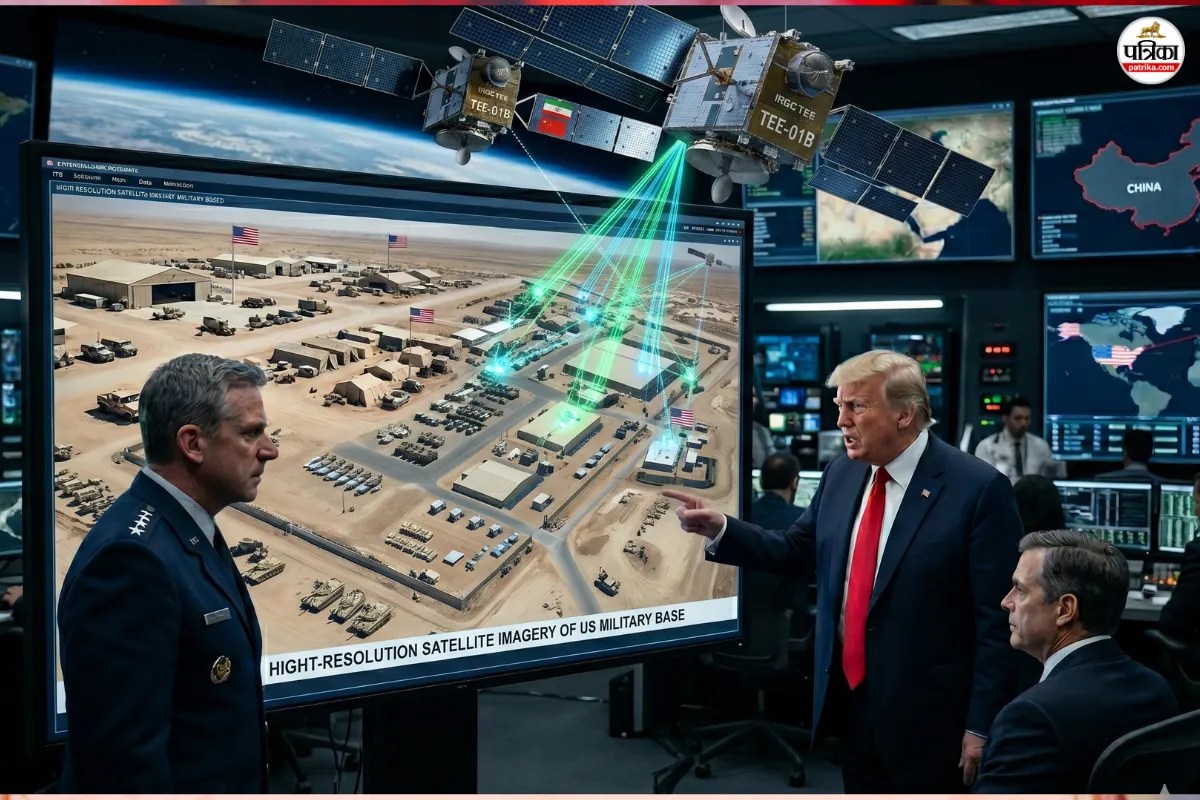
The global security map just got a lot messier. We're seeing a collision of space-age espionage and old-school geopolitical posturing that feels straight out of a Cold War thriller. Intelligence reports suggest that Chinese satellites are being used to track and monitor American military assets, and the timing couldn't be worse. While the Pentagon tries to figure out exactly how much data leaked, Donald Trump has jumped into the fray with a fiery rhetoric that targets Iran and hints at a major shift in the coming days.
He didn't hold back. During a recent address, Trump pointed toward the next 48 hours as a "spectacular" window for American interests. It’s classic Trump—blunt, aggressive, and designed to keep everyone guessing. But beneath the bravado, there’s a real concern about how Beijing’s eyes in the sky are helping Washington’s enemies on the ground. This isn't just about cameras in space. It's about a coordinated effort to undermine U.S. dominance in the Middle East.
Beijing's Orbital Spying is Helping Tehran
The accusation is simple but terrifying. Chinese commercial and military satellites are reportedly feeding high-resolution imagery and electronic intelligence to Iranian proxies. This data allows for the precise tracking of American carrier strike groups and logistics hubs. You don't need a secret base when you can buy or borrow a bird’s-eye view of every move your opponent makes.
China and Iran signed a 25-year strategic cooperation agreement back in 2021. We’re seeing the fruit of that deal now. It’s a trade-off. Iran gets the technical edge it lacks, and China gets a foothold in a region that controls the world’s energy flow. Trump’s anger stems from the fact that this surveillance makes American troops sitting ducks. If a satellite knows exactly where a base's perimeter is weakest, a drone strike becomes ten times more effective.
Why Trump Is Targeting Iran Now
Trump's "next two days" comment has the beltway buzzing. He’s basically telling the world that he knows something we don’t. Or, more likely, he’s setting the stage for a massive policy pivot if he regains the leverage he’s seeking. He views the current administration’s approach as weak and reactionary. To him, the fact that China can spy on U.S. bases and hand that info to Iran is a failure of deterrence.
He’s long argued that Iran only understands strength. By linking Chinese satellite spying to Iranian aggression, he’s painting a picture of a global "axis" that needs to be broken. His supporters love it. His critics think it’s reckless. But you can't deny that the threat is real. The U.S. Space Command has been warning about the "democratization of space" for years, meaning that even smaller powers can now access high-end intelligence if they have the right friends in Beijing.
The Technological Gap Is Closing Fast
We used to have the monopoly on high-altitude reconnaissance. Those days are gone. China’s Yaogan series satellites are now capable of sub-meter resolution. They can see the tail number on a jet or the specific hardware on a naval deck. When this info gets shared with Tehran, it bypasses the need for Iran to build its own expensive space program. They’re essentially outsourcing their intelligence needs to the CCP.
It’s a cheap way to fight a superpower. Think about the costs involved. The U.S. spends billions on stealth and electronic warfare. All of that is neutralized if a $50 million satellite can just track the heat signature of a carrier from 300 miles up. It’s frustrating. It’s dangerous. And it’s exactly why the rhetoric is heating up.
The Problem With Commercial Satellite Data
A lot of this isn't even coming from "spy" satellites. Commercial imagery is so good now that you can track troop movements on a public website if you know where to look. Beijing uses "dual-use" tech to mask their activities. They claim it’s for agriculture or weather, but the data ends up in the hands of the IRGC. This creates a massive legal and diplomatic gray zone. How do you punish a company for selling "civilian" photos that just happen to show an American base?
Strategic Moves For The Coming Days
If Trump’s prediction of a "spectacular" two days holds any weight, we should look for a few specific developments. First, watch for movement in the UN regarding sanctions on satellite tech transfers. Second, expect a ramp-up in U.S. Cyber Command activity. If we can’t stop them from looking, we might try to blind them digitally.
The military term for this is "Space Superiority." We're losing it. Not because our tech is worse, but because our rivals are playing a different game. They don't need to win a space war; they just need to make our movements transparent.
- Check your sources. Always verify these satellite claims against independent tracking data from groups like the Union of Concerned Scientists.
- Watch the markets. Any escalation between Trump, China, and Iran usually hits oil prices within minutes.
- Monitor the rhetoric. If the "two days" pass without a major event, it was likely political theater. If something happens, the playbook for 2026 just got rewritten.
Keep your eyes on the Persian Gulf and the South China Sea. They’re two halves of the same coin. The next move won't just be a tweet or a speech. It'll be a shift in how we protect our borders—both on Earth and in orbit.