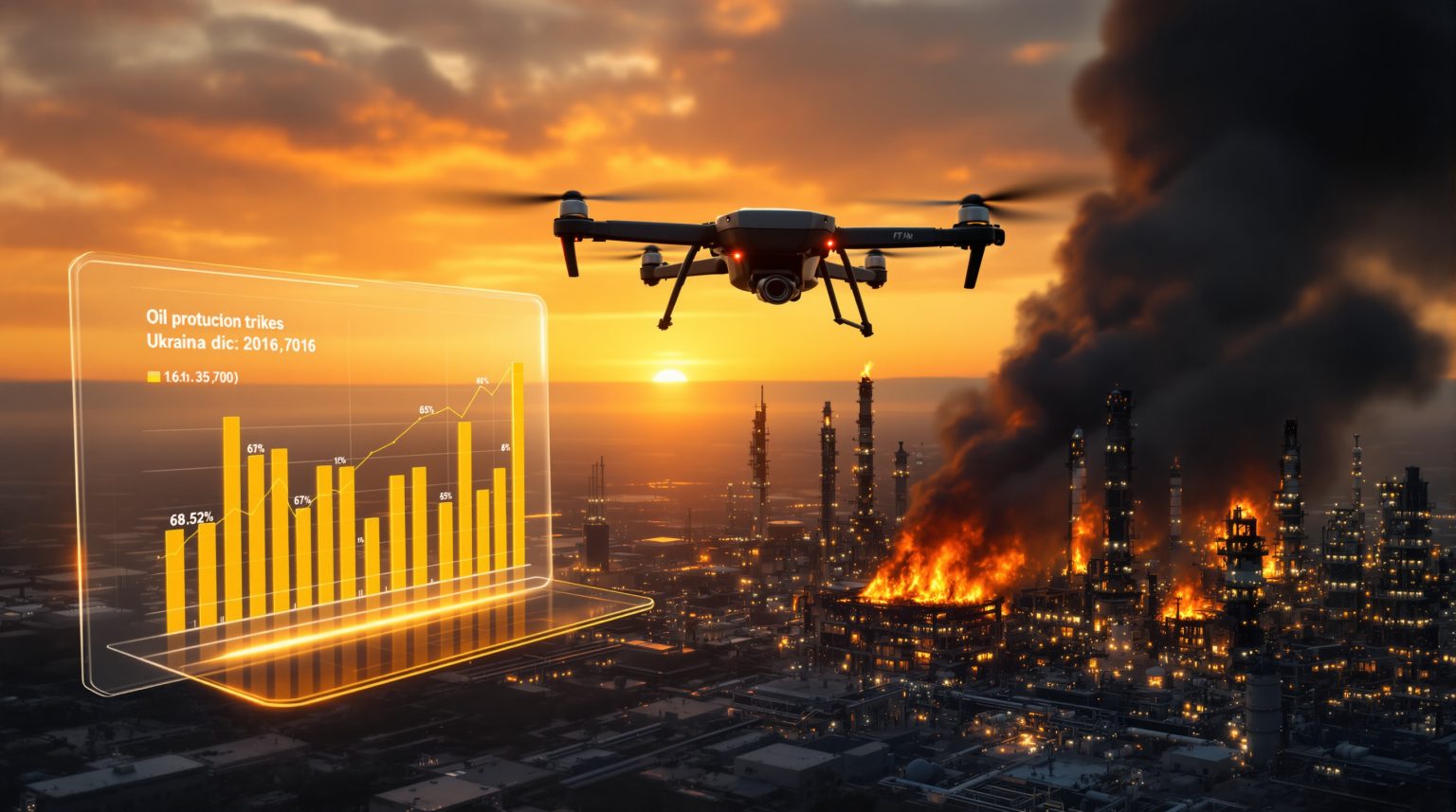
The headlines are always the same. "Fire erupts." "Black smoke billows." "Drone strike hits Tuapse."
Most analysts see these reports and talk about tactical victories, supply chain disruption, and the degradation of the Russian war machine. They look at a refinery fire and see a win. They are looking at the wrong map.
I’ve spent two decades tracking energy infrastructure and the movement of crude. If you think knocking out a distillation unit at a Black Sea port is the beginning of the end for a petro-state, you don’t understand how global energy markets actually work. These strikes aren’t just a drop in the bucket; they are a fundamental misunderstanding of the physics of oil and the psychology of the global economy.
The Crude Reality of Displacement
When a drone hits the Tuapse refinery, the logic used by the "lazy consensus" is simple: refinery stops working, Russia loses money.
False.
Refineries don't create oil; they process it. When a refinery goes offline, that raw crude doesn't just vanish into the ether. It stays in the ground or, more likely, it gets rerouted to the export market. By hitting domestic refining capacity, you are inadvertently forcing more raw crude onto the global market.
In a world where the West is trying to keep oil prices stable to prevent a political backlash at the pump, forcing a surge of cheap, raw Russian Urals onto the global shadow fleet is the definition of a backfire. You aren't starving the beast; you’re just changing its diet.
The Myth of Tactical Ruin
Modern refineries are not fragile glass sculptures. They are sprawling industrial fortresses.
Tuapse, owned by Rosneft, is a massive complex. A drone carrying a few kilograms of explosives hitting a vacuum distillation unit is a headache, not a decapitation strike. I have seen refineries recover from catastrophic internal failures that make a drone strike look like a firecracker.
The media loves the visual of a fire. Fire sells clicks. But the engineering reality is that these facilities are built with redundancy.
- Modular Repair: Modern industrial components are increasingly modular. You swap the damaged part.
- Feedstock Flexibility: If Tuapse can't process, the crude moves to another facility or is sold to "neutral" parties who are more than happy to take the discount.
- The Insurance Game: This is the part nobody talks about. These assets are often tied into complex global financial webs. The disruption costs are often hedged or absorbed in ways that never touch the actual war chest.
Energy Physics 101: The Pressure Vessel Trap
People ask, "Why don't they just blow up the whole thing?"
Because you can't. A refinery isn't a single point of failure. It is a network of pressure vessels, heat exchangers, and storage tanks. To actually "destroy" a refinery like Tuapse, you would need a sustained carpet-bombing campaign, not a handful of buzzing toys.
When you damage a secondary unit, the primary distillation often continues. Even if the whole plant shuts down for two weeks, the global price of refined products (diesel, gasoline, jet fuel) spikes. Who benefits from high global fuel prices? The very people selling the oil.
By creating "scarcity" in the refining sector, these strikes can actually drive up the margins for the remaining operational refineries in the region. It is a perverse incentive structure that the armchair generals completely ignore.
The Silicon Fallacy
There is a growing belief that "tech" wins every fight. That a $50,000 drone can permanently dismantle a multi-billion dollar industrial asset.
This is the Silicon Fallacy. It ignores the grit of heavy industry.
The people running these refineries aren't tech bros; they are hardened engineers who specialize in keeping ancient, dangerous equipment running under extreme stress. They have been dealing with pressure leaks, fires, and equipment failure long before drones were a thing.
I once watched a team in a sanctioned country rebuild a cracked thermal cracker using "illegal" parts and sheer willpower in under a month. If you think a drone strike is going to stop a state-backed energy giant for more than a fiscal quarter, you haven't been paying attention to the history of industrial sabotage.
The Hidden Cost of "Winning"
Let's talk about the downside that no one wants to admit. Every time a refinery burns, the environmental and economic "externality" is pushed onto the rest of us.
- Market Volatility: Every headline about Tuapse adds a $2 premium to a barrel of oil due to "geopolitical risk." That money goes straight from your pocket into the hands of oil speculators.
- Environmental Degradation: These fires are toxic. The long-term cleanup and the soot fallout affect regional agriculture and water tables.
- The Precedent: We are currently normalizing the targeting of energy infrastructure. If you think this stays confined to one region, you are dreaming. We are writing the playbook for every rogue actor on the planet to start targeting the energy grids and refineries that keep the West functioning.
The Strategy is the Problem
The obsession with these "kinetic" strikes reveals a lack of imagination. If the goal is to actually impact a nation’s ability to fund a conflict, you don't aim for the refinery towers. You aim for the bank ledgers. You aim for the shipping insurance. You aim for the specialized software that runs the logistics.
A fire at Tuapse is a photo op. It’s a tactical distraction.
The real war is being fought in the boring, un-photogenic world of maritime law and commodity trading. While the world watches the smoke over the Black Sea, millions of barrels of oil are still moving, still being sold, and still being paid for in currencies that bypass the traditional Western systems.
Stop cheering for the smoke. Start looking at the tankers.
The drone strike on the Tuapse refinery isn't a masterstroke. It's a loud, bright, expensive way to prove that we still don't understand how to fight a war in the 21st-century energy market. We are using 20th-century sabotage tactics against a 21st-century decentralized commodity network.
The refinery will be rebuilt. The oil will keep flowing. The prices will stay high.
And we’ll be right back here next month, watching another video of a fire and calling it progress while the underlying math of the conflict remains completely unchanged.
The "fire" isn't the story. The fact that we think the fire matters is the real tragedy.



