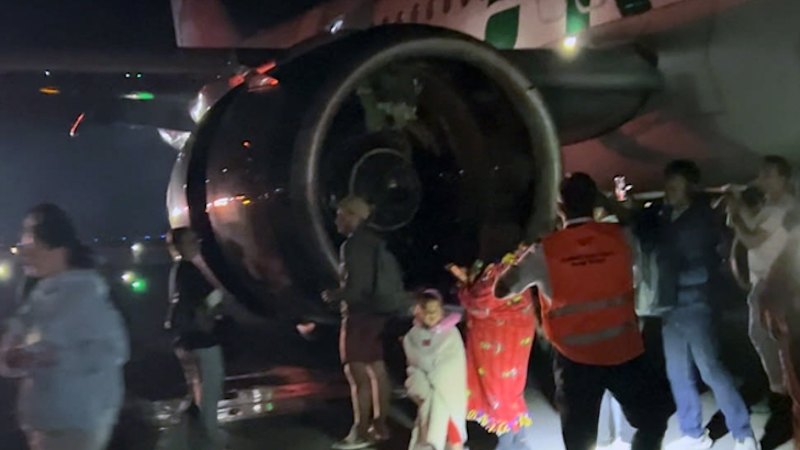
When the odor of acrid smoke filled the cabin of Frontier Airlines Flight 1326 during its landing at Harry Reid International Airport, the transition from a routine flight to a chaotic evacuation happened in seconds. Flames licked at the undercarriage of the Airbus A321. Passengers, fueled by primal instinct and the commands of a strained flight crew, tumbled down emergency slides onto the Las Vegas tarmac. While the immediate headlines focused on the lack of serious injuries, the event serves as a flashing red indicator for an airline industry pushing its machines and its crews to the absolute breaking point.
This was not an isolated incident of bad luck. It was the physical manifestation of a business model that prioritizes high-cycle usage and razor-thin operational margins. Frontier, like many Ultra-Low-Cost Carriers (ULCCs), relies on keeping its fleet in the air for as many hours as humanly possible. When a plane is on the ground, it is losing money. When it is screaming down a runway with smoking tires, it becomes a liability that no amount of ten-dollar seat upgrades can cover.
The Mechanical Reality of High Cycle Operations
Modern aviation is a marvel of engineering, but it is not immune to the laws of physics. The incident in Las Vegas, involving a hard landing followed by a visible fire in the landing gear area, points toward a specific type of failure common in the high-intensity world of budget travel.
Landing gear systems are designed to absorb massive amounts of kinetic energy. They convert the speed of a hundred-ton metal tube into heat through friction and hydraulic compression. In the ULCC world, aircraft perform more takeoffs and landings per day than their long-haul counterparts. These are known as "cycles." Each cycle stresses the airframe, the brakes, and the hydraulic seals. While maintenance schedules are strictly regulated by the FAA, the sheer frequency of these cycles means that the margin for error shrinks. If a brake pad hangs or a hydraulic line develops a microscopic weep, the intense heat of a landing can turn a minor mechanical nuisance into a localized inferno.
Investigators are now looking at whether the flight crew received a "smoke in the cockpit" indication before the touchdown. This distinction matters. If the smoke began in flight, we are looking at a systemic electrical or environmental control failure. If it began upon impact, the focus shifts to the maintenance of the landing gear and the crew’s execution of a stabilized approach.
The Psychology of the Tarmac Slide
Watching cell phone footage of the evacuation reveals a terrifying lack of discipline among passengers that flight crews are increasingly unable to control. You see people pausing to grab their carry-on bags from overhead bins while the cabin fills with haze. This is a lethal mistake.
In a fire, every second spent wrestling with a roller bag is a second stolen from the person sitting in the row behind you. Federal regulations require that a plane be fully evacuated in 90 seconds or less, even with half the exits blocked. That metric assumes passengers aren't trying to save their laptops. Frontier’s crew managed to get everyone out, but the visual of passengers sliding down chutes with backpacks on shows how close we are to a tragedy caused by vanity and property.
We have reached a point where the "me-first" attitude of the modern traveler is directly clashing with the basic physics of survival. Flight attendants, who are often viewed by budget passengers as glorified vending machines, are actually the only thing standing between an orderly exit and a pile of bodies at the bulkhead.
The Financial Pressure Cooker
To understand why Frontier faces these hurdles, you have to look at their balance sheet. The airline has been grappling with significant financial headwinds as the post-pandemic travel surge cools and labor costs rise. To stay competitive, they have leaned into a strategy of aggressive cost-cutting and maximum aircraft utilization.
The Cost of Keeping the Fleet Young
Frontier prides itself on having one of the youngest fleets in the industry. On paper, younger planes mean fewer repairs. However, new planes come with massive debt service. To pay for these Airbus A320neo and A321neo aircraft, Frontier must fly them relentlessly. This creates a feedback loop.
- High Utilization: More flight hours per day than traditional carriers.
- Short Turnarounds: Minimal time on the ground for inspections between hops.
- Maintenance Outsourcing: Much of the heavy lifting is done by third-party contractors to keep overhead low.
This model works perfectly until it doesn't. When a plane is grounded by an incident like the one in Las Vegas, the ripple effect through the flight schedule is devastating. Because budget carriers don't have "spare" aircraft sitting around, one smoking tire in Nevada can cause cancellations in Florida, Colorado, and Ohio.
The Regulatory Gap
The FAA is currently under intense scrutiny for its oversight of Boeing, but the maintenance practices of ULCCs deserve equal attention. While there is no evidence that Frontier is "skipping" maintenance, the intensity of their operations tests the limits of current regulatory frameworks.
Inspectors are stretched thin. The oversight of third-party maintenance providers—often located in different states or even different countries—is notoriously difficult. When an airline operates on a razor's edge, the "safety culture" can sometimes become a "compliance culture." There is a massive difference between doing what is safe and doing the bare minimum required by the logbook.
The Las Vegas evacuation should be a wake-up call for the Department of Transportation. We are seeing an increase in "near-misses" and ground incidents that suggest the system is redlining. It isn't just about the planes; it is about the entire infrastructure supporting them.
The Myth of the Cheap Seat
Consumers love the twenty-nine-dollar fare, but we are beginning to see the hidden costs of those tickets. You aren't just paying for a seat; you are participating in a high-stakes game of operational efficiency. When you strip away the frills, you eventually start stripping away the buffers that make air travel feel routine.
The Frontier evacuation is a reminder that flying is still an inherently violent act of physics held in check by meticulous care. When smoke enters the cabin, the brand of the airline becomes irrelevant, and the quality of the maintenance and the training of the crew become the only currency that matters.
Frontier will likely point to the successful evacuation as a testament to their safety protocols. And they are right—everyone survived. But the investigative question remains: why was the plane on fire in the first place? If the industry doesn't find a way to balance the relentless pursuit of utilization with the fundamental need for mechanical breathing room, the next set of slides might be deployed under much darker circumstances.
The industry must move toward a more transparent reporting system for mechanical "snags" that don't result in crashes but indicate systemic wear. We need to stop treating every successful evacuation as a victory and start treating every fire as a failure of the maintenance chain. If the ULCC model is to survive a decade of rising costs and aging infrastructure, the "ultra-low-cost" mindset cannot apply to the hanger.